

25 cents – Belize
Add to wishlist
Circulating commemorative coins
Commemoration: World Congress for Forestry
Belize
Context
Material
Diameter: 23.6 mm
Weight: 5.66 g
Thickness: 1.9 mm
Shape: Round
Composition: Copper-nickel
Technique: Milled
Alignment: Medal alignment
flip
References
KM: #
Numista: #15391
Value
Exchange value: 0.25 BZD
Obverse
Description:
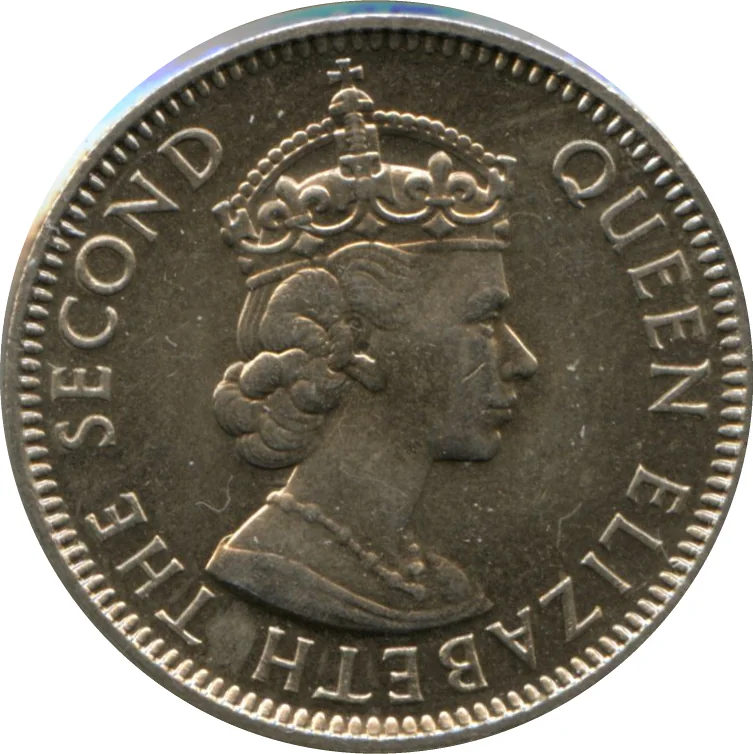
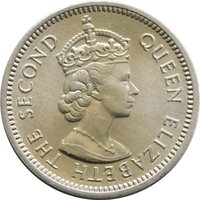
Crowned portrait of Queen Elizabeth II facing right.
Inscription:
QUEEN ELIZABETH THE SECOND
Script: Latin
Engraver: Cecil Thomas
Reverse
Description:
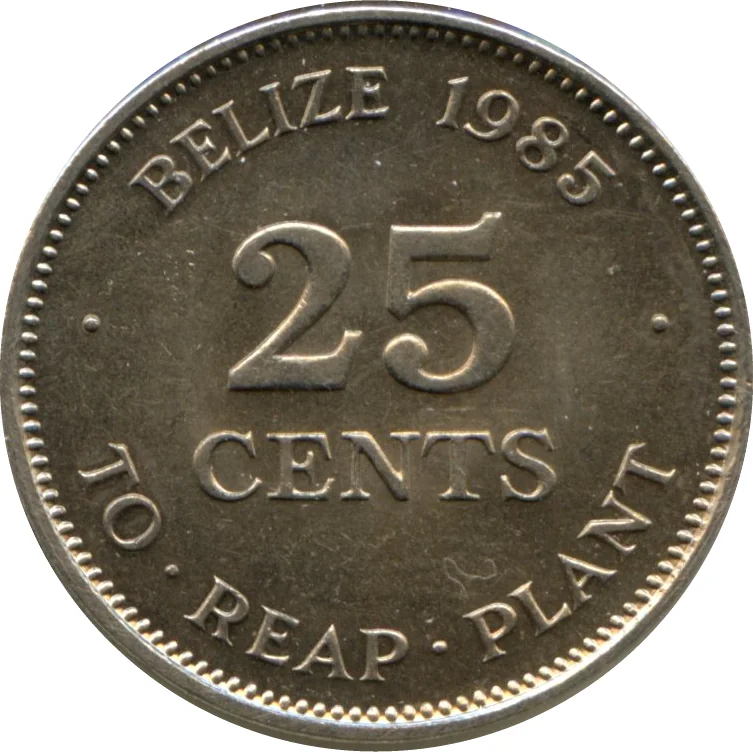
Denomination centre, legend around.
Inscription:
BELIZE 1985
· 25 ·
CENTS
TO · REAP · PLANT
· 25 ·
CENTS
TO · REAP · PLANT
Script: Latin
Edge
Reeded
Mints
| Name | Mark |
|---|---|
| Royal Mint | — |
Mintings
| Year | Mint Mark | Mintage | Quality | Collection |
|---|---|---|---|---|
| 1985 | — | — |
Historical background
In 1985, Belize was navigating a complex currency landscape as a newly independent nation, having achieved full sovereignty from the United Kingdom in 1981. The country's official currency remained the Belize dollar (BZD), which was pegged to the United States dollar at a fixed and stable rate of BZ$2 = US$1. This peg, established in 1978, provided crucial monetary stability and predictability for trade and investment, which was vital for a small, open economy heavily reliant on imports and susceptible to external shocks. The arrangement was managed by the Central Bank of Belize, which had been established just two years prior in 1982, giving the young institution a core mandate of maintaining this anchor.
The economy during this period faced significant headwinds that pressured the currency regime. Belize's key agricultural exports—sugar, citrus, and bananas—were subject to volatile global commodity prices and preferential trade agreements that were under renegotiation. Furthermore, the nation was burdened by a substantial external debt, a legacy from extensive borrowing for infrastructure development in the post-independence era. These factors strained the country's foreign exchange reserves, which were essential for defending the fixed peg. The government, led by Prime Minister Manuel Esquivel of the United Democratic Party, had to carefully balance fiscal policy to avoid a devaluation, which would have increased the cost of living and debt servicing.
Despite the economic challenges, the currency peg held firm throughout 1985, a testament to the political will to prioritize stability. The fixed exchange rate was seen as a symbol of national credibility and a deterrent against inflation. However, this came at a cost, requiring tight monetary control and limiting the central bank's ability to use exchange rate adjustments as a tool for economic competitiveness. Consequently, the period was characterized by a cautious economic policy focused on maintaining the dollar's parity, managing debt, and diversifying the export base to shore up the foreign reserves that underpinned the entire currency system.
The economy during this period faced significant headwinds that pressured the currency regime. Belize's key agricultural exports—sugar, citrus, and bananas—were subject to volatile global commodity prices and preferential trade agreements that were under renegotiation. Furthermore, the nation was burdened by a substantial external debt, a legacy from extensive borrowing for infrastructure development in the post-independence era. These factors strained the country's foreign exchange reserves, which were essential for defending the fixed peg. The government, led by Prime Minister Manuel Esquivel of the United Democratic Party, had to carefully balance fiscal policy to avoid a devaluation, which would have increased the cost of living and debt servicing.
Despite the economic challenges, the currency peg held firm throughout 1985, a testament to the political will to prioritize stability. The fixed exchange rate was seen as a symbol of national credibility and a deterrent against inflation. However, this came at a cost, requiring tight monetary control and limiting the central bank's ability to use exchange rate adjustments as a tool for economic competitiveness. Consequently, the period was characterized by a cautious economic policy focused on maintaining the dollar's parity, managing debt, and diversifying the export base to shore up the foreign reserves that underpinned the entire currency system.
🌱 Common