

5 Pounds (Arab League) – Egypt
Non-circulating coins
Commemoration: 60th Anniversary Arab League
Egypt
Context
Year: 2005
Islamic (Hijri) Year: 1426
Issuer: Egypt 
Period:
(since 1971)
Currency:
(since 1916)
Total mintage: 2,000
Material
References
KM: #Click to copy to clipboard975
Numista: #153880
Value
Exchange value: 5 EGP
Bullion value: $37.90
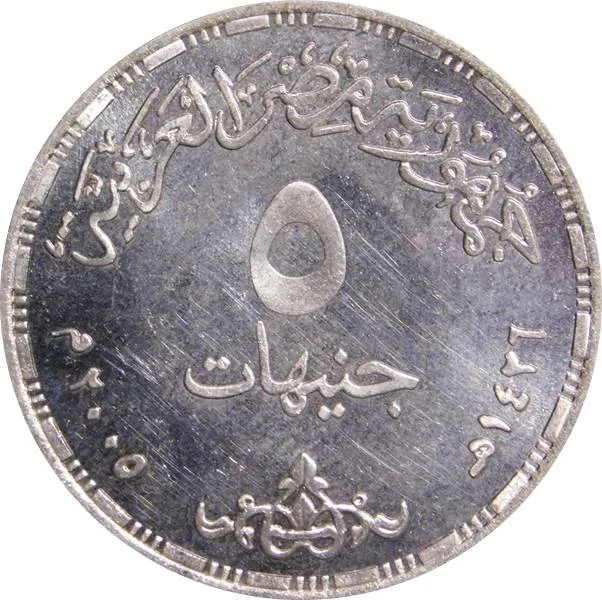
Obverse
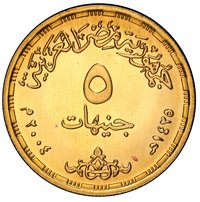
Inscription:
جمهورية مصر العربية
٥ جنيهات
١٤٢٦ ـ ٢٠٠٥
٥ جنيهات
١٤٢٦ ـ ٢٠٠٥
Translation:
Arab Republic of Egypt
5 Pounds
1426 - 2005
5 Pounds
1426 - 2005
Language: Arabic
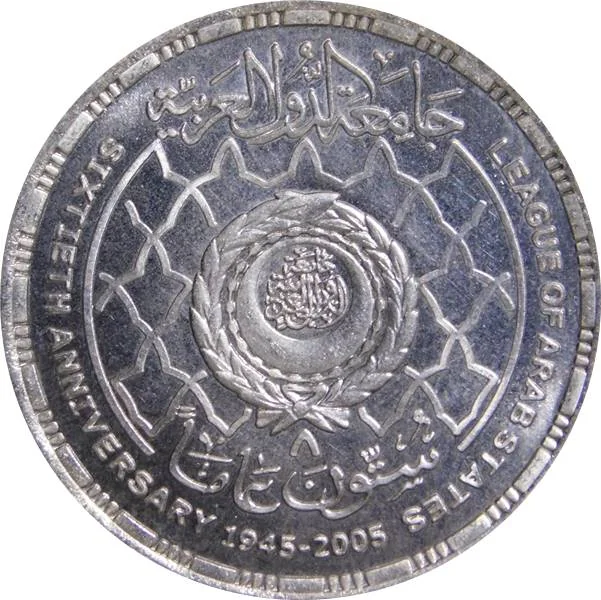
Reverse
Description:
Crescent moon enclosing text, framed by a wreath on an ornate background.
Inscription:
جامعة الدول العربية
ستون عاما
League Of Arab States
Sixtieth Anniversary
1945 - 2005
ستون عاما
League Of Arab States
Sixtieth Anniversary
1945 - 2005
Translation:
League of Arab States
Sixty Years
1945 - 2005
Sixty Years
1945 - 2005
Language: Arabic
Edge
Reeded
Mintings
| Year | Mint Mark | Mintage | Quality | Collection |
|---|---|---|---|---|
| 2005 | — | 2,000 |
Historical background
In 2005, Egypt's currency situation was defined by a protracted period of a heavily managed exchange rate for the Egyptian pound (EGP), pegged primarily to the US dollar. This policy, maintained by the Central Bank of Egypt (CBE), aimed to provide stability and control inflation but came under increasing strain. The official rate was artificially strong, while a thriving black market for dollars emerged, creating a significant and widening gap between the two rates. This disparity reflected underlying economic pressures, including a growing trade deficit, insufficient foreign direct investment, and mounting public debt, which eroded confidence in the pound's official valuation.
The government of President Hosni Mubarak, under Prime Minister Ahmed Nazif, was under mounting pressure from international institutions like the IMF and domestic business circles to move towards a more flexible exchange rate. Proponents argued that devaluation would boost exports, attract foreign investment, and eliminate the distortions of the parallel market. However, the regime was deeply cautious, fearing that a sharp devaluation would trigger social unrest by making imported goods—particularly vital subsidies like food and fuel—more expensive for a population already grappling with high unemployment and poverty rates.
Consequently, 2005 became a year of hesitant transition rather than decisive action. The CBE did allow for a very gradual and controlled depreciation of the pound within its managed band, but it fiercely defended the official rate against speculative attacks, spending billions in foreign reserves to do so. This period set the stage for a more significant shift; the pressures that built up in 2005 ultimately contributed to the CBE's decision to implement a surprise, large-scale devaluation in 2006, moving to a more flexible currency regime, albeit one that remained tightly managed in practice.
The government of President Hosni Mubarak, under Prime Minister Ahmed Nazif, was under mounting pressure from international institutions like the IMF and domestic business circles to move towards a more flexible exchange rate. Proponents argued that devaluation would boost exports, attract foreign investment, and eliminate the distortions of the parallel market. However, the regime was deeply cautious, fearing that a sharp devaluation would trigger social unrest by making imported goods—particularly vital subsidies like food and fuel—more expensive for a population already grappling with high unemployment and poverty rates.
Consequently, 2005 became a year of hesitant transition rather than decisive action. The CBE did allow for a very gradual and controlled depreciation of the pound within its managed band, but it fiercely defended the official rate against speculative attacks, spending billions in foreign reserves to do so. This period set the stage for a more significant shift; the pressures that built up in 2005 ultimately contributed to the CBE's decision to implement a surprise, large-scale devaluation in 2006, moving to a more flexible currency regime, albeit one that remained tightly managed in practice.
💎 Extremely Rare