

10 Rupees – India
Circulating commemorative coins
Commemoration: FAO - Food for All
India
Context

Material
References
KM: #Click to copy to clipboard186
Numista: #15377
Value
Exchange value: 10 INR = $0.11
Bullion value: $34.88
Inflation-adjusted value: 544.12 INR
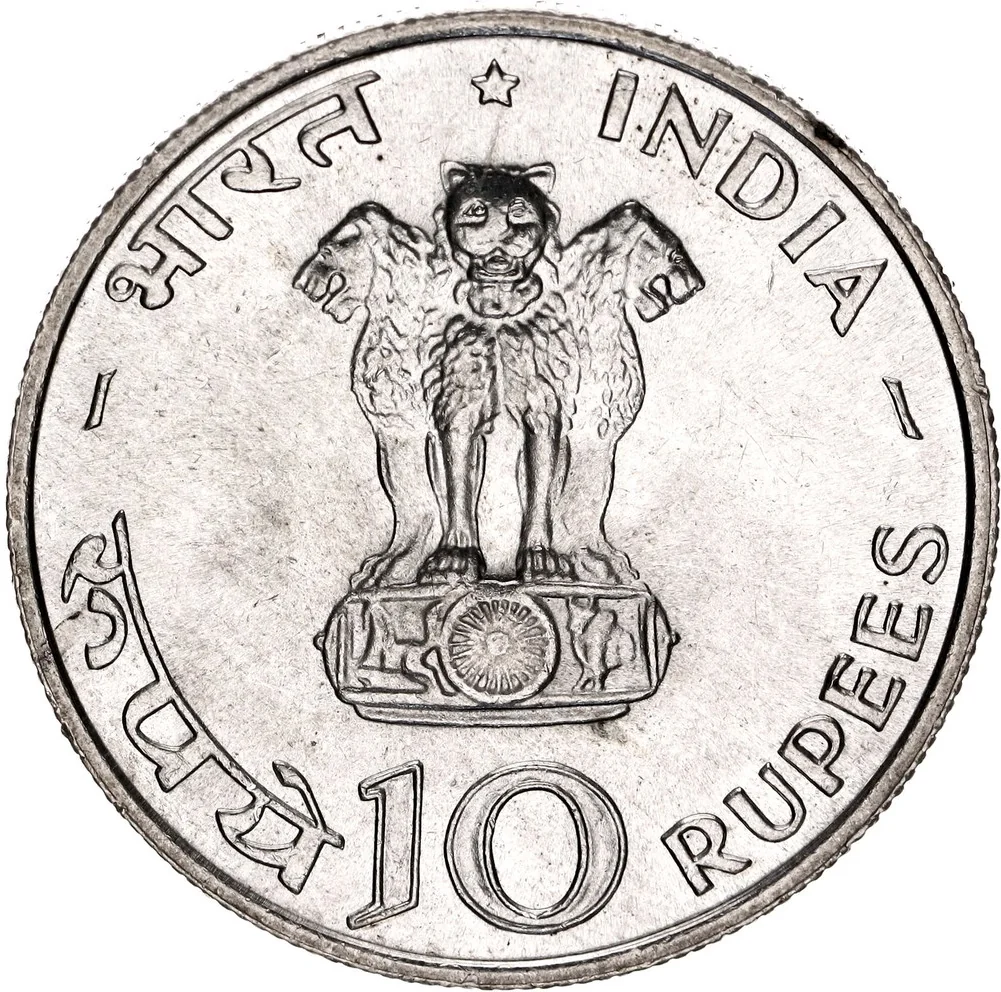
Obverse
Description:
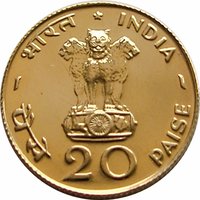
Asoka Lion with denomination.
Inscription:
भारत INDIA
रूपये 10 RUPEES
रूपये 10 RUPEES
Translation:
Ten Rupees
Scripts: Devanagari, Latin
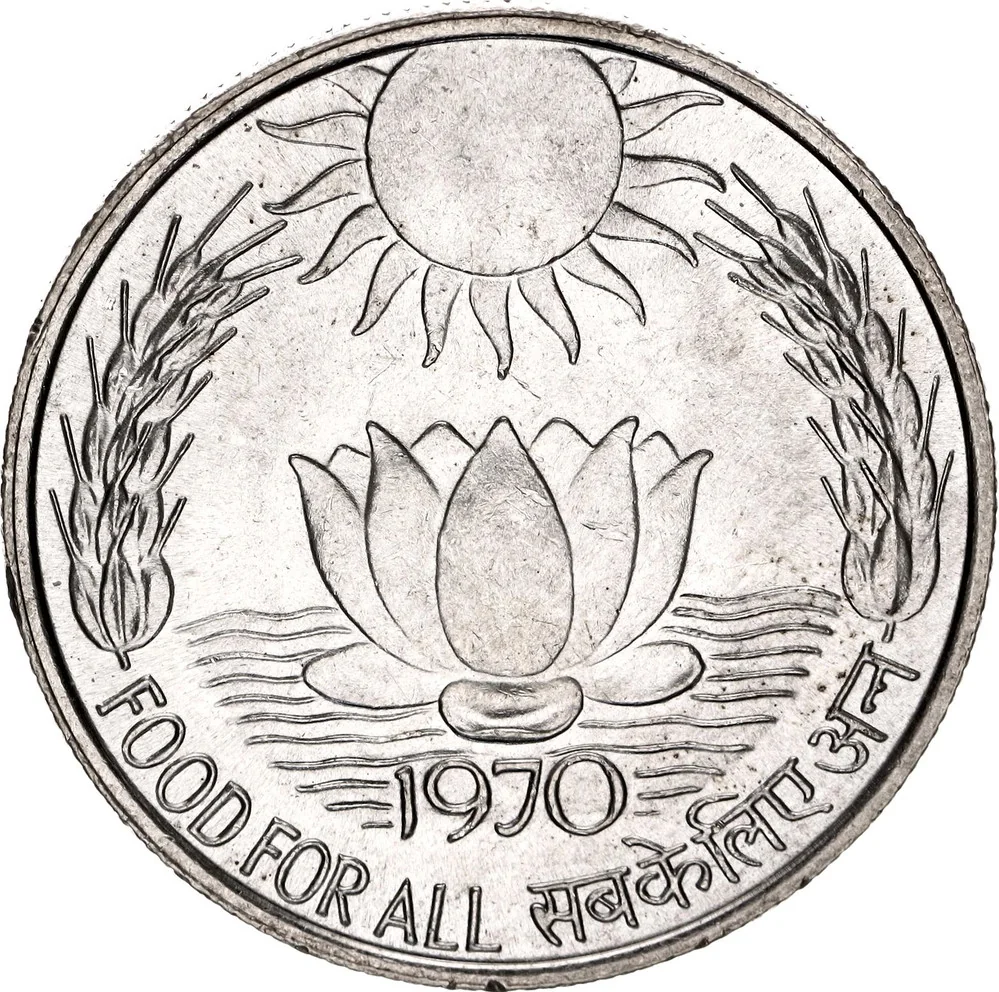
Reverse
Description:
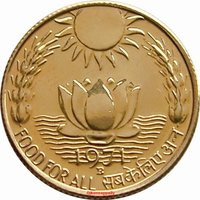
Lotus beneath sun, flanked by wheat.
Inscription:
1970
FOOD FOR ALL सब के लिए अन्न
FOOD FOR ALL सब के लिए अन्न
Translation:
FOOD FOR ALL Food For All
Scripts: Devanagari, Latin
Edge
Milled
Categories
| Organization> FAO |
Mints
| Name | Mark |
|---|---|
| Kolkata / Calcutta / Murshidabad | — |
| Mumbai / Bombay | ♦ & B |
Mintings
| Year | Mint Mark | Mintage | Quality | Collection |
|---|---|---|---|---|
| 1970 | — | 100,000 | ||
| 1970 | B | 3,046 | Proof | |
| 1970 | ♦ | — | ||
| 1971 | B | 1,594 | Proof | |
| 1971 | ♦ | — |
Historical background
In 1970, India's currency system was operating under the framework established by the Banking Regulation Act (1949) and the Reserve Bank of India Act (1934), with the Indian Rupee pegged to the British Pound Sterling as part of the Sterling Area. This fixed exchange rate system, managed by the Reserve Bank of India (RBI), provided stability but was inherently linked to the economic fortunes of the United Kingdom. The rupee's value was indirectly tied to gold via the Pound's Bretton Woods parity, a system that was showing signs of global strain. Domestically, the economy was characterized by extensive licensing (the "License Raj"), low foreign exchange reserves, and a focus on import-substitution industrialization, which placed persistent pressure on the balance of payments.
The year fell within a period of relative calm before a significant monetary upheaval. The decade had begun with a major devaluation in 1966 (from ₹4.76 to ₹7.50 per US Dollar), a move forced by chronic trade deficits and the cessation of foreign aid. By 1970, the immediate shock of that devaluation had been absorbed, but its intended benefits—boosting exports and stabilizing the economy—remained elusive due to structural constraints and insufficient follow-up reforms. Consequently, the country continued to grapple with a weak external sector, limited forex reserves, and reliance on external borrowings and aid, setting the stage for future interventions.
Thus, the currency situation in 1970 was one of precarious stability under a fixed but vulnerable regime. The underlying economic weaknesses and the mounting global pressures on the Bretton Woods system meant the peg was unsustainable in the long term. This context foreshadowed the dramatic changes of the coming years, most notably the 1971 Indo-Pakistani War, which would lead to a massive influx of refugees and economic strain, and the global collapse of the Bretton Woods system itself, prompting India to eventually delink from the Pound and shift its peg to the US Dollar by 1975.
The year fell within a period of relative calm before a significant monetary upheaval. The decade had begun with a major devaluation in 1966 (from ₹4.76 to ₹7.50 per US Dollar), a move forced by chronic trade deficits and the cessation of foreign aid. By 1970, the immediate shock of that devaluation had been absorbed, but its intended benefits—boosting exports and stabilizing the economy—remained elusive due to structural constraints and insufficient follow-up reforms. Consequently, the country continued to grapple with a weak external sector, limited forex reserves, and reliance on external borrowings and aid, setting the stage for future interventions.
Thus, the currency situation in 1970 was one of precarious stability under a fixed but vulnerable regime. The underlying economic weaknesses and the mounting global pressures on the Bretton Woods system meant the peg was unsustainable in the long term. This context foreshadowed the dramatic changes of the coming years, most notably the 1971 Indo-Pakistani War, which would lead to a massive influx of refugees and economic strain, and the global collapse of the Bretton Woods system itself, prompting India to eventually delink from the Pound and shift its peg to the US Dollar by 1975.
🌱 Common