

25 Pence – Isle of Man
Circulating commemorative coins
Commemoration: Manx Cat
Context
Year: 1975
Country: British Crown dependencies
Issuer: Isle of Man 
Ruler: Elizabeth II
Currency:
(since 1971)
Total mintage: 35,000
Material
Diameter: 38.61 mm
Weight: 28.4 g
Thickness: 3.2 mm
Shape: Round
Composition: Copper-nickel
Technique: Milled
Alignment: Medal alignment
flip
References
KM: #Click to copy to clipboard31
Numista: #15303
Value
Exchange value: 0.25 IMP
Obverse
Description:
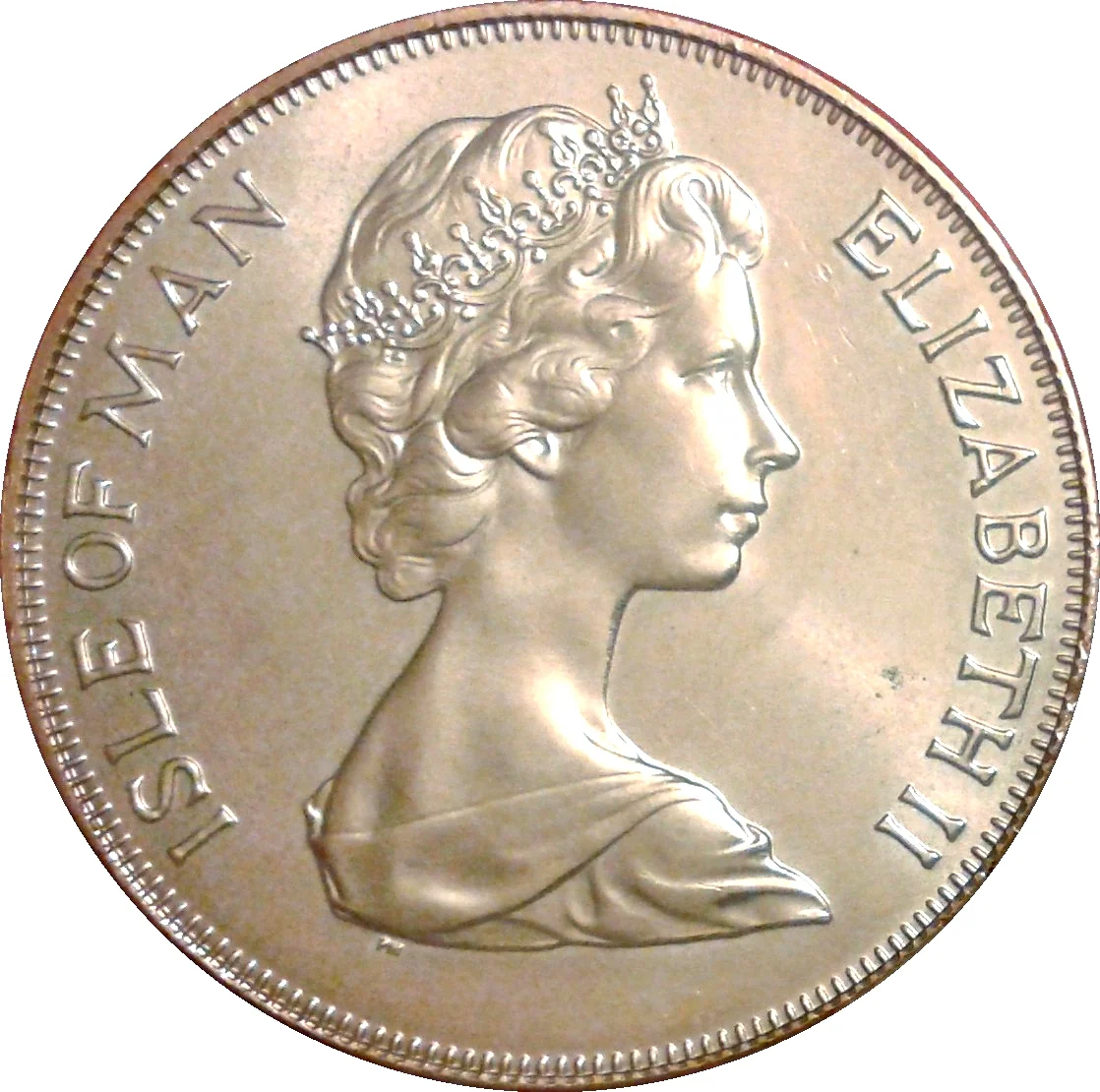
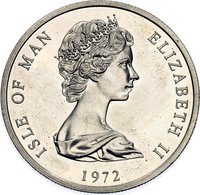
Queen Elizabeth II in right profile, wearing the Girls of Great Britain and Ireland Tiara.
Inscription:
ISLE OF MAN
ELIZABETH II
PM
ELIZABETH II
PM
Translation:
ISLE OF MAN
ELIZABETH II
PM
ELIZABETH II
PM
Script: Latin
Language: English
Engraver: Arnold Machin
Reverse
Description:
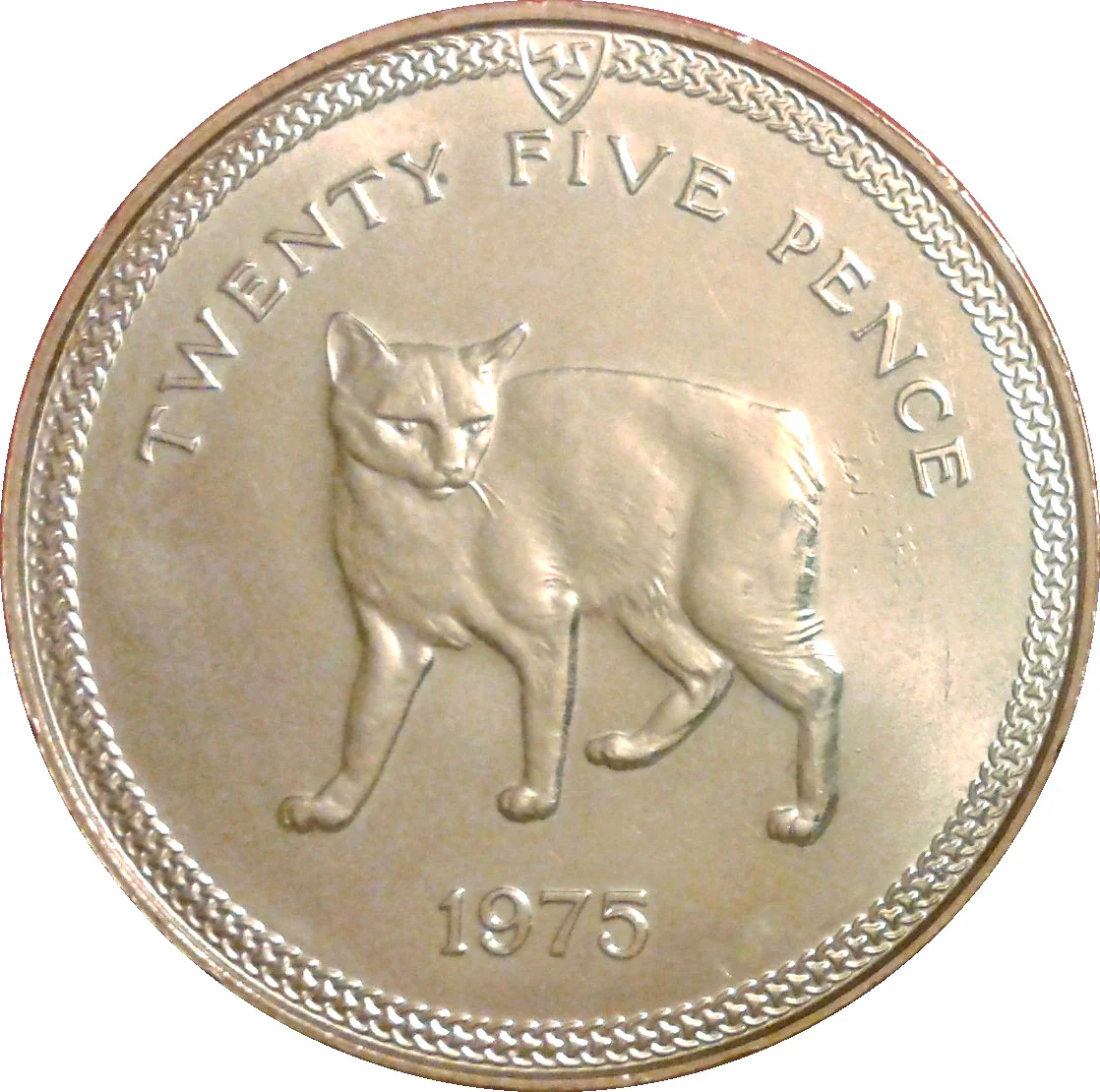
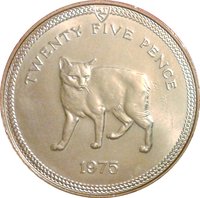
Manx cat facing left, tailless.
Inscription:
TWENTY FIVE PENCE
1975
1975
Script: Latin
Engraver: Christopher Ironside
Edge
Reeded
Categories
| Animal> Feline |
| Symbol> Triskelion |
Mints
| Name | Mark |
|---|---|
| Pobjoy Mint | PM |
Mintings
| Year | Mint Mark | Mintage | Quality | Collection |
|---|---|---|---|---|
| 1975 | PM | 35,000 |
Historical background
In 1975, the Isle of Man's currency situation was defined by its unique constitutional position as a British Crown Dependency, which granted it a significant degree of autonomy in domestic affairs, including monetary policy. While the UK pound sterling (£) was legal tender and formed the bedrock of the economy, the Isle of Man Government had long issued its own, distinct versions of sterling notes and coins. These Manx issues, bearing local symbols and inscriptions, circulated alongside UK currency at a strict 1:1 parity, but their status as legal tender was technically limited to the Island itself.
This period saw the Manx authorities actively asserting their monetary identity. The Isle of Man Treasury had been issuing its own notes since 1961, and in 1975, these were the primary paper currency in daily use on the Island. Notably, the Manx pound was not a separate currency but a local issue of sterling, fully backed by pound sterling reserves held in London. This system provided the Manx government with seigniorage revenue—the profit made from issuing currency—which was invested back into local infrastructure and services, a crucial financial benefit for the self-governing island.
The context of 1975 was one of economic transition for the Isle of Man, which was beginning to develop its offshore finance sector. A stable and credible currency arrangement was essential for this growth. The fixed link to sterling provided economic stability and certainty for trade, which was overwhelmingly with the United Kingdom. However, it also meant the Island's money was directly exposed to the UK's severe economic challenges of the mid-1970s, including high inflation and sterling's volatility on international markets. Thus, the currency situation reflected a careful balance: leveraging autonomy for local benefit while remaining securely anchored to the much larger British economy upon which it depended.
This period saw the Manx authorities actively asserting their monetary identity. The Isle of Man Treasury had been issuing its own notes since 1961, and in 1975, these were the primary paper currency in daily use on the Island. Notably, the Manx pound was not a separate currency but a local issue of sterling, fully backed by pound sterling reserves held in London. This system provided the Manx government with seigniorage revenue—the profit made from issuing currency—which was invested back into local infrastructure and services, a crucial financial benefit for the self-governing island.
The context of 1975 was one of economic transition for the Isle of Man, which was beginning to develop its offshore finance sector. A stable and credible currency arrangement was essential for this growth. The fixed link to sterling provided economic stability and certainty for trade, which was overwhelmingly with the United Kingdom. However, it also meant the Island's money was directly exposed to the UK's severe economic challenges of the mid-1970s, including high inflation and sterling's volatility on international markets. Thus, the currency situation reflected a careful balance: leveraging autonomy for local benefit while remaining securely anchored to the much larger British economy upon which it depended.
🌱 Fairly Common