

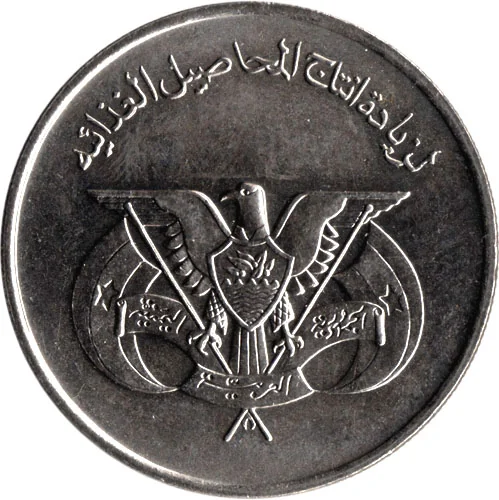
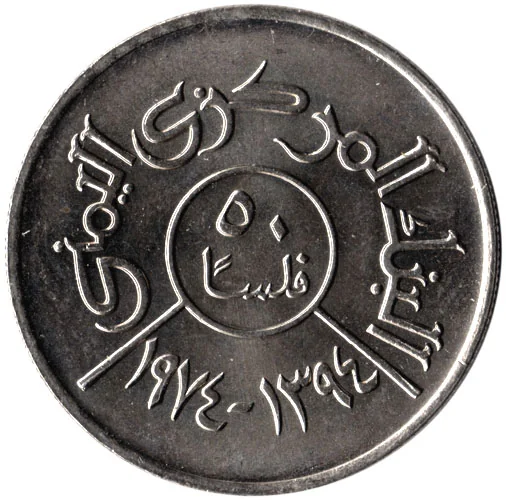
50 fils – North Yemen
Add to wishlist
Non-circulating coins
Commemoration: FAO
Yemen
Context
Year: 1974
Islamic (Hijri) Year:: 1394
Country: Yemen
Issuer: North Yemen
Period:
(1962—1990)
Currency:
(1974—1990)
Demonetized: Yes
Total mintage: 25,000
Material
References
Y: #
Numista: #15298
Value
Exchange value: 0.50 YER
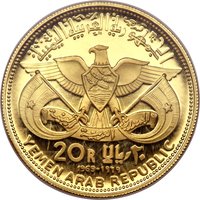
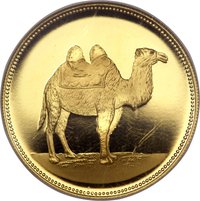
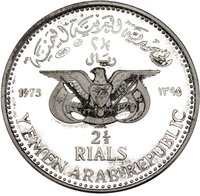
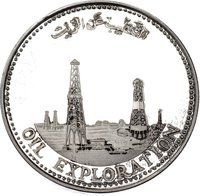
Obverse
Reverse
Edge
Plain
Categories
| Animal> Bird> Eagle |
| Symbol> Flag |
| Organization> FAO |
| Symbols> Coat of Arms |
Mints
| Name | Mark |
|---|---|
| Royal Mint | — |
Mintings
| Year | Mint Mark | Mintage | Quality | Collection |
|---|---|---|---|---|
| 1974 | — | 25,000 |
Historical background
In 1974, the Yemen Arab Republic (North Yemen) was grappling with a complex and unstable currency situation rooted in its fragmented economic history. The country lacked a unified national currency; instead, multiple forms of money circulated simultaneously. The primary official currency was the Yemeni Riyal (YRI), but it competed in circulation with the older Maria Theresa Thaler (a silver coin) and, significantly, the Saudi Riyal. This multiplicity reflected deep tribal autonomy, a cash-based traditional economy, and heavy dependence on financial links with Saudi Arabia, which provided crucial budgetary support and employed a large number of Yemeni migrant workers whose remittances were often sent home in foreign currency.
The economy was overwhelmingly dependent on external sources of income, making it highly vulnerable. Remittances from hundreds of thousands of Yemenis working in Saudi Arabia and the Gulf states constituted the largest inflow of foreign exchange, dwarfing earnings from modest agricultural exports like coffee. Furthermore, the state itself relied on foreign aid, particularly from Saudi Arabia, to cover its budget deficits. This reliance meant that the value and stability of the domestic currency were indirectly pegged to external economic conditions and the policies of benefactor states, rather than being managed by a strong central monetary authority.
President Ibrahim al-Hamdi, who came to power in a bloodless coup in June 1974, identified this chaotic monetary system as a major obstacle to modernization and state consolidation. His government recognized that currency unification and control were essential for asserting central authority, enabling effective economic planning, and reducing dependence. While comprehensive reform would take years to implement, the situation in 1974 set the stage for al-Hamdi’s subsequent efforts to strengthen central banking institutions, which culminated in the establishment of the Central Bank of Yemen in 1975 as a critical first step toward creating a sovereign and managed monetary system.
The economy was overwhelmingly dependent on external sources of income, making it highly vulnerable. Remittances from hundreds of thousands of Yemenis working in Saudi Arabia and the Gulf states constituted the largest inflow of foreign exchange, dwarfing earnings from modest agricultural exports like coffee. Furthermore, the state itself relied on foreign aid, particularly from Saudi Arabia, to cover its budget deficits. This reliance meant that the value and stability of the domestic currency were indirectly pegged to external economic conditions and the policies of benefactor states, rather than being managed by a strong central monetary authority.
President Ibrahim al-Hamdi, who came to power in a bloodless coup in June 1974, identified this chaotic monetary system as a major obstacle to modernization and state consolidation. His government recognized that currency unification and control were essential for asserting central authority, enabling effective economic planning, and reducing dependence. While comprehensive reform would take years to implement, the situation in 1974 set the stage for al-Hamdi’s subsequent efforts to strengthen central banking institutions, which culminated in the establishment of the Central Bank of Yemen in 1975 as a critical first step toward creating a sovereign and managed monetary system.
🌱 Fairly Common