

1 dollar – Barbados
Add to wishlist
Barbados
Context
Material
Diameter: 25.9 mm
Weight: 5.5 g
Shape: Equilateral curve heptagon
Magnetic: Yes
Technique: Milled
Alignment: Medal alignment
flip
References
KM: #
Numista: #152898
Value
Exchange value: 1 BBD
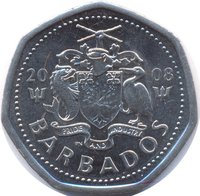
Obverse
Description:
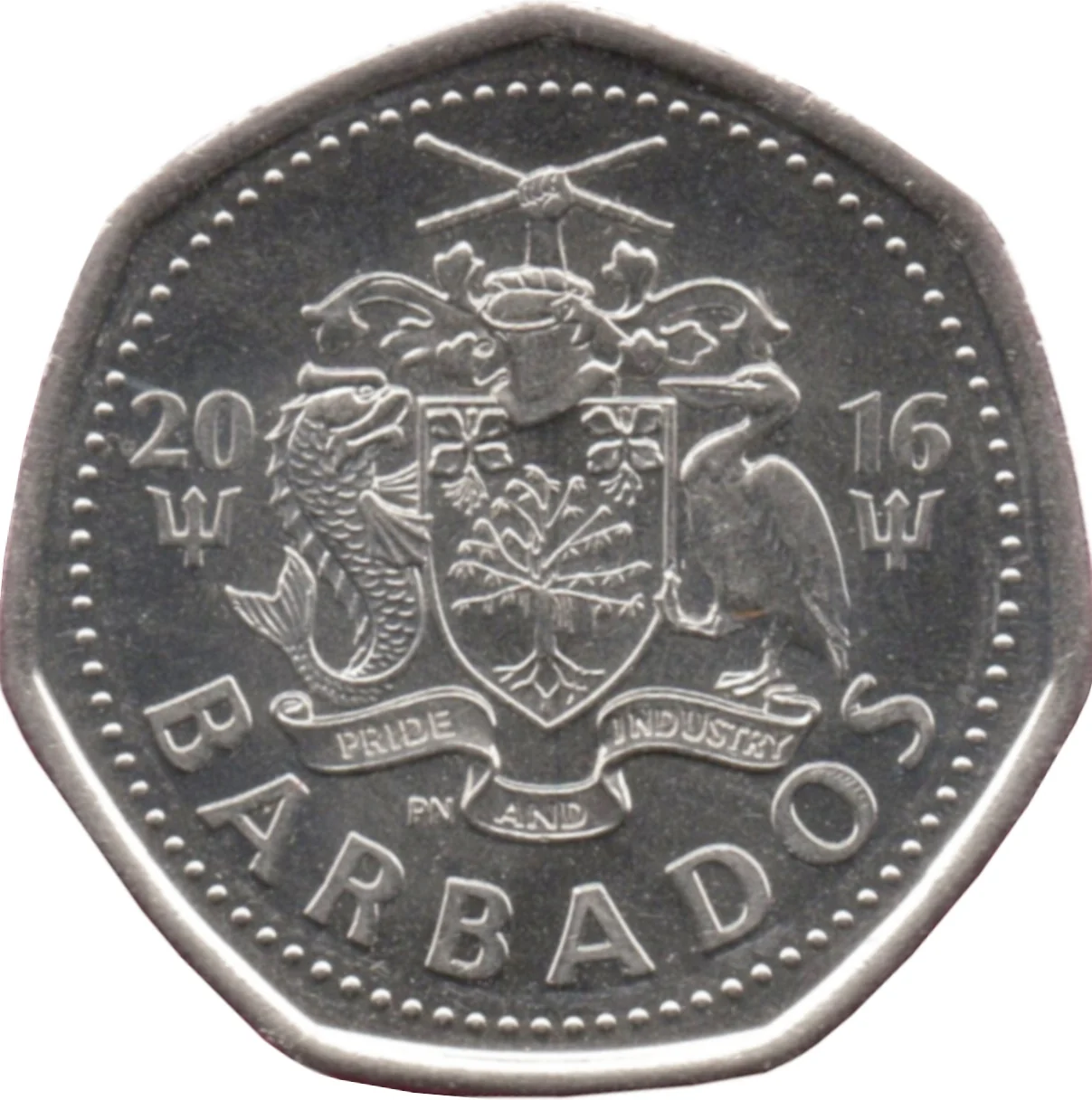
Barbados coat of arms with flanking date, tridents above, and country name below.
Inscription:
20 16
PRIDE AND INDUSTRY
PN
BARBADOS
PRIDE AND INDUSTRY
PN
BARBADOS
Translation:
PRIDE AND INDUSTRY
PN
BARBADOS
PN
BARBADOS
Script: Latin
Language: English
Designer: Philip Nathan
Reverse
Edge
Plain
Categories
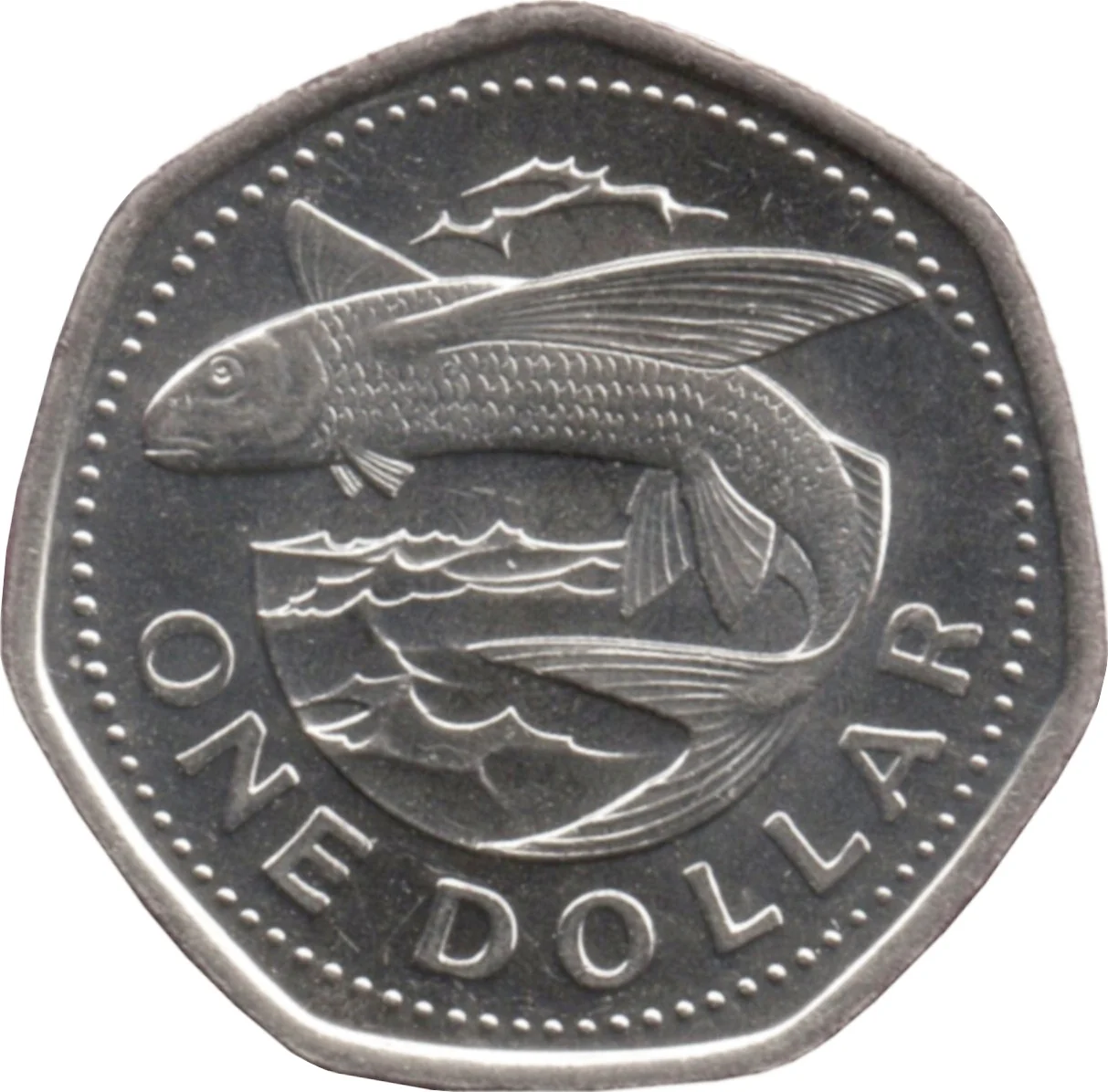
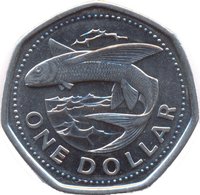
| Animal> Fish |
| Symbols> Coat of Arms |
Mints
| Name | Mark |
|---|---|
| Royal Canadian Mint of Winnipeg | — |
Mintings
| Year | Mint Mark | Mintage | Quality | Collection |
|---|---|---|---|---|
| 2012 | — | — | ||
| 2015 | — | — | ||
| 2016 | — | — | ||
| 2017 | — | — | ||
| 2018 | — | — | ||
| 2020 | — | — | ||
| 2022 | — | — |
Historical background
In 2012, Barbados was grappling with a persistent and concerning currency situation, defined by a fixed exchange rate regime under significant strain. The Barbadian dollar (BBD) had been pegged to the US dollar at a rate of 2:1 since 1975, a cornerstone of the country's economic stability and a key factor in its thriving tourism sector. However, by 2012, maintaining this peg was becoming increasingly costly. The country was facing chronic fiscal deficits, declining foreign exchange reserves, and low productivity, which collectively fueled market anxieties about the sustainability of the peg.
The core issue was a balance of payments crisis. Barbados was importing far more than it exported, leading to a steady drain on its foreign currency reserves, which are essential for defending the fixed rate. These reserves had fallen to precariously low levels, covering only a few months of imports. This decline was exacerbated by the lingering effects of the 2008-09 global financial crisis, which had hit tourism and foreign investment—the island's primary sources of foreign exchange—hard. Consequently, international credit rating agencies downgraded Barbados' sovereign debt, raising borrowing costs and further eroding confidence.
Despite the mounting pressure, the government of Prime Minister Freundel Stuart remained unequivocally committed to maintaining the peg in 2012, viewing it as a non-negotiable pillar of economic and social stability. The administration opted for a strategy of "fiscal adjustment" rather than devaluation, implementing austerity measures including tax increases and cuts to public spending to reduce the budget deficit and slow the reserve depletion. This set the stage for a prolonged period of economic challenge, as the fundamental imbalances were addressed through painful domestic contraction rather than an exchange rate adjustment.
The core issue was a balance of payments crisis. Barbados was importing far more than it exported, leading to a steady drain on its foreign currency reserves, which are essential for defending the fixed rate. These reserves had fallen to precariously low levels, covering only a few months of imports. This decline was exacerbated by the lingering effects of the 2008-09 global financial crisis, which had hit tourism and foreign investment—the island's primary sources of foreign exchange—hard. Consequently, international credit rating agencies downgraded Barbados' sovereign debt, raising borrowing costs and further eroding confidence.
Despite the mounting pressure, the government of Prime Minister Freundel Stuart remained unequivocally committed to maintaining the peg in 2012, viewing it as a non-negotiable pillar of economic and social stability. The administration opted for a strategy of "fiscal adjustment" rather than devaluation, implementing austerity measures including tax increases and cuts to public spending to reduce the budget deficit and slow the reserve depletion. This set the stage for a prolonged period of economic challenge, as the fundamental imbalances were addressed through painful domestic contraction rather than an exchange rate adjustment.
🌱 Common