

1 Rupee – India
Circulating commemorative coins
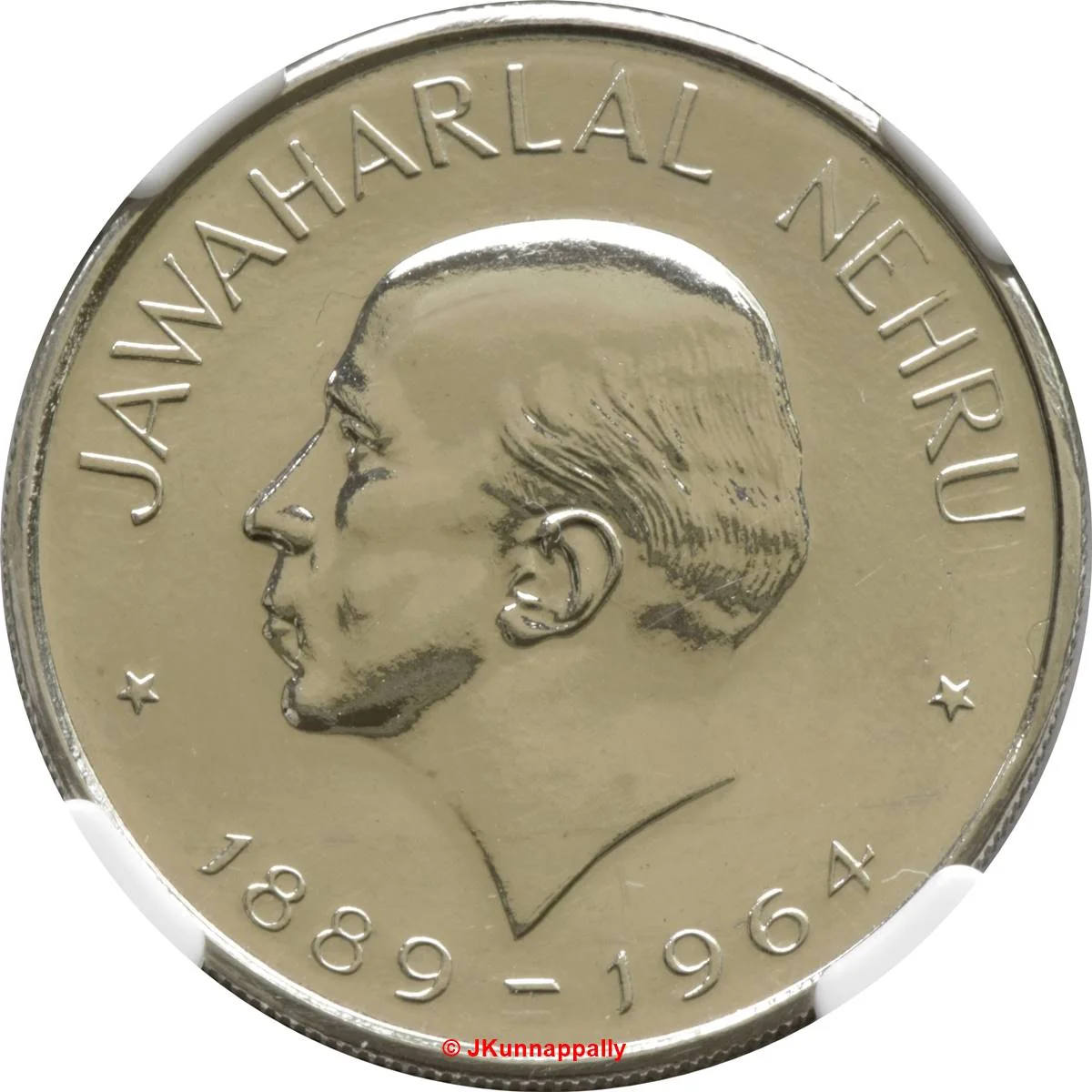
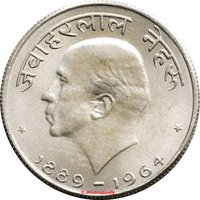
Commemoration: Death of Jawaharlal Nehru
India
Context

Material
References
KM: #Click to copy to clipboard76
Numista: #15275
Value
Exchange value: 1 INR = $0.01
Inflation-adjusted value: 86.82 INR
Obverse
Description:
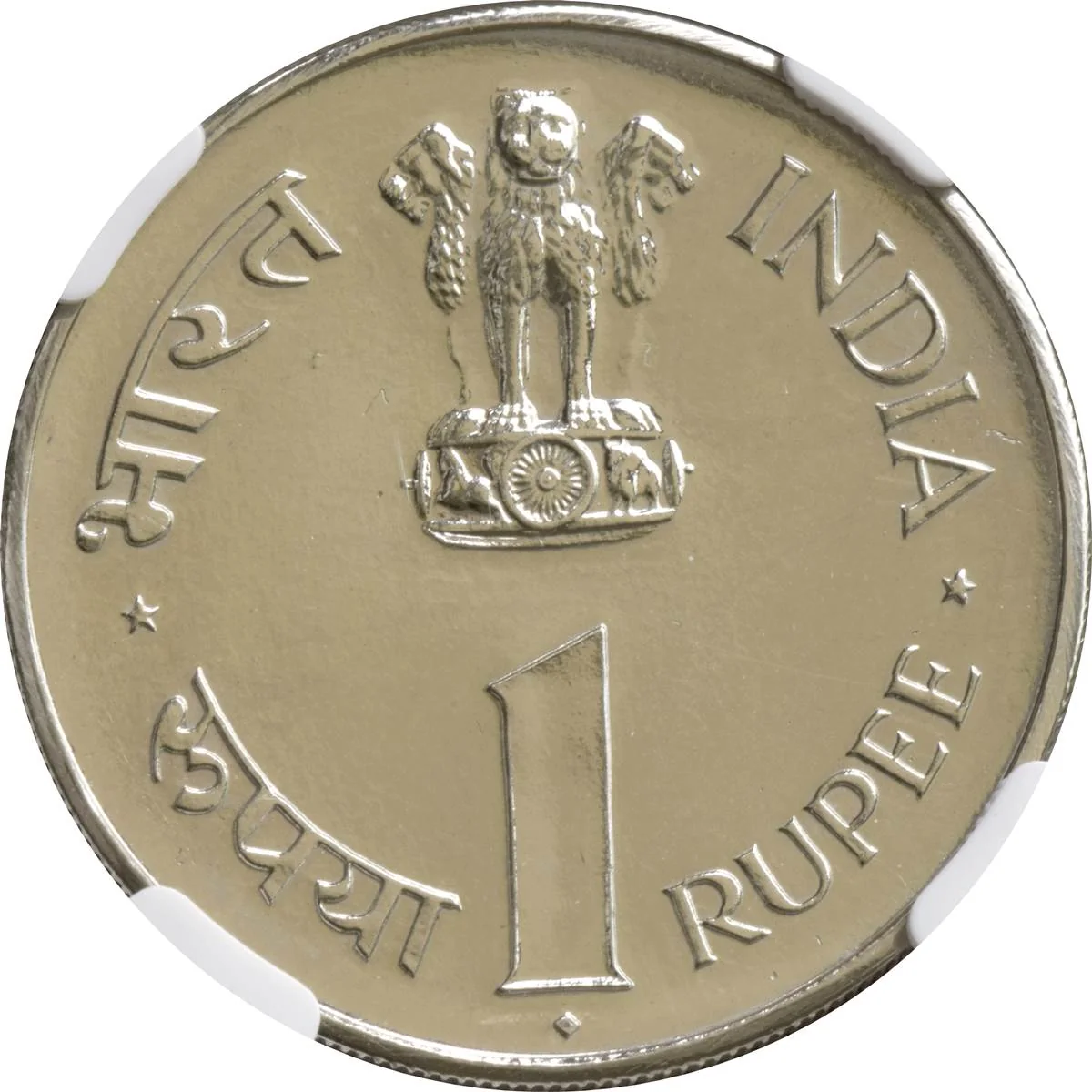
Ashoka pillar with lion capital, denomination beneath.
Inscription:
भारत INDIA
रुपया 1 RUPEE
रुपया 1 RUPEE
Translation:
INDIA RUPEE 1 RUPEE
Scripts: Devanagari, Latin
Reverse
Edge
Security
Categories
| Person> Politician |
Mints
| Name | Mark |
|---|---|
| Kolkata / Calcutta / Murshidabad | — |
| Mumbai / Bombay | ♦ & B |
Mintings
| Year | Mint Mark | Mintage | Quality | Collection |
|---|---|---|---|---|
| 1964 | ♦ | 9,147 | Proof | |
| 1964 | — | 6,690,000 | ||
| 1964 | ♦ | 5,180,000 |
Historical background
In 1964, India's currency situation was characterized by a managed fixed exchange rate system under the Bretton Woods framework, with the Indian Rupee pegged to the British Pound Sterling at a rate of ₹13.33 = £1. This indirect peg to gold via the Pound provided stability but was increasingly under strain. The period followed the 1962 Sino-Indian War and preceded the major conflict with Pakistan in 1965, with defense expenditures rising sharply. Furthermore, the Third Five-Year Plan (1961-66) was placing heavy demands on foreign exchange reserves to fund industrialization and imports, leading to a growing balance of payments deficit.
Internally, the economy was grappling with inflationary pressures, partly due to successive monsoon failures in 1964 and 1965, which impacted agricultural output and drove up food prices. The government, led by Prime Minister Lal Bahadur Shastri, faced the difficult task of managing scarce foreign exchange reserves while trying to maintain essential imports and development goals. While the rupee's external value remained officially stable, the underlying economic vulnerabilities were mounting, setting the stage for future devaluations.
Thus, 1964 represented a precarious calm before a storm. The currency regime appeared stable on the surface, but the pressures of war, drought, planned industrialization, and a widening trade gap were eroding the foundations of that stability. The situation would culminate just two years later in the significant devaluation of the rupee in June 1966, when its value was sharply reduced by 36.5% against the US Dollar as a condition for aid from the International Monetary Fund and the World Bank.
Internally, the economy was grappling with inflationary pressures, partly due to successive monsoon failures in 1964 and 1965, which impacted agricultural output and drove up food prices. The government, led by Prime Minister Lal Bahadur Shastri, faced the difficult task of managing scarce foreign exchange reserves while trying to maintain essential imports and development goals. While the rupee's external value remained officially stable, the underlying economic vulnerabilities were mounting, setting the stage for future devaluations.
Thus, 1964 represented a precarious calm before a storm. The currency regime appeared stable on the surface, but the pressures of war, drought, planned industrialization, and a widening trade gap were eroding the foundations of that stability. The situation would culminate just two years later in the significant devaluation of the rupee in June 1966, when its value was sharply reduced by 36.5% against the US Dollar as a condition for aid from the International Monetary Fund and the World Bank.
🌱 Very Common