

1 Att – Thailand
Thailand
Context
Year: 1862
Issuer: Thailand 
Ruler: Phra Chom Klao
Currency:
(1869—1897)
Subdivision: 1 Att = ⅛ Fuang = 1⁄64 Baht
Demonetized: Yes
Material
References
Y: #Click to copy to clipboard6
Numista: #15256
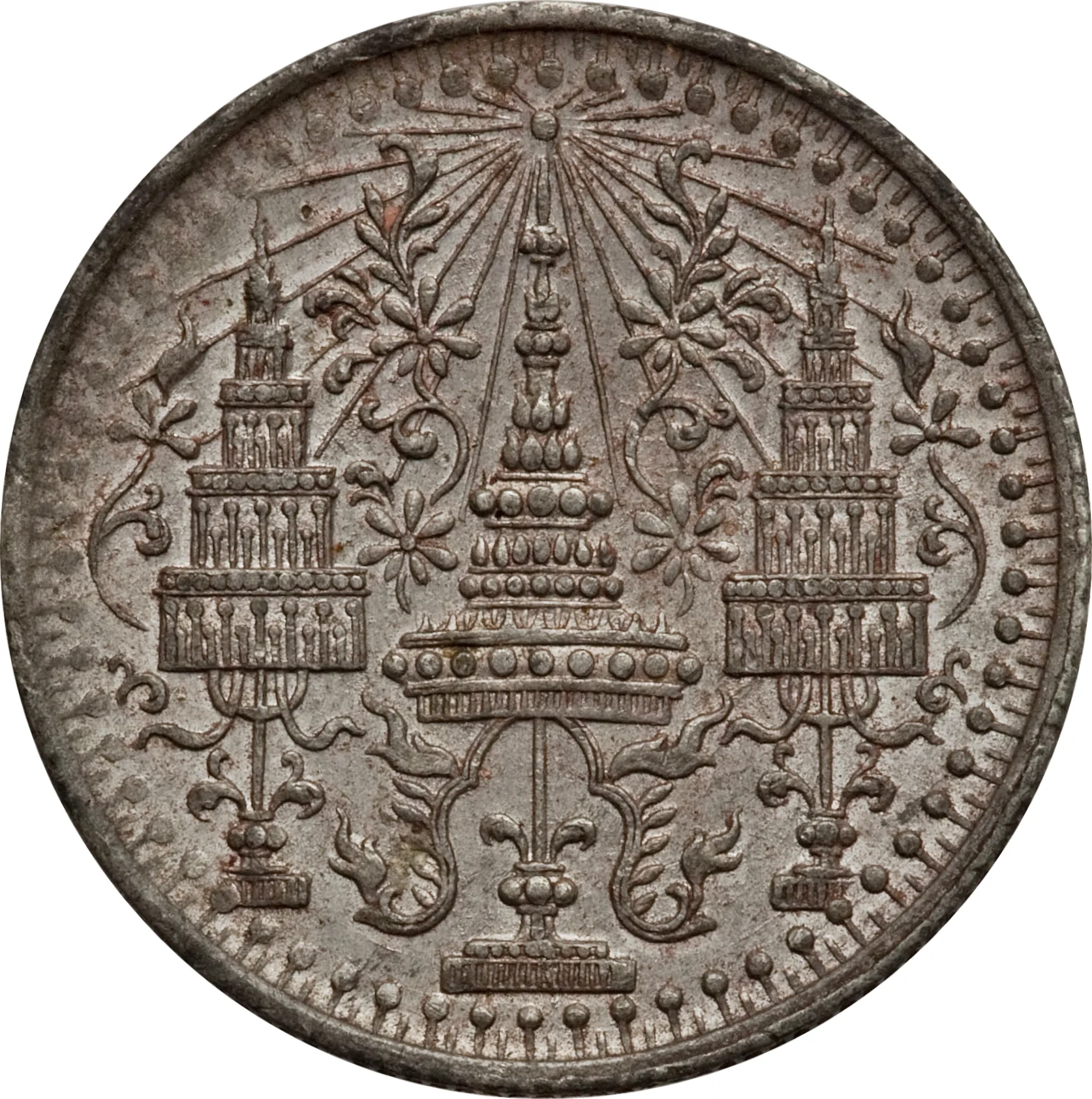
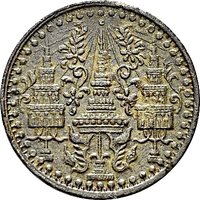
Obverse
Description:
Crowned by two umbrellas.
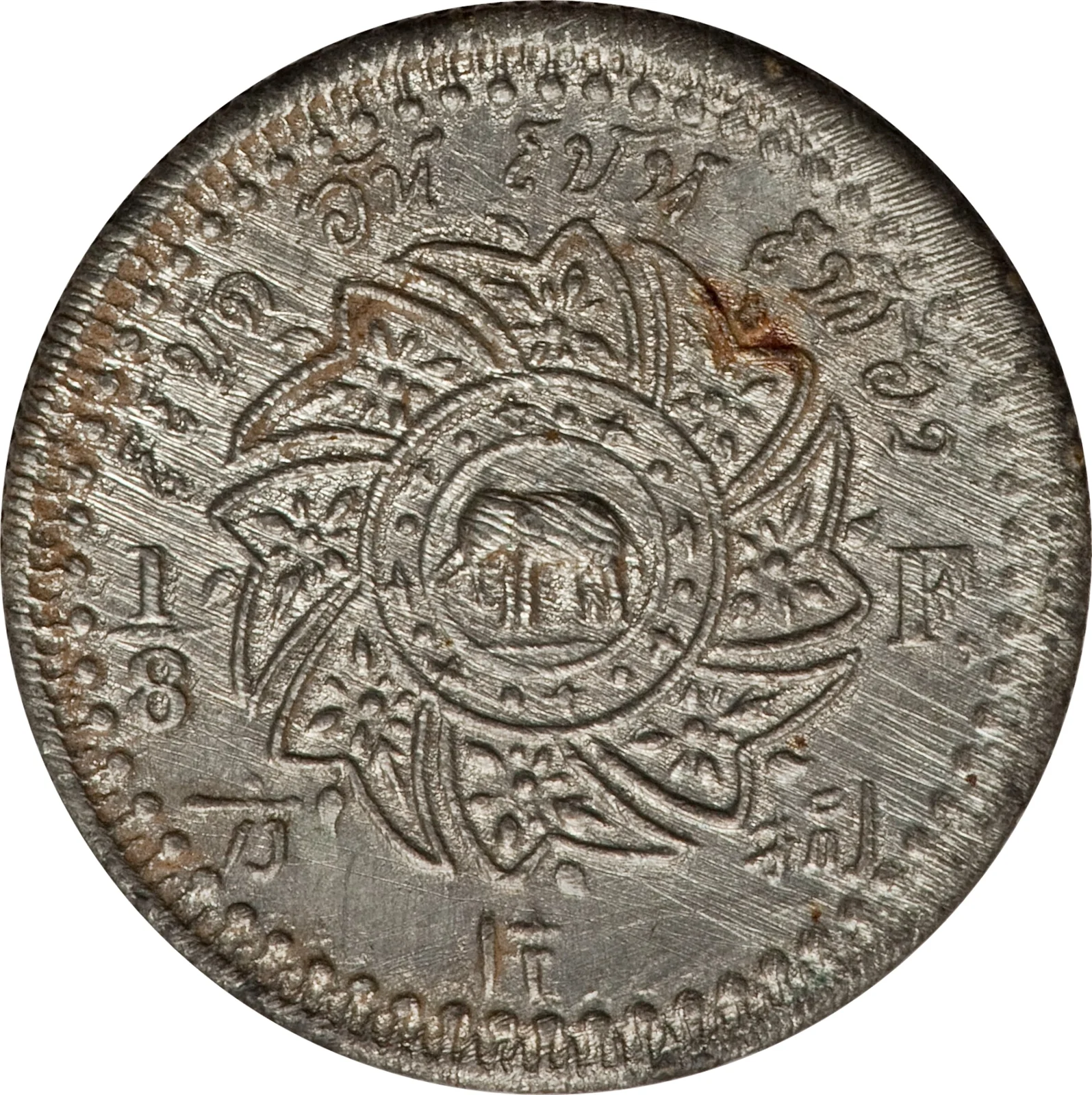
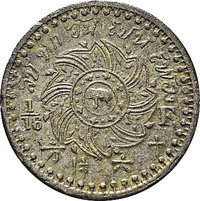
Reverse
Edge
Reeded
Mintings
| Year | Mint Mark | Mintage | Quality | Collection |
|---|---|---|---|---|
| 1862 | — | — |
Historical background
In 1862, the currency situation in Siam (modern-day Thailand) was a complex and fragmented system, reflecting a pre-modern economy in transition. The kingdom operated without a unified national coinage. Instead, the primary medium of exchange was the bullet coin, known as phot duang—handmade, silver pieces shaped like bent rods or grains, stamped with royal and merchant symbols to guarantee purity. Their value was determined by weight in the traditional unit of baht (a unit of mass, approximately 15 grams), leading to cumbersome transactions that required constant cutting and weighing. Alongside this, foreign silver coins, particularly Mexican Dollars and Indian Rupees, circulated heavily in port cities like Bangkok due to thriving international trade, creating a dual monetary system.
This fragmentation posed significant challenges to both commerce and royal authority. King Mongkut (Rama IV, reigned 1851-1868) recognized that the archaic system hindered economic modernization and Siam’s integration into the global economy. The 1855 Bowring Treaty with Britain had dramatically increased foreign trade, intensifying the demand for a more standardized and convenient currency. By 1862, the King and his advisors were actively laying the groundwork for monetary reform, studying Western minting techniques and foreign coinage, though the actual minting of flat, machine-struck coins was still a few years away.
Therefore, 1862 represents a pivotal moment just before a major transformation. It was the twilight of the centuries-old phot duang system, existing uneasily alongside foreign coinage. The royal court was in a deliberate planning phase, moving toward the landmark introduction of a decimalized, flat coinage system. This reform would culminate in the reign of King Chulalongkorn, with the first modern Thai coins minted in the 1860s, formally establishing the baht as a decimal currency unit and setting the stage for the modern financial system.
This fragmentation posed significant challenges to both commerce and royal authority. King Mongkut (Rama IV, reigned 1851-1868) recognized that the archaic system hindered economic modernization and Siam’s integration into the global economy. The 1855 Bowring Treaty with Britain had dramatically increased foreign trade, intensifying the demand for a more standardized and convenient currency. By 1862, the King and his advisors were actively laying the groundwork for monetary reform, studying Western minting techniques and foreign coinage, though the actual minting of flat, machine-struck coins was still a few years away.
Therefore, 1862 represents a pivotal moment just before a major transformation. It was the twilight of the centuries-old phot duang system, existing uneasily alongside foreign coinage. The royal court was in a deliberate planning phase, moving toward the landmark introduction of a decimalized, flat coinage system. This reform would culminate in the reign of King Chulalongkorn, with the first modern Thai coins minted in the 1860s, formally establishing the baht as a decimal currency unit and setting the stage for the modern financial system.
🌟 Limited