

30 euro (End of the First World War) – Slovenia
Add to wishlist
Non-circulating coins
Commemoration: 100th anniversary of the End of the First World War
Slovenia
Context
Material
References
KM: #
Numista: #152294
Value
Exchange value: 30 EUR
Bullion value: $33.77
Inflation-adjusted value: 39.27 EUR
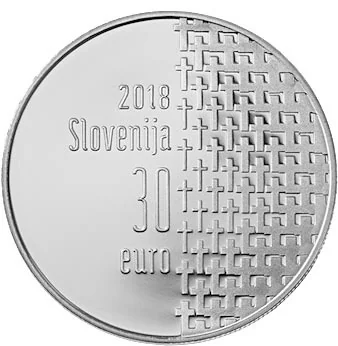
Obverse
Inscription:
2018
Slovenija
30
euro
Slovenija
30
euro
Translation:
2018
Slovenia
30
euro
Slovenia
30
euro
Script: Latin
Designer: Robert Žvokelj
Reverse
Description:
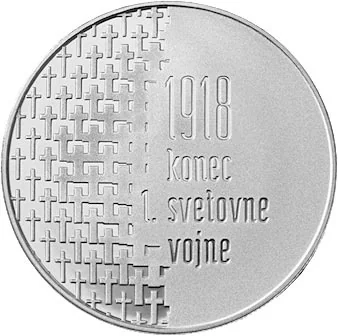
Slovenia issues these coins on the war's 100th anniversary to honor all victims and promote peace. The cross mesh symbolizes military and civilian lives lost. Their increasing density represents the unimaginable number of victims, and their vertical end marks "1918 – end of the First World War."
Inscription:
1918
konec
1. svetovne
vojne
konec
1. svetovne
vojne
Translation:
1918
End
of the World
War 1
End
of the World
War 1
Script: Latin
Language: Slovenian
Designer: Robert Žvokelj
Edge
Mints
| Name | Mark |
|---|---|
| Rome | — |
Mintings
| Year | Mint Mark | Mintage | Quality | Collection |
|---|---|---|---|---|
| 2018 | — | 1,500 | Proof |
Historical background
In 2018, Slovenia was a stable member of the Eurozone, having adopted the euro as its sole legal tender on 1 January 2007. Therefore, the country did not have an independent "currency situation" in the traditional sense, as its monetary policy was set by the European Central Bank (ECB) in Frankfurt. The year was characterized by macroeconomic stability, with low inflation averaging around 1.8% and sustained economic growth, which was projected at nearly 5% for the year—one of the highest rates in the Eurozone. This growth was driven by strong exports, increased domestic consumption, and a surge in investment.
The primary financial discussions within Slovenia in 2018 revolved not around currency but around fiscal policy and banking sector stability. The government, led by Prime Minister Miro Cerar, focused on further repairing public finances after the 2013 banking crisis, maintaining a budget surplus, and reducing public debt. A significant milestone was the successful completion of the sale of the state’s remaining stake in the country’s largest bank, Nova Ljubljanska Banka (NLB), in November 2018. This move was closely watched by international markets and European institutions as a sign of continued commitment to financial stability and reform.
From a broader Eurozone perspective, Slovenia benefited from the ECB’s accommodative monetary policy, which kept interest rates at historic lows. This environment supported affordable credit for businesses and households. The main challenges related to currency were external, shared by all Eurozone members: managing the effects of a relatively strong euro on export competitiveness and navigating broader geopolitical and trade uncertainties. Domestically, the euro provided a framework of monetary stability, allowing national economic policy to focus on structural reforms and fiscal management rather than exchange rate concerns.
The primary financial discussions within Slovenia in 2018 revolved not around currency but around fiscal policy and banking sector stability. The government, led by Prime Minister Miro Cerar, focused on further repairing public finances after the 2013 banking crisis, maintaining a budget surplus, and reducing public debt. A significant milestone was the successful completion of the sale of the state’s remaining stake in the country’s largest bank, Nova Ljubljanska Banka (NLB), in November 2018. This move was closely watched by international markets and European institutions as a sign of continued commitment to financial stability and reform.
From a broader Eurozone perspective, Slovenia benefited from the ECB’s accommodative monetary policy, which kept interest rates at historic lows. This environment supported affordable credit for businesses and households. The main challenges related to currency were external, shared by all Eurozone members: managing the effects of a relatively strong euro on export competitiveness and navigating broader geopolitical and trade uncertainties. Domestically, the euro provided a framework of monetary stability, allowing national economic policy to focus on structural reforms and fiscal management rather than exchange rate concerns.

💎 Extremely Rare