

1000 kroner (Queen Margrethe II) – Denmark
Add to wishlist
Non-circulating coins
Commemoration: 70th Birthday of Queen Margrethe II
Denmark
Context
Material
References
KM: #
Numista: #152000
Value
Exchange value: 1000 DKK
Bullion value: $1193.42
Inflation-adjusted value: 1305.65 DKK
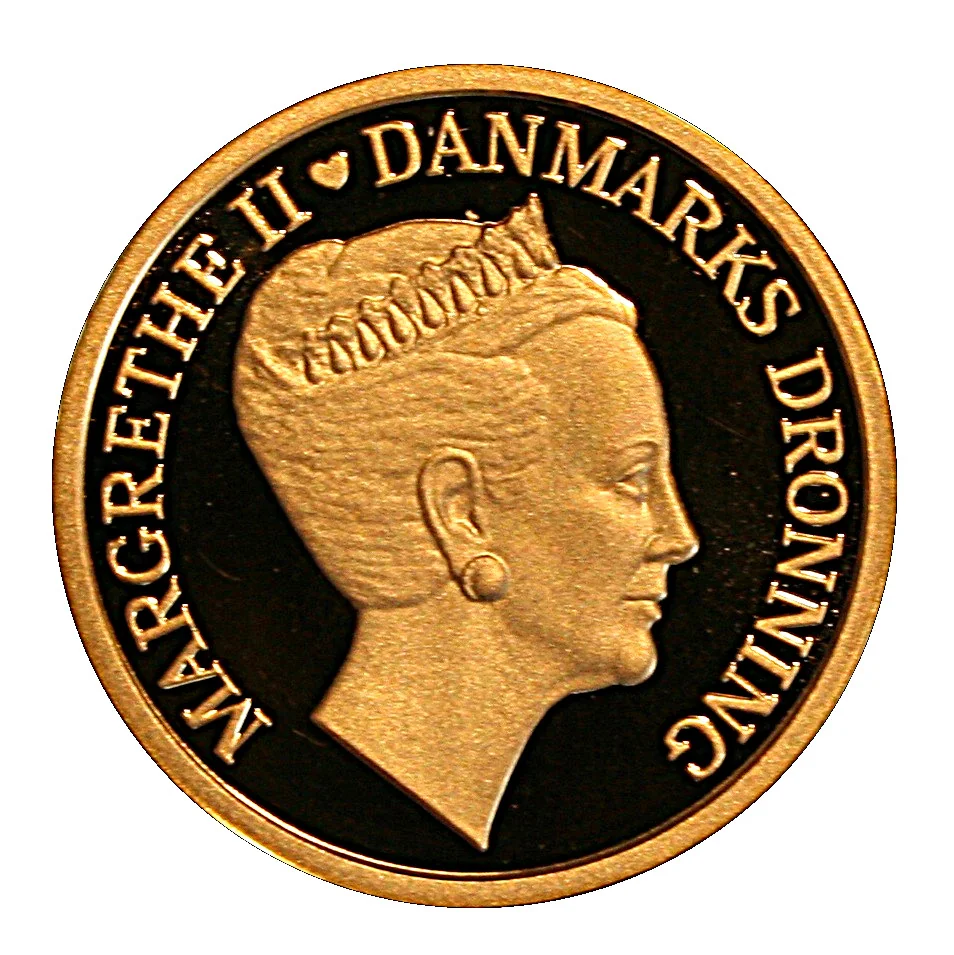
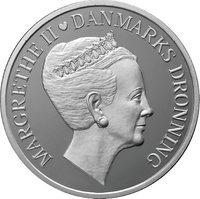
Obverse
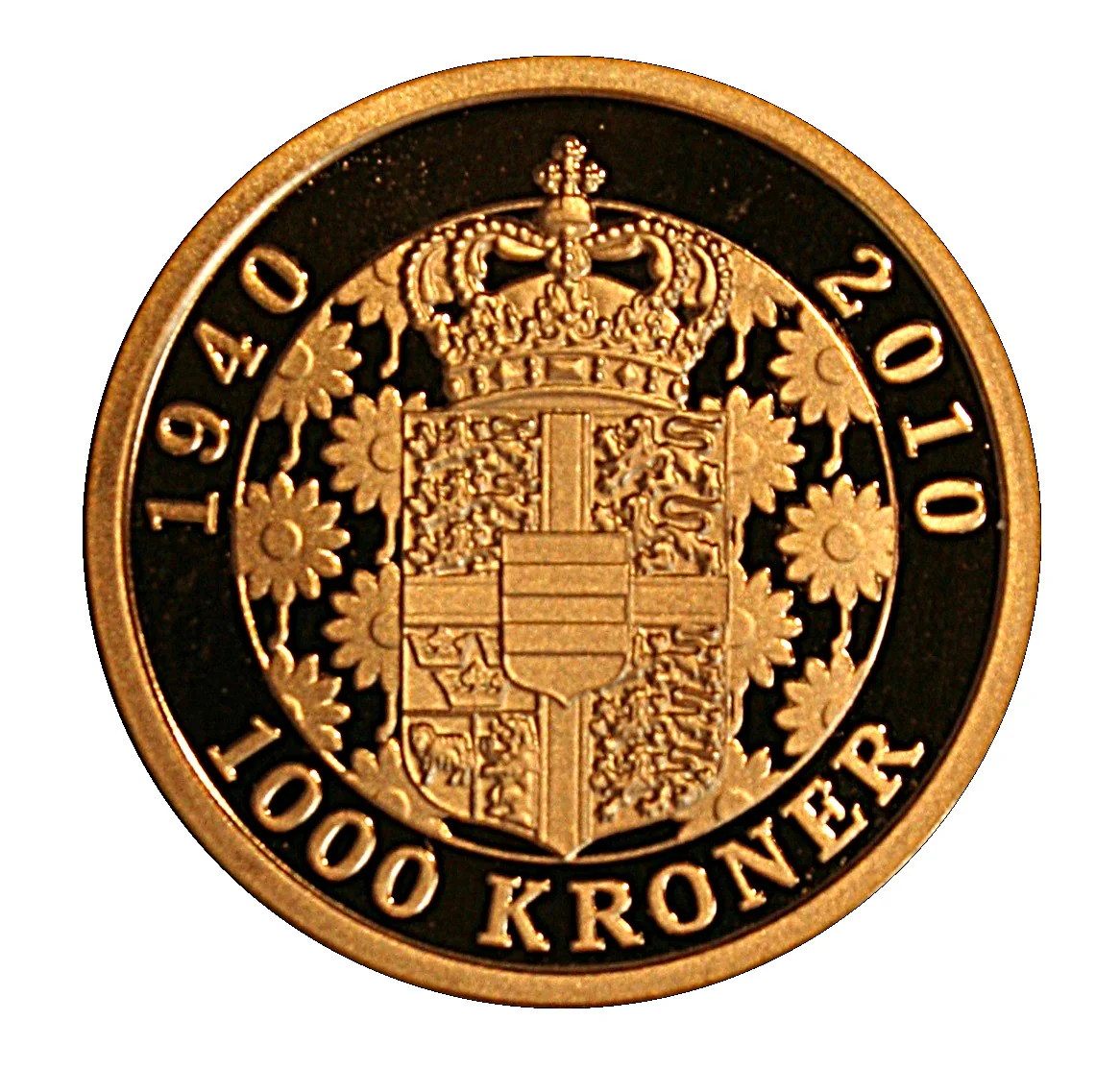
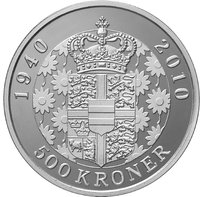
Reverse
Description:
Queen Margrethe II's royal arms on a bed of marguerites.
Inscription:
1940 2010
1000 KRONER
1000 KRONER
Script: Latin
Edge
Plain
Categories
| Event> Birth anniversary |
| Symbols> Coat of Arms |
Mints
| Name | Mark |
|---|---|
| Royal Danish Mint | — |
Mintings
| Year | Mint Mark | Mintage | Quality | Collection |
|---|---|---|---|---|
| 2010 | — | 2,639 |
Historical background
In 2010, Denmark's currency situation was defined by its long-standing and stable peg of the Danish krone (DKK) to the euro, a policy managed through the European Exchange Rate Mechanism II (ERM II). This arrangement, in place since Denmark's 2000 referendum rejected adopting the euro, required the Danish central bank (Danmarks Nationalbank) to maintain the krone within a narrow band of +/- 2.25% around a central rate of 7.46038 krone per euro. The primary objective was to ensure monetary stability and low inflation, anchoring the economy of a small, open, trade-dependent nation to its largest trading partner, the Eurozone.
The year unfolded against the turbulent backdrop of the European sovereign debt crisis, which began to intensify in early 2010 with Greece's bailout. This crisis created significant pressure on the peg, as investors sought safe-haven currencies, leading to capital inflows and upward pressure on the krone. To defend the fixed exchange rate and prevent the krone from appreciating too strongly, Danmarks Nationalbank was forced to intervene heavily in foreign exchange markets, selling kroner and buying foreign currency. Consequently, the bank's key interest rates were set below those of the European Central Bank (ECB)—a notable reversal from the typical pattern—to discourage speculative inflows and maintain the currency band.
Despite the external shocks, the peg was successfully maintained throughout 2010, reaffirming its credibility. The Danish economy navigated the period with relative resilience compared to the crisis-stricken Eurozone periphery, though the low interest rate policy contributed to a growing household debt burden and a heating housing market. Thus, 2010 highlighted both the strength of Denmark's institutional commitment to its currency anchor and the complex policy trade-offs required to sustain it during a period of severe European financial instability.
The year unfolded against the turbulent backdrop of the European sovereign debt crisis, which began to intensify in early 2010 with Greece's bailout. This crisis created significant pressure on the peg, as investors sought safe-haven currencies, leading to capital inflows and upward pressure on the krone. To defend the fixed exchange rate and prevent the krone from appreciating too strongly, Danmarks Nationalbank was forced to intervene heavily in foreign exchange markets, selling kroner and buying foreign currency. Consequently, the bank's key interest rates were set below those of the European Central Bank (ECB)—a notable reversal from the typical pattern—to discourage speculative inflows and maintain the currency band.
Despite the external shocks, the peg was successfully maintained throughout 2010, reaffirming its credibility. The Danish economy navigated the period with relative resilience compared to the crisis-stricken Eurozone periphery, though the low interest rate policy contributed to a growing household debt burden and a heating housing market. Thus, 2010 highlighted both the strength of Denmark's institutional commitment to its currency anchor and the complex policy trade-offs required to sustain it during a period of severe European financial instability.
💎 Extremely Rare