

1 guinea – United Kingdom
Add to wishlist
United Kingdom
Context
Material
References
KM: #
Numista: #13166
Value
Bullion value: $1187.79
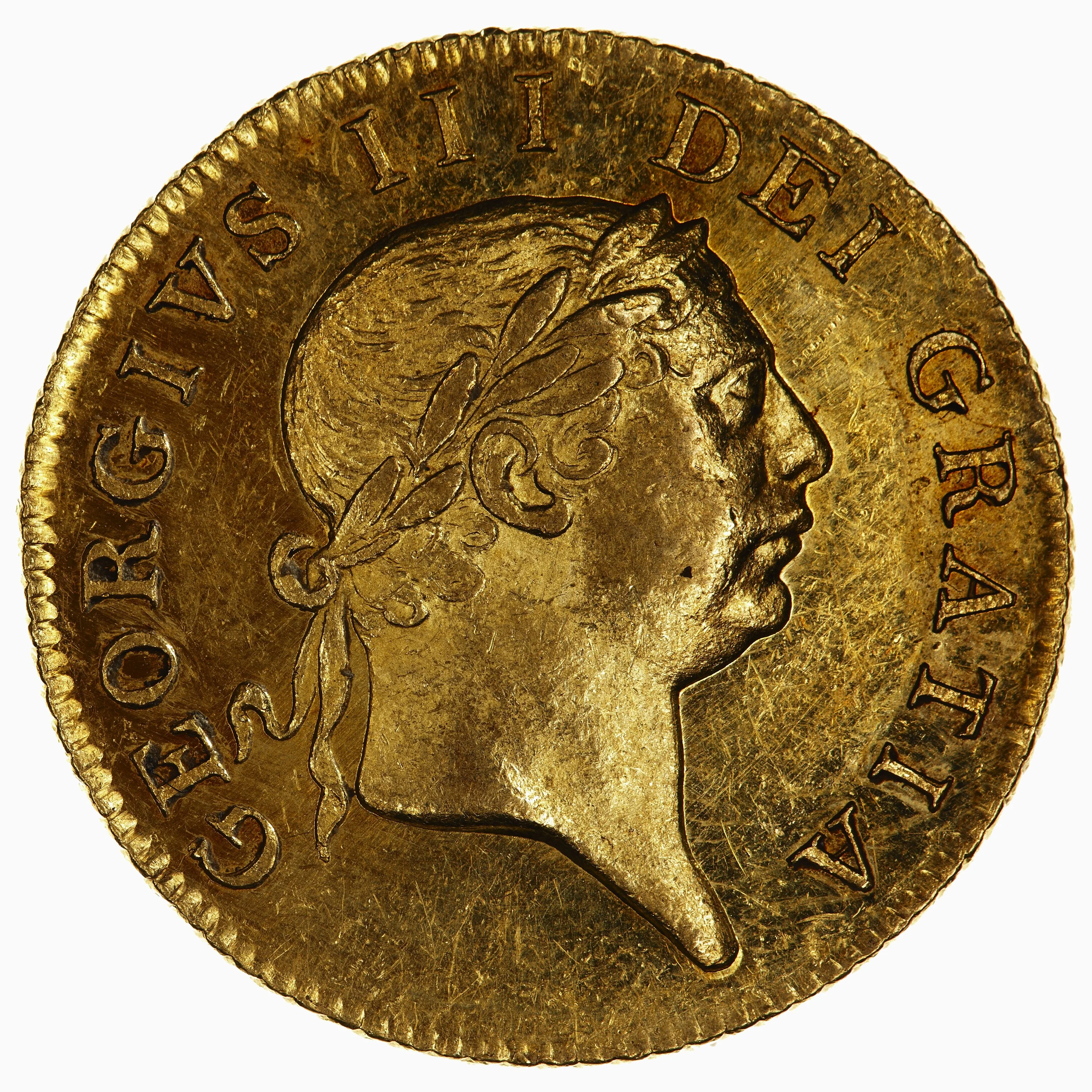
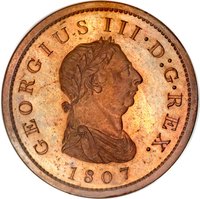
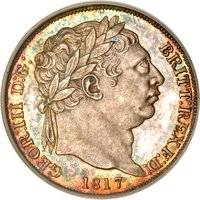
Obverse
Description:
King George III facing right, surrounded by legend.
Inscription:
GEORGIVS III DEI GRATIA
Translation:
George the Third by the Grace of God
Script: Latin
Language: Latin
Engraver: Lewis Pingo
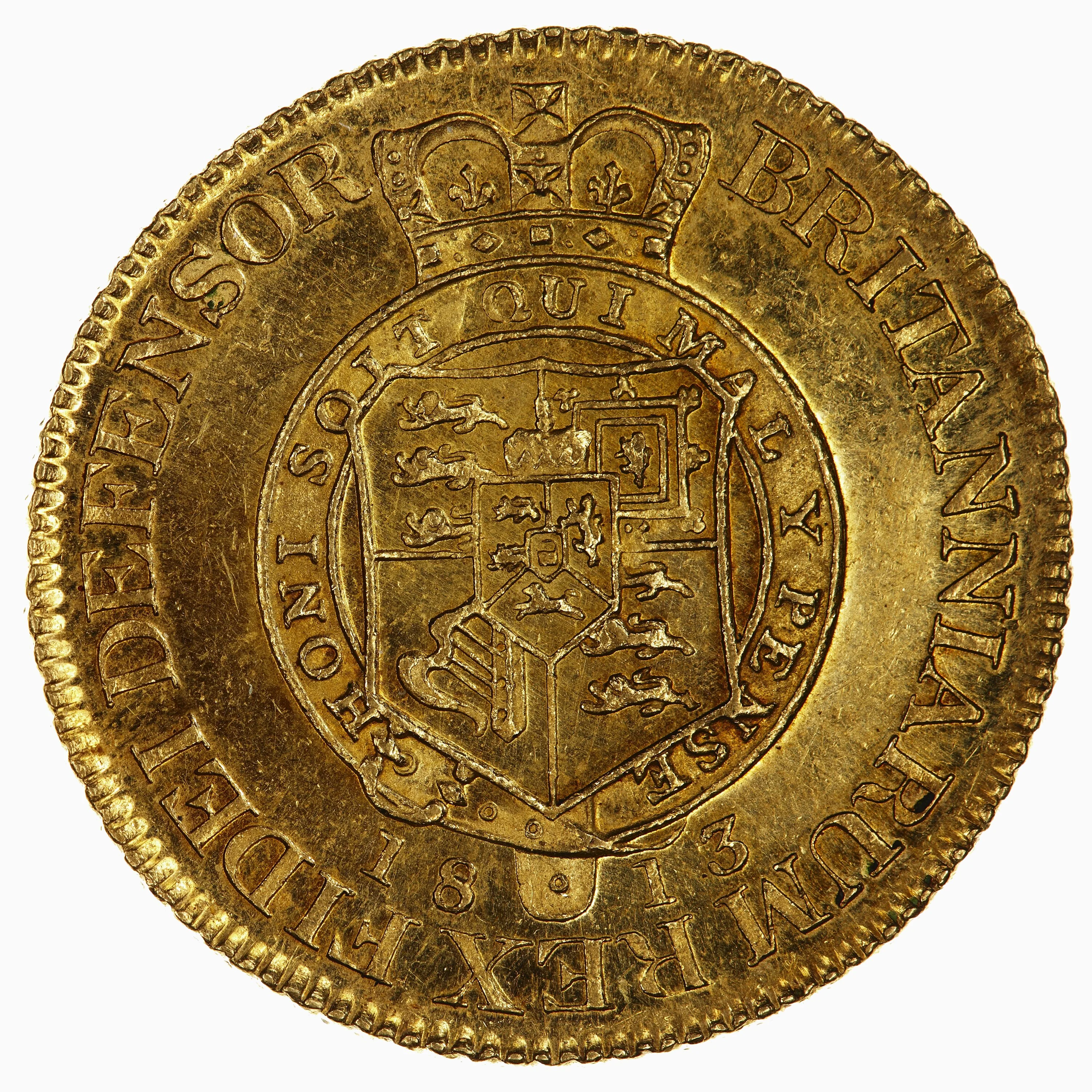
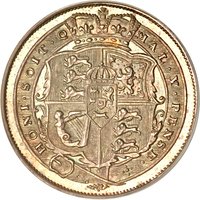
Reverse
Description:
Arms in crowned garter, legend around, date below.
Inscription:
HONI SOIT QUI MAL Y PENSE
BRITANNARUM REX FIDEI DEFENSOR
1813
BRITANNARUM REX FIDEI DEFENSOR
1813
Translation:
Shame on him who thinks evil of it
King of the Britains, Defender of the Faith
1813
King of the Britains, Defender of the Faith
1813
Script: Latin
Engraver: Lewis Pingo
Edge
Reeded
Mints
| Name | Mark |
|---|---|
| Royal Mint (Tower Hill) | — |
Mintings
| Year | Mint Mark | Mintage | Quality | Collection |
|---|---|---|---|---|
| 1813 | — | — | ||
| 1813 | — | — | Proof |
Historical background
In 1813, the United Kingdom was in the midst of the "Bank Restriction Period" (1797–1821), a defining era for its currency. The financial pressures of the French Revolutionary and Napoleonic Wars had led the government to suspend the convertibility of Bank of England notes into gold. This meant the pound sterling was no longer backed by a fixed quantity of bullion, becoming a fiat currency for the first time. The primary goal was to prevent a run on the Bank's gold reserves and to allow the government to finance its vast war expenditure through increased note issuance.
This suspension had significant consequences. The increased supply of paper money, combined with trade disruptions and poor harvests, contributed to inflation and a sharp depreciation in the pound's value against gold and on foreign exchanges. A lively public debate, known as the "Bullion Controversy," raged between the "Bullionists" (who argued inflation was caused by over-issuance of notes and demanded a swift return to gold convertibility) and the "Anti-Bullionists" (who believed the depreciation was due to extraordinary wartime factors like foreign remittances and harvest failures). The government, fearing a return to gold would restrict its financial flexibility, resisted change.
Thus, by 1813, Britain was operating with an inconvertible paper currency that had lost substantial value, causing economic strain and heated political-economic debate. The situation would persist until after the Battle of Waterloo in 1815, with the official return to the gold standard not occurring until 1821, following the recommendations of a Parliamentary committee and the passage of Peel's Act in 1819.
This suspension had significant consequences. The increased supply of paper money, combined with trade disruptions and poor harvests, contributed to inflation and a sharp depreciation in the pound's value against gold and on foreign exchanges. A lively public debate, known as the "Bullion Controversy," raged between the "Bullionists" (who argued inflation was caused by over-issuance of notes and demanded a swift return to gold convertibility) and the "Anti-Bullionists" (who believed the depreciation was due to extraordinary wartime factors like foreign remittances and harvest failures). The government, fearing a return to gold would restrict its financial flexibility, resisted change.
Thus, by 1813, Britain was operating with an inconvertible paper currency that had lost substantial value, causing economic strain and heated political-economic debate. The situation would persist until after the Battle of Waterloo in 1815, with the official return to the gold standard not occurring until 1821, following the recommendations of a Parliamentary committee and the passage of Peel's Act in 1819.
💎 Extremely Rare