

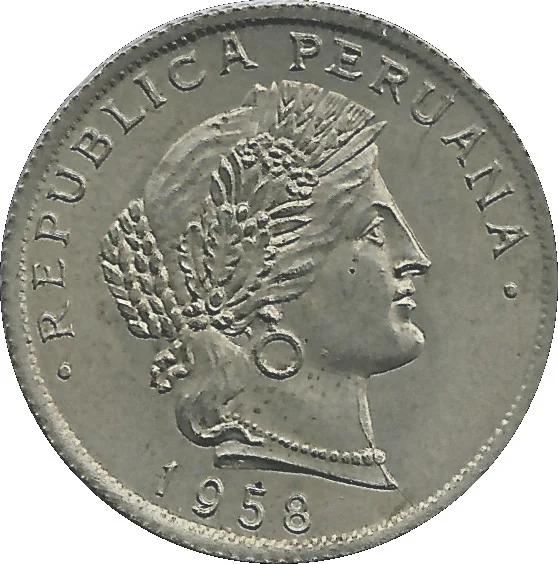
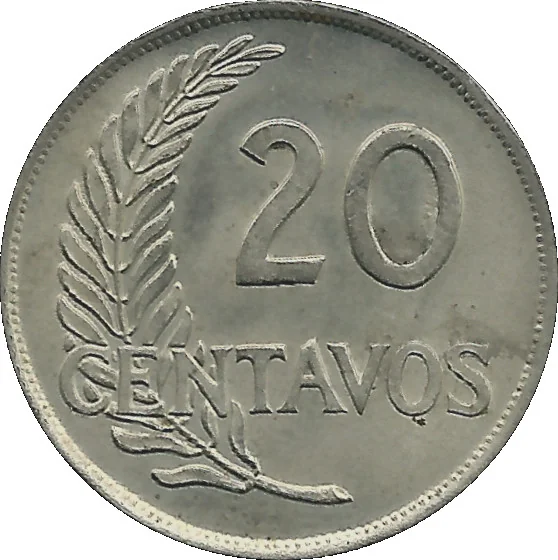
20 centavos – Peru
Add to wishlist
Peru
Material
Diameter: 23 mm
Weight: 3.95 g
Thickness: 1.3 mm
Shape: Round
Composition: Copper-nickel
Technique: Milled
Alignment: Coin alignment
flip
References
KM: #
Numista: #131122
Value
Exchange value: 0.20 PEH
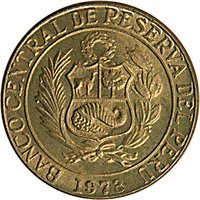
Obverse
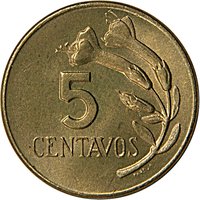
Reverse
Edge
Reeded
Mintings
| Year | Mint Mark | Mintage | Quality | Collection |
|---|---|---|---|---|
| 1958 | — | — | ||
| 1963 | — | — | ||
| 1965 | — | — |
Historical background
In 1958, Peru operated under a fixed exchange rate system, with its currency, the sol, pegged to the U.S. dollar. This regime was managed by the Central Reserve Bank of Peru and was part of a broader post-war global economic order centered on the Bretton Woods system. The official parity was maintained through strict capital controls and the use of the country's foreign exchange reserves, which were primarily backed by exports of key commodities like copper, cotton, and sugar. This system aimed to provide monetary stability and control inflation, but it also made the economy vulnerable to external trade shocks and speculative pressures.
However, the fixed rate was under growing strain. A significant balance of payments deficit had emerged, driven by a combination of declining export prices for Peru's primary goods and rising imports of capital goods for industrialization projects. This drain on dollar reserves created a chronic shortage of foreign currency, leading to the proliferation of a thriving black market for dollars where the sol traded at a significant discount to the official rate. This dual exchange rate system created distortions, incentivized corruption, and reflected a lack of confidence in the government's ability to maintain the peg without devaluing the currency.
The situation placed the government of President Manuel Prado, who had returned to office in 1956, in a difficult policy dilemma. A devaluation of the sol was widely seen as economically necessary to correct the imbalances and restore competitiveness, but it was politically perilous as it would immediately increase the cost of living and risk social unrest. Consequently, 1958 was a year of precarious equilibrium, characterized by stopgap measures to conserve reserves and intense debate among policymakers. The mounting pressures would ultimately force a major devaluation in 1959, marking the beginning of the end for that era of fixed exchange rate stability in Peru.
However, the fixed rate was under growing strain. A significant balance of payments deficit had emerged, driven by a combination of declining export prices for Peru's primary goods and rising imports of capital goods for industrialization projects. This drain on dollar reserves created a chronic shortage of foreign currency, leading to the proliferation of a thriving black market for dollars where the sol traded at a significant discount to the official rate. This dual exchange rate system created distortions, incentivized corruption, and reflected a lack of confidence in the government's ability to maintain the peg without devaluing the currency.
The situation placed the government of President Manuel Prado, who had returned to office in 1956, in a difficult policy dilemma. A devaluation of the sol was widely seen as economically necessary to correct the imbalances and restore competitiveness, but it was politically perilous as it would immediately increase the cost of living and risk social unrest. Consequently, 1958 was a year of precarious equilibrium, characterized by stopgap measures to conserve reserves and intense debate among policymakers. The mounting pressures would ultimately force a major devaluation in 1959, marking the beginning of the end for that era of fixed exchange rate stability in Peru.
💎 Extremely Rare