

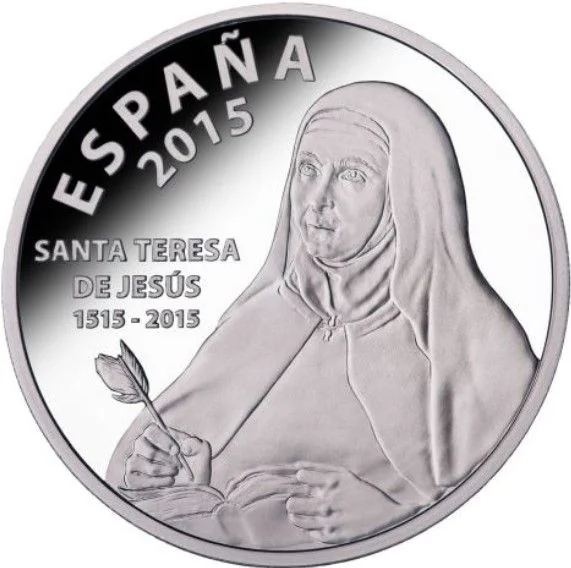
10 Euro (Saint Teresa of Jesus) – Spain
Non-circulating coins
Commemoration: 500th anniversary of the birth of Saint Teresa of Jesus
Spain
Material
References
KM: #Click to copy to clipboard1350
Numista: #130551
Value
Exchange value: 10 EUR = $11.81
Bullion value: $71.00
Inflation-adjusted value: 12.42 EUR
Obverse
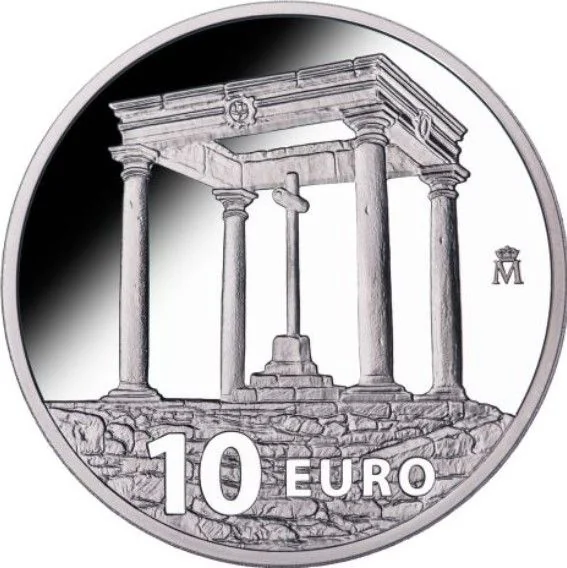
Reverse
Description:
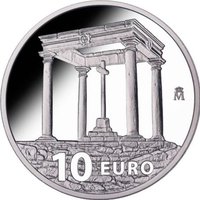
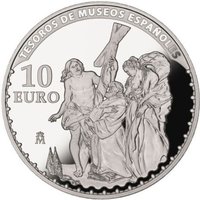
The Humilladero de los Cuatro Postes, a religious monument in Ávila.
Inscription:
10 EURO
M
M
Script: Latin
Edge
Reeded
Categories
| Symbol> Cross |
| Building> Museum |
| Event> Birth anniversary |
| Person> Religious figure |
Mints
| Name | Mark |
|---|---|
| Royal Mint of Madrid | (M) |
Mintings
| Year | Mint Mark | Mintage | Quality | Collection |
|---|---|---|---|---|
| 2015 | M | 7,500 | Proof |
Historical background
In 2015, Spain was in its third year of economic recovery following the severe Eurozone debt crisis and the bursting of its domestic property bubble. As a member of the Eurozone, the country used the euro, which meant its monetary policy was entirely set by the European Central Bank (ECB) in Frankfurt. This period was characterized by the ECB's aggressive stimulus measures, including historically low interest rates and a quantitative easing program announced in early 2015, which were crucial for lowering Spain's sovereign borrowing costs and providing liquidity to the financial system. However, the shared currency also meant Spain lacked the traditional tool of devaluing its own currency to regain competitiveness, placing the entire burden of adjustment on internal "devaluation" through wage cuts and structural reforms.
Domestically, the currency situation was intertwined with a fragile banking sector recovery and persistent high unemployment, which remained above 22%. The euro's exchange rate, influenced by ECB policy and broader Eurozone dynamics, impacted key sectors like tourism (a vital source of growth, which benefited from a weaker euro making Spain cheaper for visitors) and exports. While the weak euro aided the export sector, the overall economic climate was one of cautious stabilization rather than robust growth, with public debt still high and deflationary pressures a concern.
Politically, the year was significant as it saw the rise of new political parties like Podemos and Ciudadanos, challenging the traditional two-party system in the lead-up to the December general election. Economic management, including Spain's place within the Eurozone and the austerity measures tied to its earlier bailout of the banking sector, was a central debate. There was no serious political movement to leave the euro, but there was growing public discourse about the constraints of the single currency and the need for greater fiscal integration or flexibility at the European level to support member states during asymmetric shocks.
Domestically, the currency situation was intertwined with a fragile banking sector recovery and persistent high unemployment, which remained above 22%. The euro's exchange rate, influenced by ECB policy and broader Eurozone dynamics, impacted key sectors like tourism (a vital source of growth, which benefited from a weaker euro making Spain cheaper for visitors) and exports. While the weak euro aided the export sector, the overall economic climate was one of cautious stabilization rather than robust growth, with public debt still high and deflationary pressures a concern.
Politically, the year was significant as it saw the rise of new political parties like Podemos and Ciudadanos, challenging the traditional two-party system in the lead-up to the December general election. Economic management, including Spain's place within the Eurozone and the austerity measures tied to its earlier bailout of the banking sector, was a central debate. There was no serious political movement to leave the euro, but there was growing public discourse about the constraints of the single currency and the need for greater fiscal integration or flexibility at the European level to support member states during asymmetric shocks.
✨ Legendary