

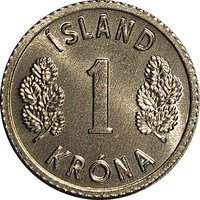
Obverse
Description:
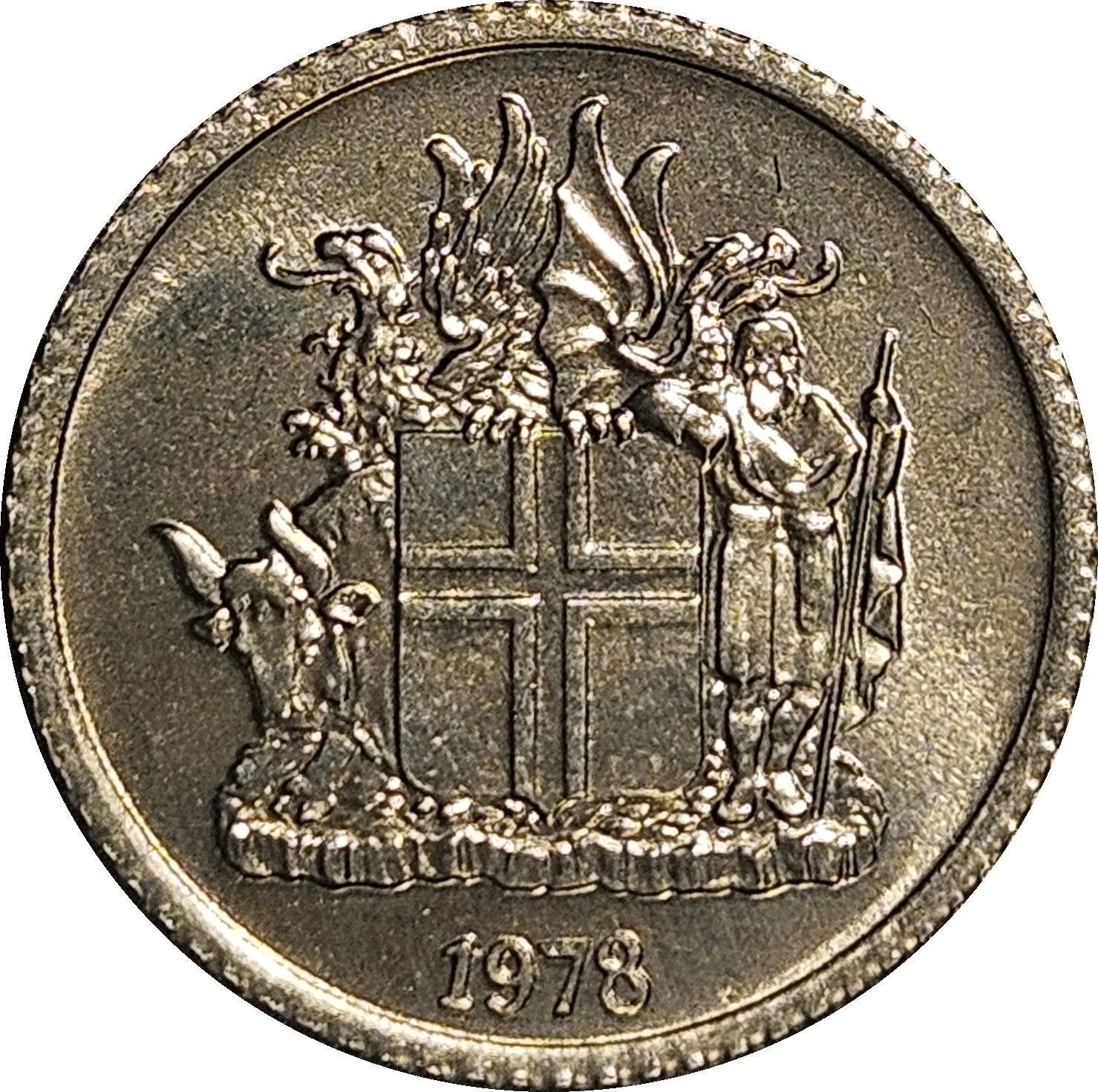
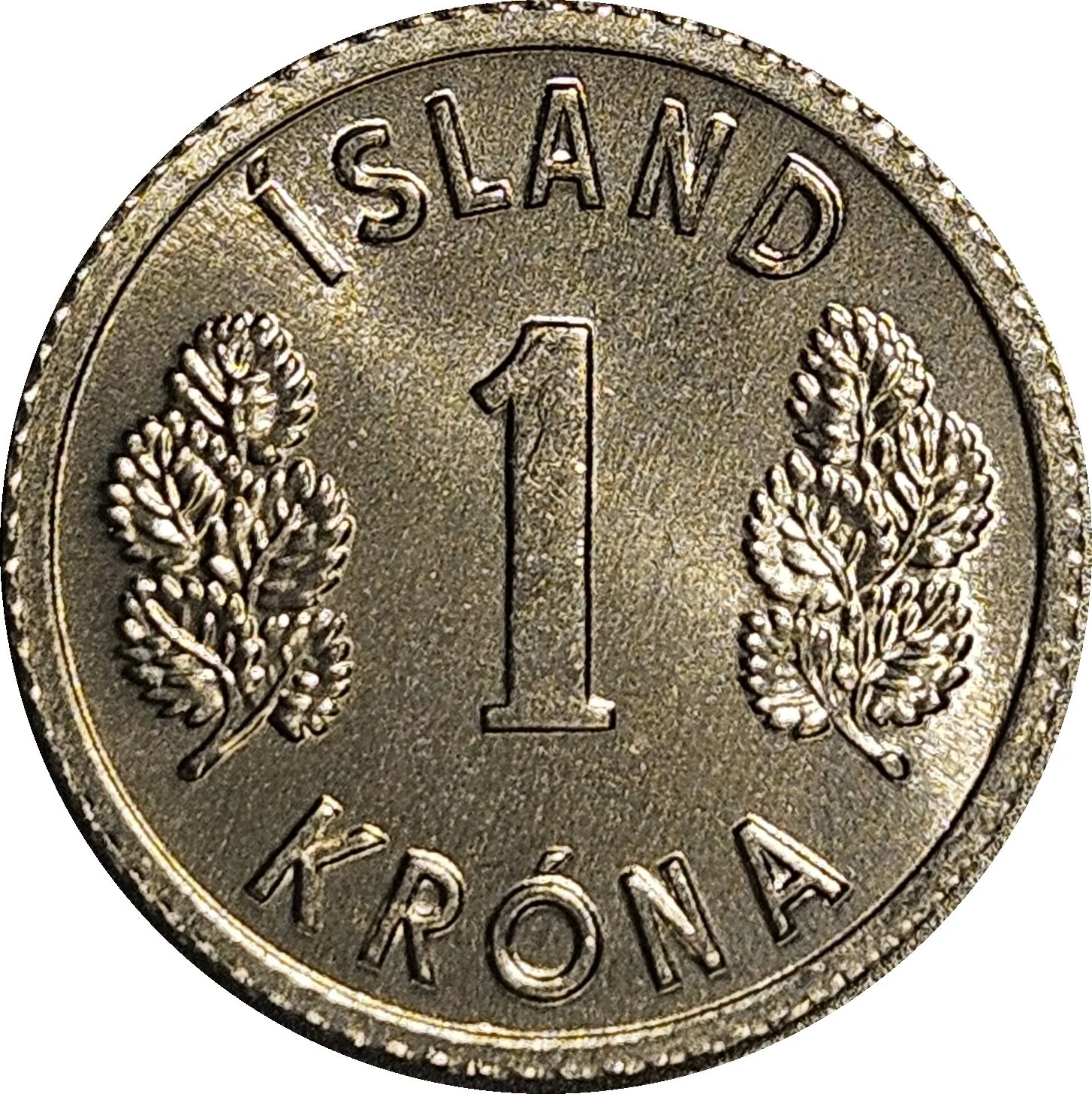
Iceland's coat of arms encircled by its four guardian spirits (Landvættir): the bull, eagle, dragon, and giant.
Inscription:
1978
Script: Latin
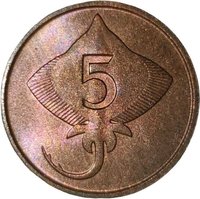
Reverse
Edge
Reeded
Categories
| Mythology> Fantastic animal |
| Animal> Bird |
| Animal> Cow |
| Symbols> Coat of Arms |
Mints
| Name | Mark |
|---|---|
| Royal Mint | — |
Mintings
| Year | Mint Mark | Mintage | Quality | Collection |
|---|---|---|---|---|
| 1976 | — | 10,000,000 | ||
| 1977 | — | 10,000,000 | ||
| 1978 | — | 13,000,000 | ||
| 1980 | — | 7,225,000 | ||
| 1980 | — | 15,000 | Proof |
Historical background
In 1976, Iceland was grappling with a severe economic crisis characterized by rampant inflation, a large trade deficit, and a rapidly depreciating currency. The situation was the culmination of years of expansionary policies, indexation of wages to prices, and external shocks like the 1973 oil crisis. By the mid-1970s, inflation had soared to nearly 40%, eroding purchasing power and creating widespread economic instability. The Icelandic króna, which had been devalued several times in the preceding years, was under intense pressure, and the country's foreign exchange reserves were dangerously low.
The government's response culminated in a dramatic and comprehensive economic package enacted in late 1976. This included a major devaluation of the króna by 25% against the US dollar, coupled with stringent austerity measures, price controls, and a temporary freeze on the wage indexation system that had fueled the inflationary spiral. These actions were politically difficult but deemed necessary to restore balance of payments equilibrium, curb inflation, and rebuild international reserves. The devaluation aimed to make Icelandic exports more competitive and reduce the unsustainable trade deficit.
The 1976 currency crisis and subsequent stabilization program marked a pivotal, painful turning point in Iceland's economic history. While the immediate measures succeeded in stabilizing the external accounts, they came at a significant short-term cost to living standards. The episode underscored the vulnerabilities of a small, open economy and set the stage for a broader debate about monetary policy and financial regulation, lessons that would be revisited during the even more severe banking crisis three decades later.
The government's response culminated in a dramatic and comprehensive economic package enacted in late 1976. This included a major devaluation of the króna by 25% against the US dollar, coupled with stringent austerity measures, price controls, and a temporary freeze on the wage indexation system that had fueled the inflationary spiral. These actions were politically difficult but deemed necessary to restore balance of payments equilibrium, curb inflation, and rebuild international reserves. The devaluation aimed to make Icelandic exports more competitive and reduce the unsustainable trade deficit.
The 1976 currency crisis and subsequent stabilization program marked a pivotal, painful turning point in Iceland's economic history. While the immediate measures succeeded in stabilizing the external accounts, they came at a significant short-term cost to living standards. The episode underscored the vulnerabilities of a small, open economy and set the stage for a broader debate about monetary policy and financial regulation, lessons that would be revisited during the even more severe banking crisis three decades later.
🌱 Very Common