

1 Franc (Estates-General) – France
Circulating commemorative coins
Commemoration: 200th Anniversary of the Estates-General
France
Obverse
Description:
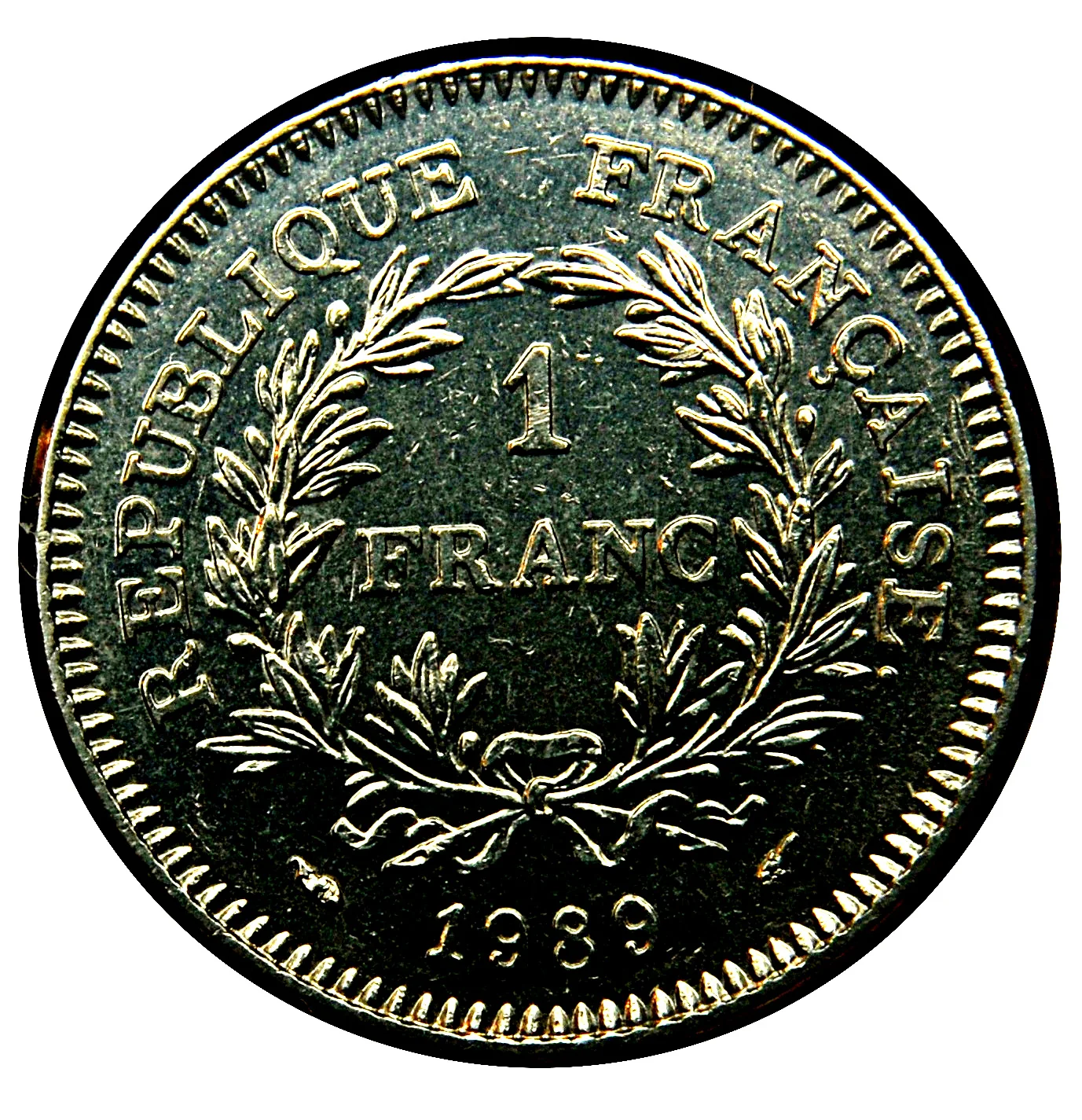
The face value, encircled by laurel branches, is surrounded by "REPUBLIQUE FRANÇAISE."
Inscription:
REPUBLIQUE FRANÇAISE.
1
FRANC
1989
1
FRANC
1989
Translation:
REPUBLIC OF FRANCE.
1
FRANC
1989
1
FRANC
1989
Script: Latin
Language: French
Engraver: Claudine Béréchel
Reverse
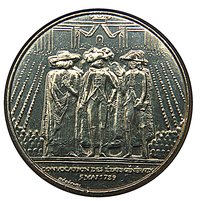
Description:
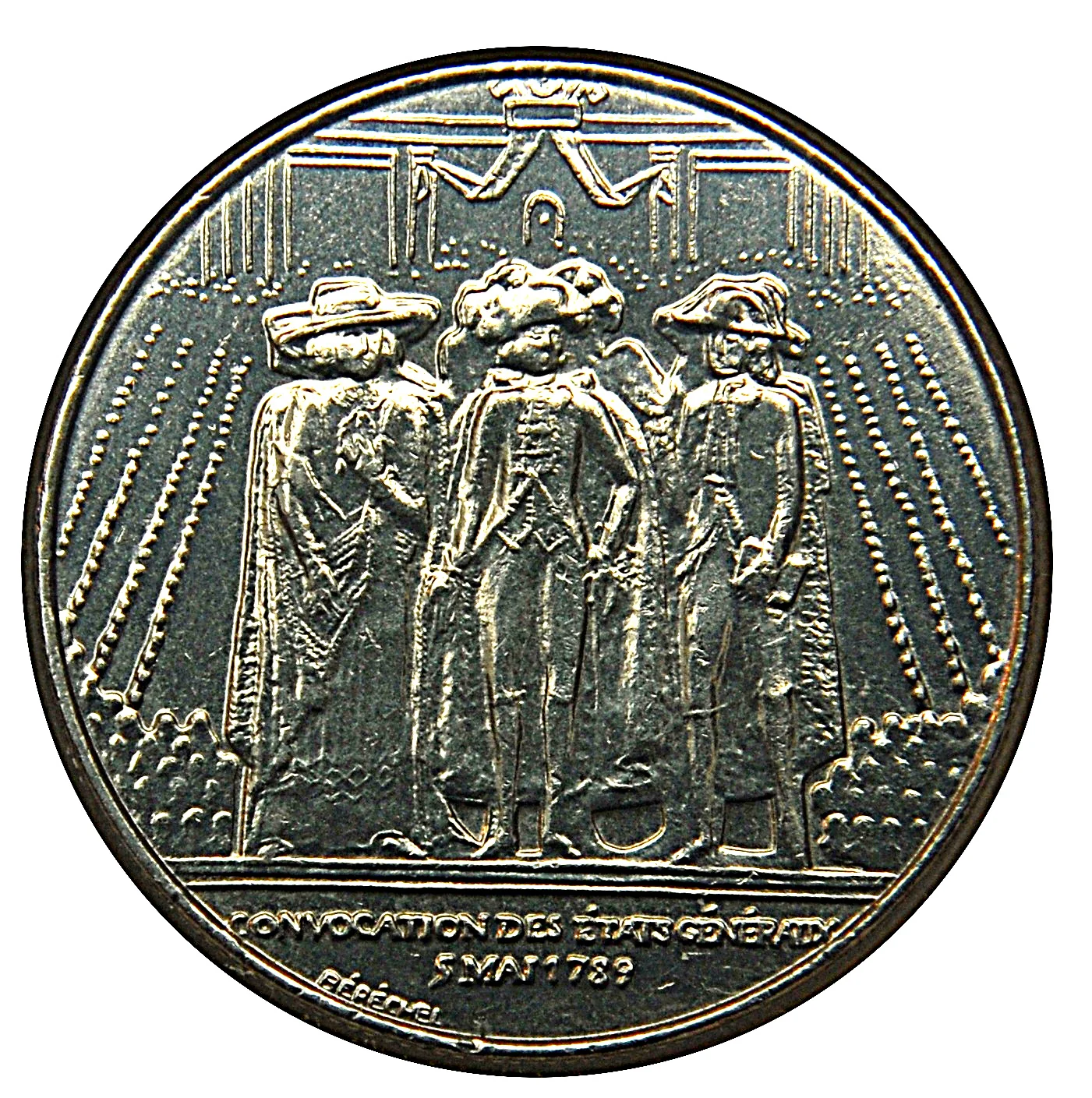
Three estates—clergy, nobility, and commoners—gather in Versailles's Salle des Menus Plaisirs for the Convocation of the Estates-General, May 5, 1789.
Inscription:
CONVOCATION DES ÉTATS GÉNÉRAUX
5 MAI 1789
BÉRÉCHEL
5 MAI 1789
BÉRÉCHEL
Translation:
Convocation of the Estates General
5 May 1789
Béréchel
5 May 1789
Béréchel
Script: Latin
Language: French
Engraver: Claudine Béréchel
Edge
Reeded
Mints
| Name | Mark |
|---|---|
| Monnaie de Paris | — |
Mintings
| Year | Mint Mark | Mintage | Quality | Collection |
|---|---|---|---|---|
| 1989 | — | 5,012,011 | BU |
Historical background
In 1989, France was in the final phase of a significant monetary transition, operating within the European Monetary System (EMS) and its Exchange Rate Mechanism (ERM). The cornerstone of its currency policy was the "franc fort" (strong franc) strategy, aggressively pursued by successive governments since the early 1980s. This policy involved pegging the French franc to the historically stable Deutsche Mark, thereby importing the anti-inflation credibility of the German Bundesbank. The goal was to break the cycle of high domestic inflation and frequent devaluations that had plagued the franc for decades, anchoring France firmly within a stable European monetary bloc.
This commitment came at a considerable economic cost. To maintain the strict parity with the DM, French interest rates were kept high, often exceeding those in Germany, which stifled economic growth and contributed to persistently high unemployment. The tension was palpable, as the French economy required more stimulative policies while the franc fort demanded monetary discipline. Furthermore, the system was inherently asymmetric, with France forced to follow Germany's lead on interest rates, a point of political friction. The year 1989 was particularly pivotal as the fall of the Berlin Wall in November set in motion German reunification, which would soon place immense new strains on the EMS.
Thus, the French currency situation in 1989 was one of successful but fragile stability. The franc fort had achieved its primary objective of low inflation and monetary credibility, yet it was a stability maintained by constraint and vulnerability to German policy shifts. The period was a crucial prelude to the crises of the early 1990s, when these strains would erupt, and ultimately, to the decisions that would lead France to abandon the franc entirely for the euro—the logical culmination of the European integration path the franc fort policy was designed to secure.
This commitment came at a considerable economic cost. To maintain the strict parity with the DM, French interest rates were kept high, often exceeding those in Germany, which stifled economic growth and contributed to persistently high unemployment. The tension was palpable, as the French economy required more stimulative policies while the franc fort demanded monetary discipline. Furthermore, the system was inherently asymmetric, with France forced to follow Germany's lead on interest rates, a point of political friction. The year 1989 was particularly pivotal as the fall of the Berlin Wall in November set in motion German reunification, which would soon place immense new strains on the EMS.
Thus, the French currency situation in 1989 was one of successful but fragile stability. The franc fort had achieved its primary objective of low inflation and monetary credibility, yet it was a stability maintained by constraint and vulnerability to German policy shifts. The period was a crucial prelude to the crises of the early 1990s, when these strains would erupt, and ultimately, to the decisions that would lead France to abandon the franc entirely for the euro—the logical culmination of the European integration path the franc fort policy was designed to secure.
🌱 Very Common