

500 Kuna (Parliament) – Croatia
Non-circulating coins
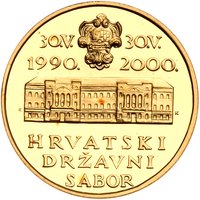
Commemoration: 10th Anniversary of Parliament
Croatia
Context
Material
References
KM: #Click to copy to clipboard82
Numista: #104751
Value
Exchange value: 500 HRK
Bullion value: $574.52
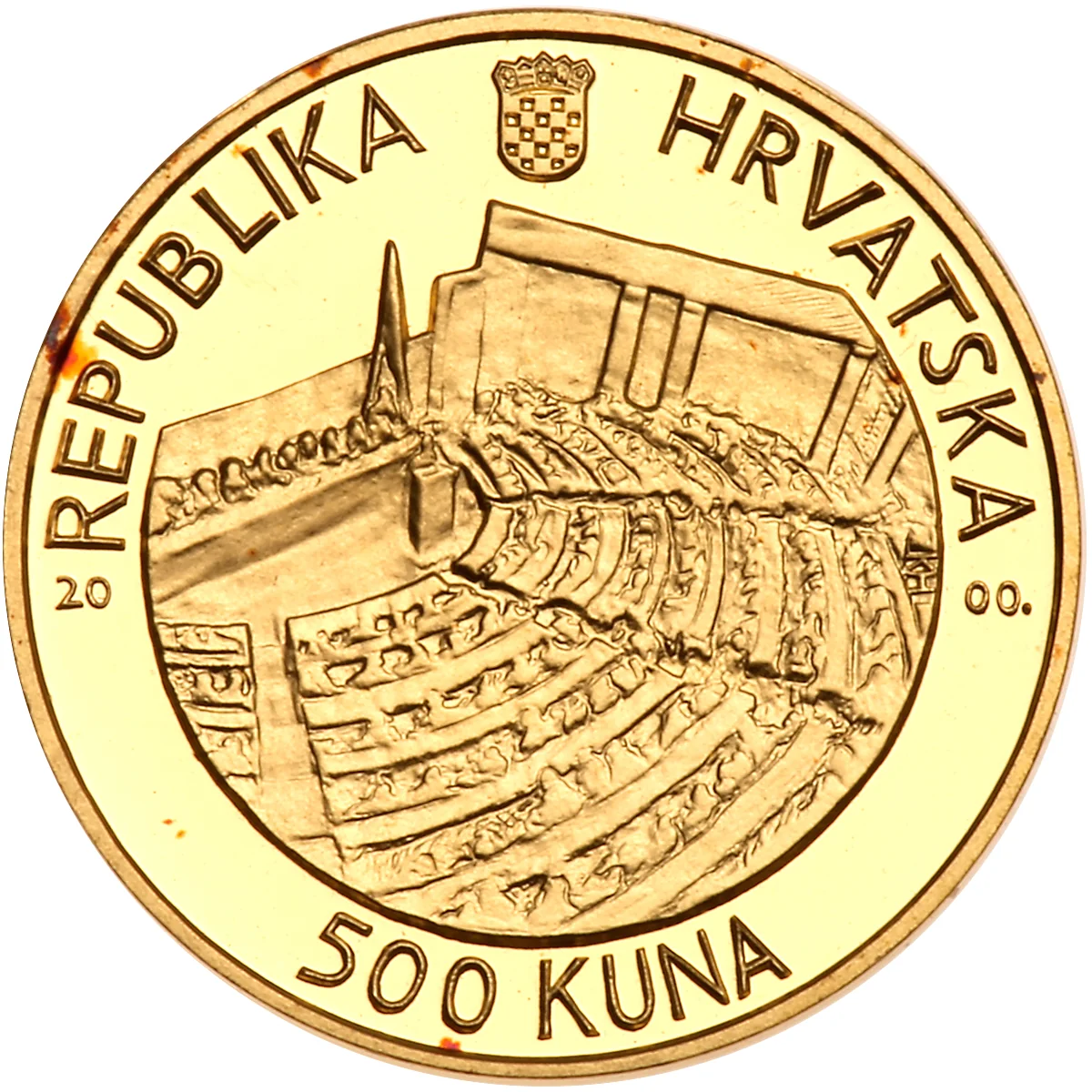
Obverse
Description:
Parliament session divides date.
Inscription:
REPUBLIKA HRVATSKA
20 00.
500 KUNA
20 00.
500 KUNA
Script: Latin
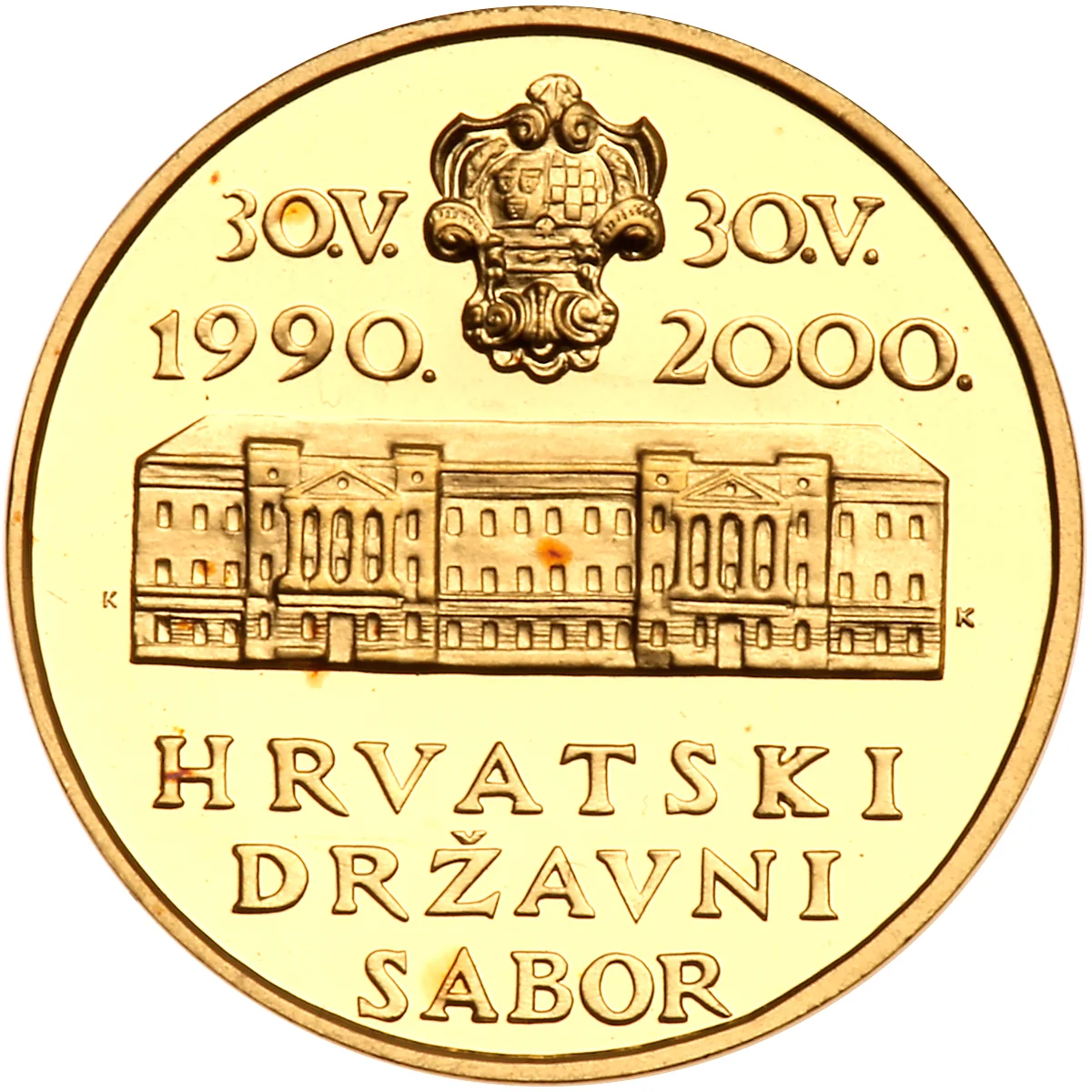
Reverse
Edge
Mintings
| Year | Mint Mark | Mintage | Quality | Collection |
|---|---|---|---|---|
| 2000 | — | 500 | Proof |
Historical background
In the year 2000, Croatia's currency situation was defined by the use of the kuna (HRK), which had been introduced in 1994 to replace the transitional Croatian dinar and stabilize the economy after the Homeland War. The kuna was a fully convertible, managed floating currency, with its value primarily influenced by the Croatian National Bank (CNB) through interventions in the foreign exchange market. The central bank's policy aimed to maintain relative stability against major currencies, particularly the Deutsche Mark, which was crucial for economic confidence and managing inflation, which had been tamed from hyperinflationary levels earlier in the decade.
The broader macroeconomic context in 2000 was challenging yet marked by a turning point. The country was still recovering from the war and the legacy of a socialist economy, with issues like a large public sector, slow privatization, and a significant external debt burden. However, the year saw the election of a new reform-oriented government, which embarked on an ambitious program of economic restructuring and liberalization. This political shift began to improve international investor sentiment, which was vital for the kuna's stability and for accessing foreign capital.
Crucially, 2000 fell within the long pre-Euro period for Croatia. While euroization was already significant in practice (with many loans and savings indexed to or held in Deutsche Marks and later euros), official Eurozone membership was not an immediate prospect. The kuna's stability was therefore managed as a national priority, setting the stage for the deeper integration with European structures that would follow, ultimately leading to Croatia's adoption of the euro as its official currency in 2023.
The broader macroeconomic context in 2000 was challenging yet marked by a turning point. The country was still recovering from the war and the legacy of a socialist economy, with issues like a large public sector, slow privatization, and a significant external debt burden. However, the year saw the election of a new reform-oriented government, which embarked on an ambitious program of economic restructuring and liberalization. This political shift began to improve international investor sentiment, which was vital for the kuna's stability and for accessing foreign capital.
Crucially, 2000 fell within the long pre-Euro period for Croatia. While euroization was already significant in practice (with many loans and savings indexed to or held in Deutsche Marks and later euros), official Eurozone membership was not an immediate prospect. The kuna's stability was therefore managed as a national priority, setting the stage for the deeper integration with European structures that would follow, ultimately leading to Croatia's adoption of the euro as its official currency in 2023.
✨ Legendary