

2 francs – Saint-Pierre and Miquelon
Add to wishlist
France
Context
Year: 1948
Country: France
Issuer: Saint-Pierre and Miquelon
Period:
(1946—1958)
Currency:
(1945—1960)
Demonetized: Yes
Total mintage: 300,000
Material
References
KM: #
Numista: #1288
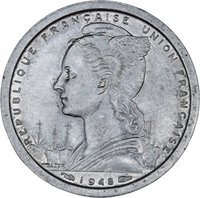
Obverse
Description:
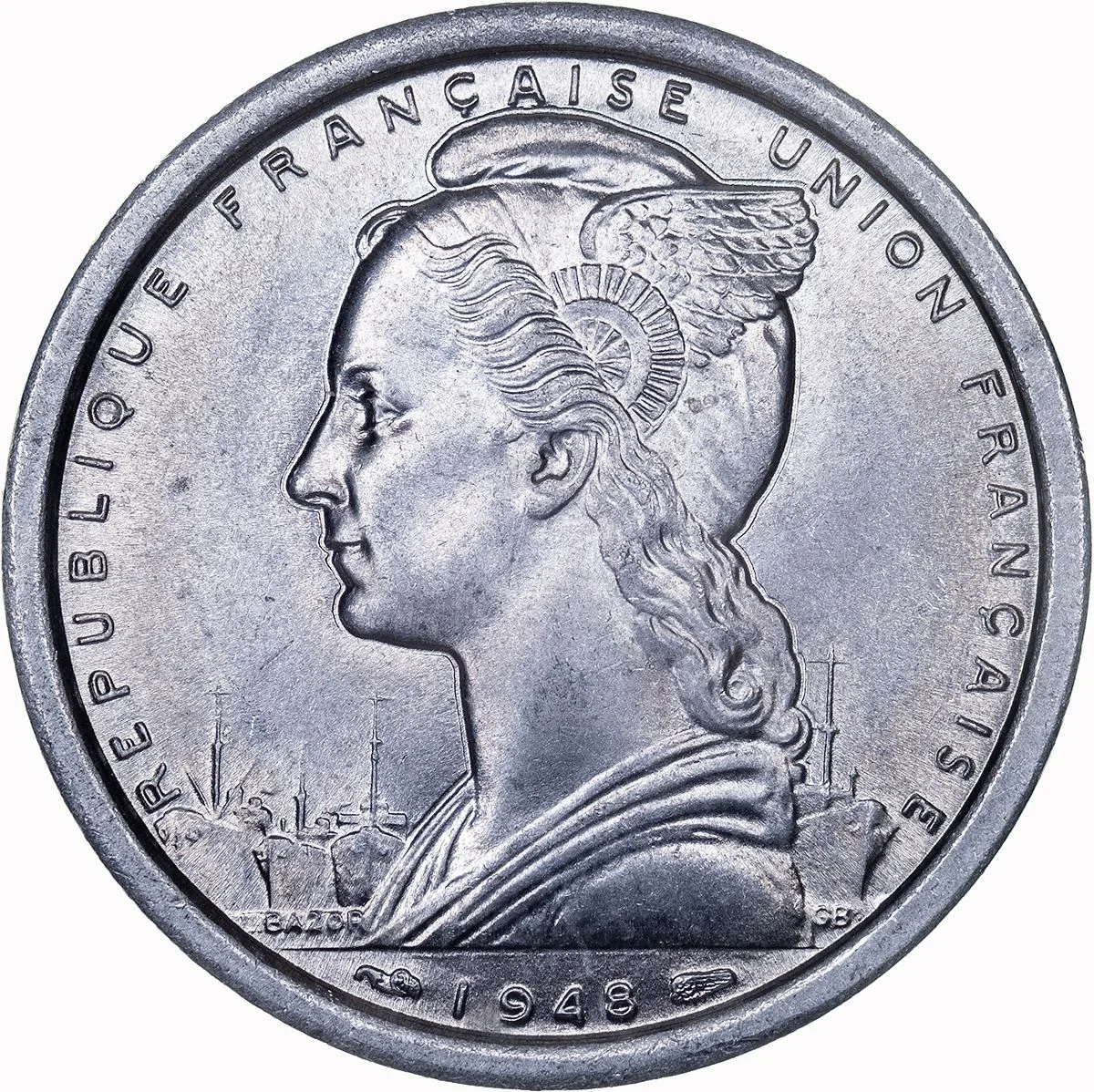
Liberty head left, modern ships flanking, date below.
Inscription:
REPUBLIQUE FRANÇAISE UNION FRANÇAISE
L.BAZOR GB
1948
L.BAZOR GB
1948
Translation:
FRENCH REPUBLIC FRENCH UNION
L.BAZOR GB
1948
L.BAZOR GB
1948
Script: Latin
Language: French
Engraver: Lucien Georges Bazor
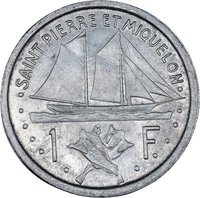
Reverse
Description:
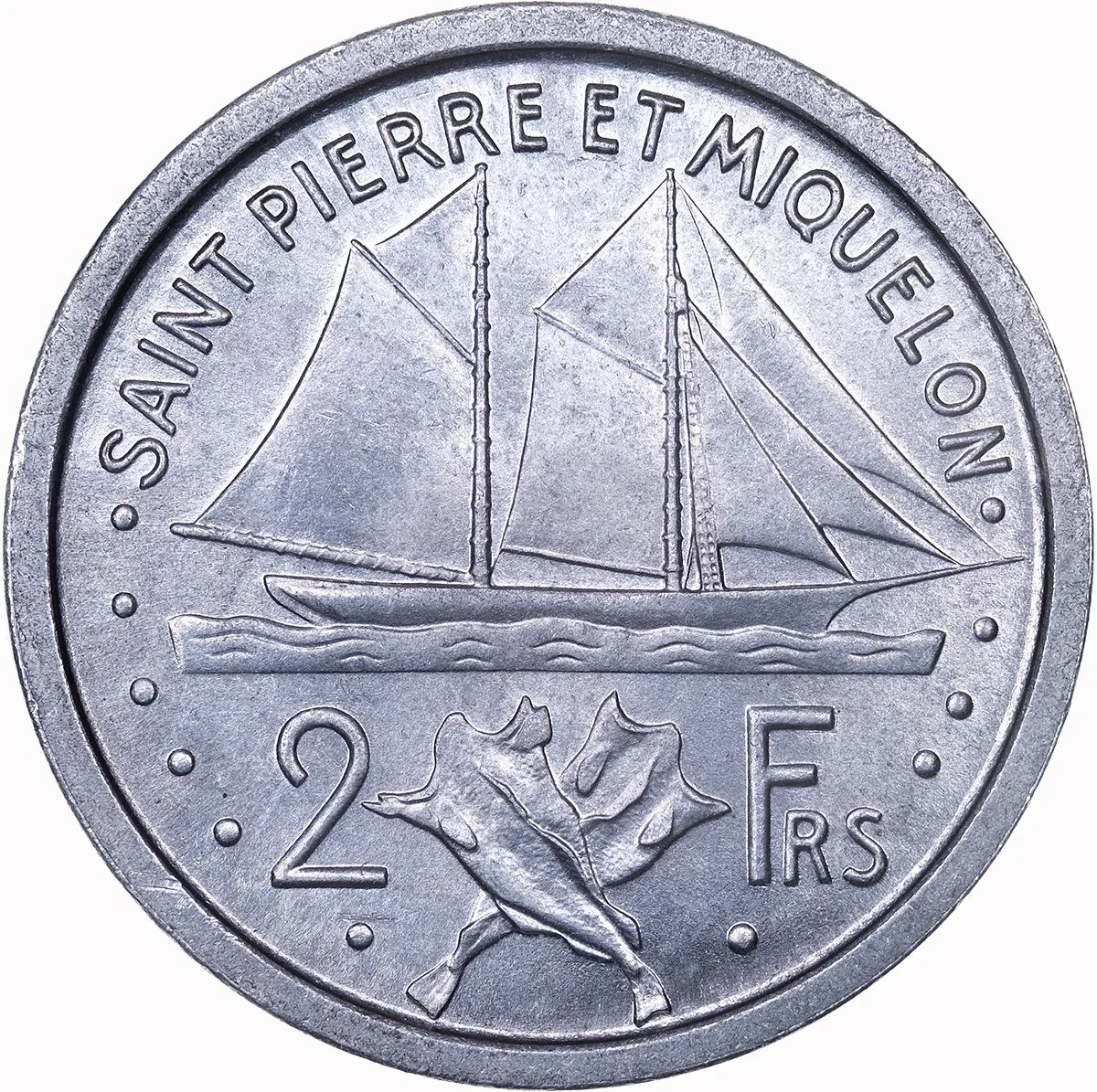
Schooner for cod fishing, value between two filets.
Inscription:
SAINT PIERRE ET MIQUELON
2 FRS
2 FRS
Script: Latin
Engraver: Lucien Georges Bazor
Edge
Plain
Categories
| Symbol> Allegory |
| Animal> Fish |
| Symbol> Phrygian cap |
| Transportation> Watercraft |
Mints
| Name | Mark |
|---|---|
| Monnaie de Paris | — |
Mintings
| Year | Mint Mark | Mintage | Quality | Collection |
|---|---|---|---|---|
| 1948 | — | 300,000 |
Historical background
In 1948, the currency situation in Saint-Pierre and Miquelon was a direct legacy of its unique political status and the economic disruptions of World War II. As a French overseas territory, the archipelago was, in principle, integrated into the franc zone. However, its proximity to North America and deep economic ties to Canada, particularly Newfoundland, created a persistent duality in monetary circulation. For decades, both the French franc and the Canadian dollar were used interchangeably in daily commerce, with the Canadian dollar often preferred for its stability and utility in the vital fish trade.
The immediate post-war period intensified this complexity. France itself was undergoing significant monetary instability and reconstruction, leading to the introduction of a new franc in 1945. This reform was implemented in the territory, but the weakened and fluctuating French franc struggled to compete with the strong, commodity-backed Canadian dollar on the islands. Consequently, 1948 saw a continued, if unofficial, bi-monetary system where prices and transactions were often mentally calculated in both currencies, despite the official legal tender being French.
This practical monetary duality was tacitly accepted by local authorities as a necessity for economic survival. A formal change was still years away; it was not until 1972 that Saint-Pierre and Miquelon would officially abandon the French franc and adopt the Canadian dollar. Therefore, in 1948, the currency situation was one of de facto Canadian dollar dominance within a de jure French franc framework, reflecting the islands' enduring geographic and economic reality caught between its political allegiance to France and its commercial lifeline to North America.
The immediate post-war period intensified this complexity. France itself was undergoing significant monetary instability and reconstruction, leading to the introduction of a new franc in 1945. This reform was implemented in the territory, but the weakened and fluctuating French franc struggled to compete with the strong, commodity-backed Canadian dollar on the islands. Consequently, 1948 saw a continued, if unofficial, bi-monetary system where prices and transactions were often mentally calculated in both currencies, despite the official legal tender being French.
This practical monetary duality was tacitly accepted by local authorities as a necessity for economic survival. A formal change was still years away; it was not until 1972 that Saint-Pierre and Miquelon would officially abandon the French franc and adopt the Canadian dollar. Therefore, in 1948, the currency situation was one of de facto Canadian dollar dominance within a de jure French franc framework, reflecting the islands' enduring geographic and economic reality caught between its political allegiance to France and its commercial lifeline to North America.
🌱 Common