


6 euro – Greece
Add to wishlist
Non-circulating coins
Commemoration: International Year of Sustainable Tourism for Development
Greece

Obverse
Description:
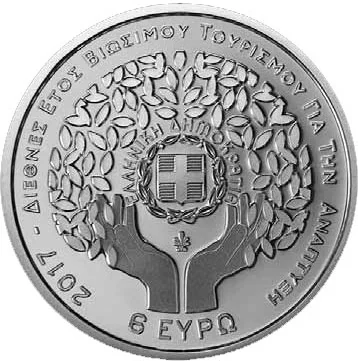
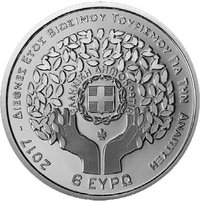
The coin depicts a tree with two hands holding leaves, centered around the national Coat of Arms and a Mint palmette. The bottom shows "6 EURO" and "2017," encircled by the Greek text for "INTERNATIONAL YEAR OF SUSTAINABLE TOURISM FOR DEVELOPMENT."
Inscription:
2017 - ΔΙΕΘΝΕΣ ΕΤΟΣ ΒΙΩΣΙΜΟΥ ΤΟΥΡΙΣΜΟΥ ΓΙΑ ΤΗΝ ΑΝΑΠΤΥΞΗ
ΕΛΛΗΝΙΚΗ ΔΗΜΟΚΡΑΤΙΑ
6 ΕΥΡΩ
ΕΛΛΗΝΙΚΗ ΔΗΜΟΚΡΑΤΙΑ
6 ΕΥΡΩ
Translation:
2017 - International Year of Sustainable Tourism for Development
HELLENIC REPUBLIC
6 EURO
HELLENIC REPUBLIC
6 EURO
Script: Greek
Language: Greek
Engraver: Maria Andonatou
Reverse
Description:
A globe sprouts houses and trees, with the engraver's monogram at left.
Inscription:
M
Script: Greek
Engraver: Maria Andonatou
Edge
Plain
Mints
| Name | Mark |
|---|---|
| National Mint of the Bank of Greece | — |
Mintings
| Year | Mint Mark | Mintage | Quality | Collection |
|---|---|---|---|---|
| 2017 | — | 1,500 | Proof |
Historical background
By 2017, Greece remained deeply entrenched in a protracted financial crisis, operating under its third international bailout program since 2010. The immediate threat of a "Grexit" (a Greek exit from the eurozone) had receded after the tumultuous summer of 2015, which featured capital controls, a bank holiday, and a dramatic referendum. However, the country's economy and financial system were still fragile. Strict capital controls, limiting cash withdrawals and transfers abroad, remained in place, a stark reminder of the severe liquidity crisis. The primary focus was on implementing the demanding austerity measures and reforms required by the creditors (the European Commission, European Central Bank, and International Monetary Fund) to unlock further bailout loan tranches.
The currency situation was defined by the continued use of the euro, but under highly constrained conditions. The Greek government and the European institutions were firmly committed to keeping Greece within the eurozone, dismissing any speculation about a return to the drachma. The real challenge was not the official currency but the lack of confidence within it. Banks were burdened with a high percentage of non-performing loans, restricting their ability to lend and stifling economic growth. While the economy showed tentative signs of stabilisation, unemployment remained alarmingly high, and public debt was unsustainable at over 180% of GDP.
The year 2017 was a period of tense negotiation and technical compliance rather than acute emergency. In July, after months of stalemate, Greece agreed to further pension cuts and tax reforms, allowing the Eurogroup to approve the disbursement of a crucial €8.5 billion loan. This averted an immediate default but did not signify recovery. The broader currency situation was one of a nation operating in a punitive "post-crisis" mode within the euro, where financial sovereignty was severely limited by creditor oversight and the primary objective was achieving primary budget surpluses to service its monumental debt, with any discussion of debt relief postponed until the bailout program's conclusion in 2018.
The currency situation was defined by the continued use of the euro, but under highly constrained conditions. The Greek government and the European institutions were firmly committed to keeping Greece within the eurozone, dismissing any speculation about a return to the drachma. The real challenge was not the official currency but the lack of confidence within it. Banks were burdened with a high percentage of non-performing loans, restricting their ability to lend and stifling economic growth. While the economy showed tentative signs of stabilisation, unemployment remained alarmingly high, and public debt was unsustainable at over 180% of GDP.
The year 2017 was a period of tense negotiation and technical compliance rather than acute emergency. In July, after months of stalemate, Greece agreed to further pension cuts and tax reforms, allowing the Eurogroup to approve the disbursement of a crucial €8.5 billion loan. This averted an immediate default but did not signify recovery. The broader currency situation was one of a nation operating in a punitive "post-crisis" mode within the euro, where financial sovereignty was severely limited by creditor oversight and the primary objective was achieving primary budget surpluses to service its monumental debt, with any discussion of debt relief postponed until the bailout program's conclusion in 2018.

💎 Very Rare