

5 forint (Sándor Petőfi) – Hungary
Add to wishlist
Non-circulating coins
Commemoration: Centenary of 1848 Revolution - Sándor Petőfi
Hungary
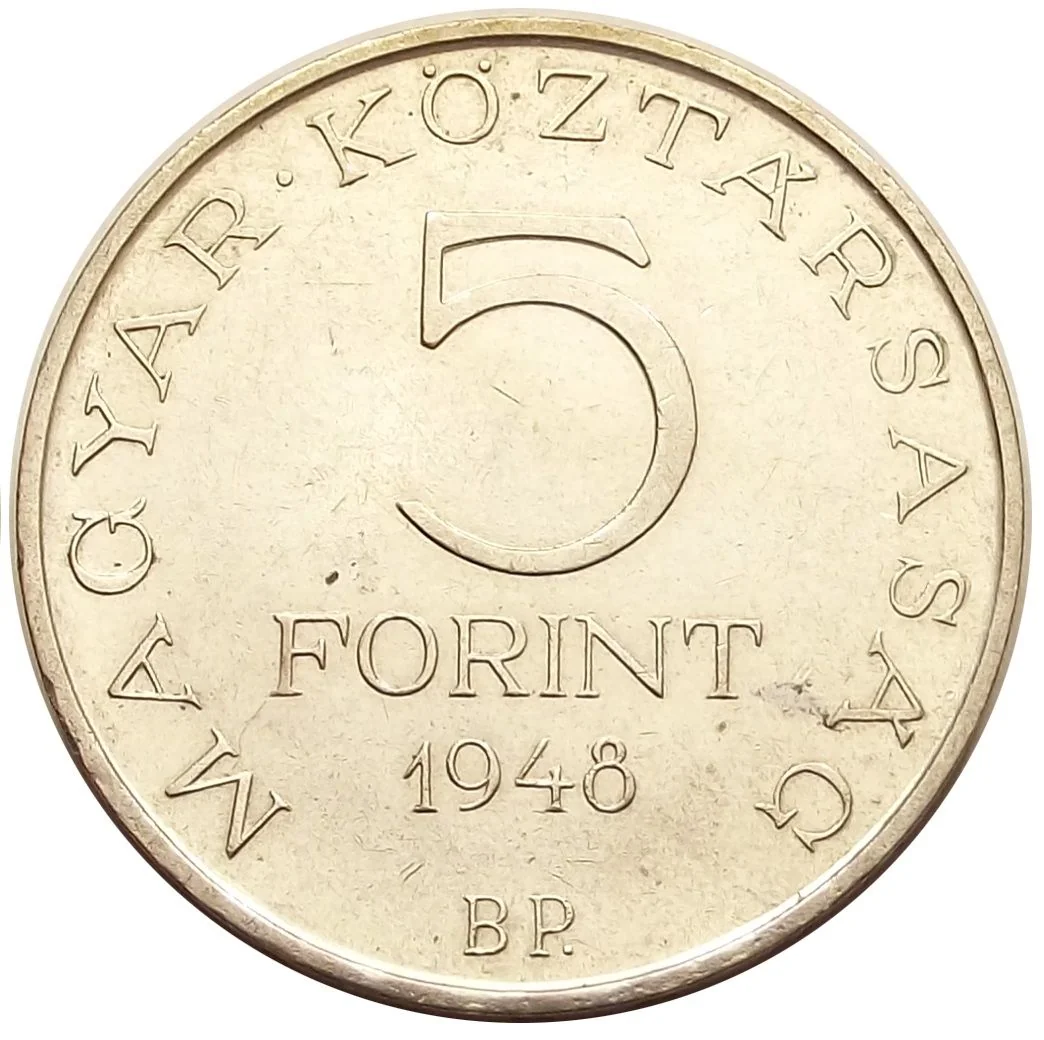
Obverse
Description:
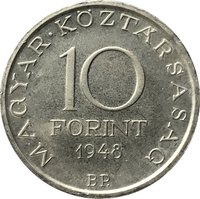
Denomination over date and mintmark
Inscription:
MAGYAR KÖZTÁRSASÁG
5
FORINT
1948
BP.
5
FORINT
1948
BP.
Translation:
HUNGARIAN REPUBLIC
5
FORINT
1948
BP.
5
FORINT
1948
BP.
Script: Latin
Language: Hungarian
Designer: József Reményi
Reverse
Description:
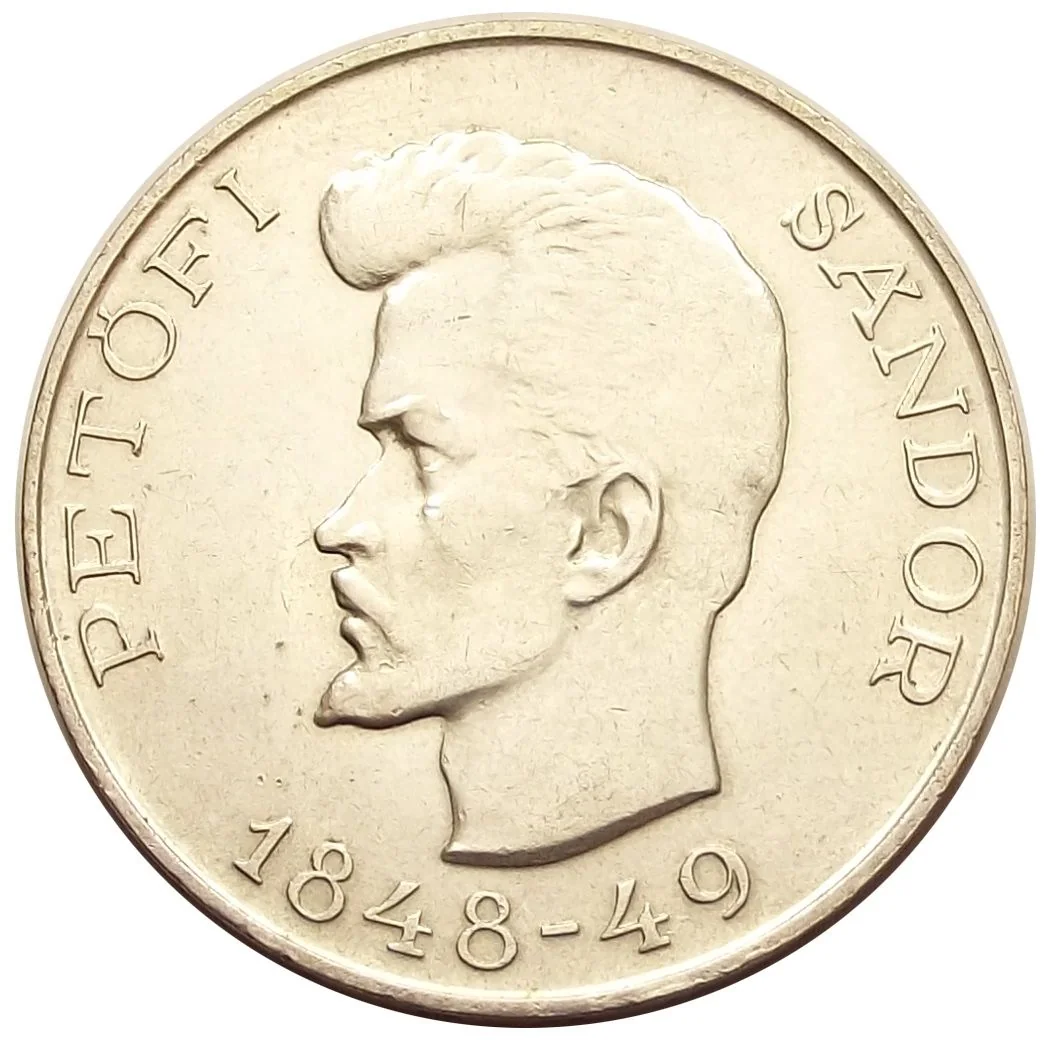
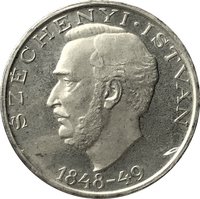
Sándor Petőfi, Hungarian poet and revolutionary.
Inscription:
PETŐFI SÁNDOR
1848-49
1848-49
Translation:
Sándor Petőfi
1848-49
1848-49
Script: Latin
Language: Hungarian
Designer: József Reményi
Edge
Categories
| Event> Revolution |
Mints
| Name | Mark |
|---|---|
| Hungarian mint | BP. |
Historical background
In 1948, Hungary’s currency situation was defined by the consolidation of Communist power and the implementation of a Soviet-style command economy. The Hungarian Forint (HUF), introduced in 1946 to end the catastrophic hyperinflation of the Pengő, was still a relatively new and stable currency. However, its management was increasingly subordinated to state planning goals rather than market mechanisms. The government, led by the Hungarian Working People’s Party, began a sweeping nationalization program, seizing control of major industries, banks, and financial institutions, which placed the entire monetary system under direct political control.
This period saw the deliberate use of currency and pricing as tools for socialist transformation. The state implemented strict foreign exchange controls, isolating the forint from international markets and tying it to the non-convertible Soviet ruble within the emerging Eastern Bloc trade system. Domestically, artificial official exchange rates and multiple pricing systems were often used to subsidize heavy industry at the expense of consumer goods, leading to hidden inflationary pressures and the beginnings of a shortage economy. Currency circulation was tightly regulated to align with central plans, suppressing the remnants of a private market.
Consequently, while the hyperinflation trauma was past, the currency situation in 1948 was one of rigid control and underlying distortion. The forint’s stability was maintained administratively, but its function was fundamentally altered from a medium of exchange to an instrument of state policy. This set the stage for the chronic economic inefficiencies and suppressed inflation that would characterize the Hungarian economy for the next four decades, well before the more visible crises of the 1950s.
This period saw the deliberate use of currency and pricing as tools for socialist transformation. The state implemented strict foreign exchange controls, isolating the forint from international markets and tying it to the non-convertible Soviet ruble within the emerging Eastern Bloc trade system. Domestically, artificial official exchange rates and multiple pricing systems were often used to subsidize heavy industry at the expense of consumer goods, leading to hidden inflationary pressures and the beginnings of a shortage economy. Currency circulation was tightly regulated to align with central plans, suppressing the remnants of a private market.
Consequently, while the hyperinflation trauma was past, the currency situation in 1948 was one of rigid control and underlying distortion. The forint’s stability was maintained administratively, but its function was fundamentally altered from a medium of exchange to an instrument of state policy. This set the stage for the chronic economic inefficiencies and suppressed inflation that would characterize the Hungarian economy for the next four decades, well before the more visible crises of the 1950s.
🌱 Fairly Common