

1 Crown – Hungary
Hungary
Context
Years: 1912–1916
Issuer: Hungary 
Ruler: Francis Joseph I
Currency:
(1892—1918)
Demonetization: 1 January 1927
Total mintage: 13,829,308
Material
References
KM: #Click to copy to clipboard492
Numista: #12865
Value
Bullion value: $11.95
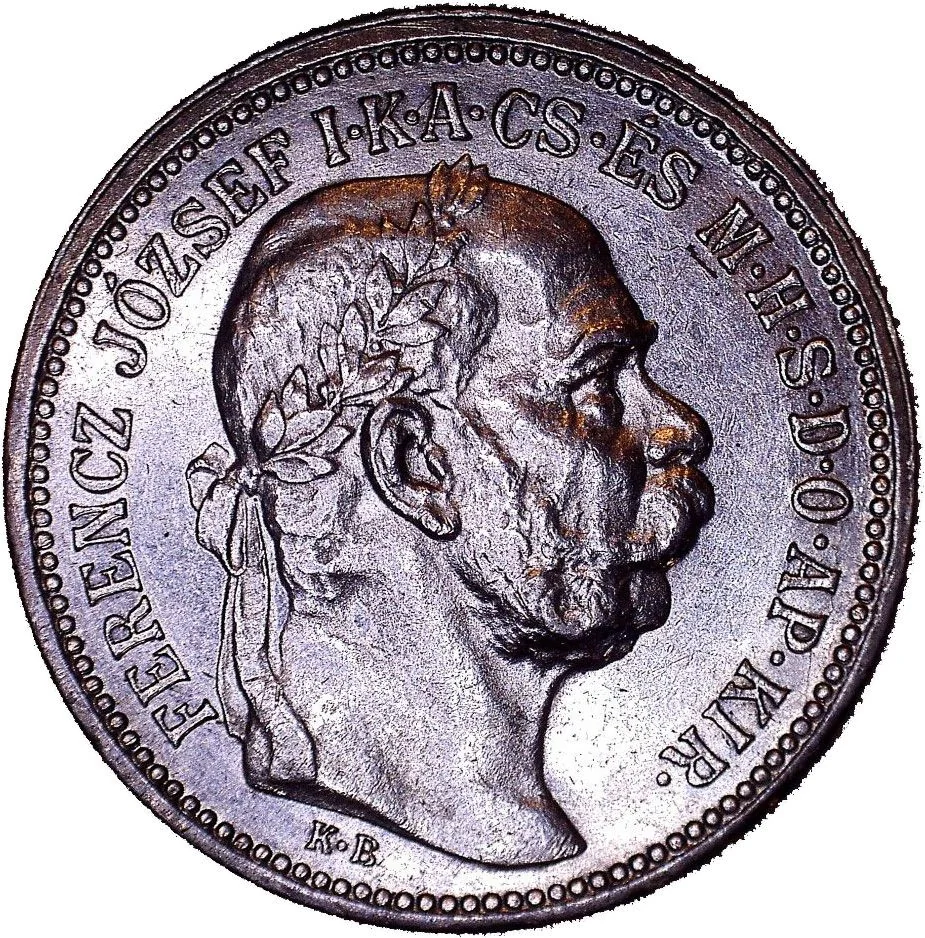
Obverse
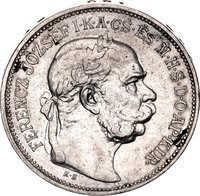
Description:
Aged Emperor Franz Joseph I
Inscription:
FERENCZ JÓZSEF I·K·A·CS·ÉS M·H·S·D·O·AP·KIR· K·B
Translation:
Francis Joseph I, Emperor of Austria, Apostolic King of Hungary, King of Bohemia, etc.
Script: Latin
Engraver: József Reisner
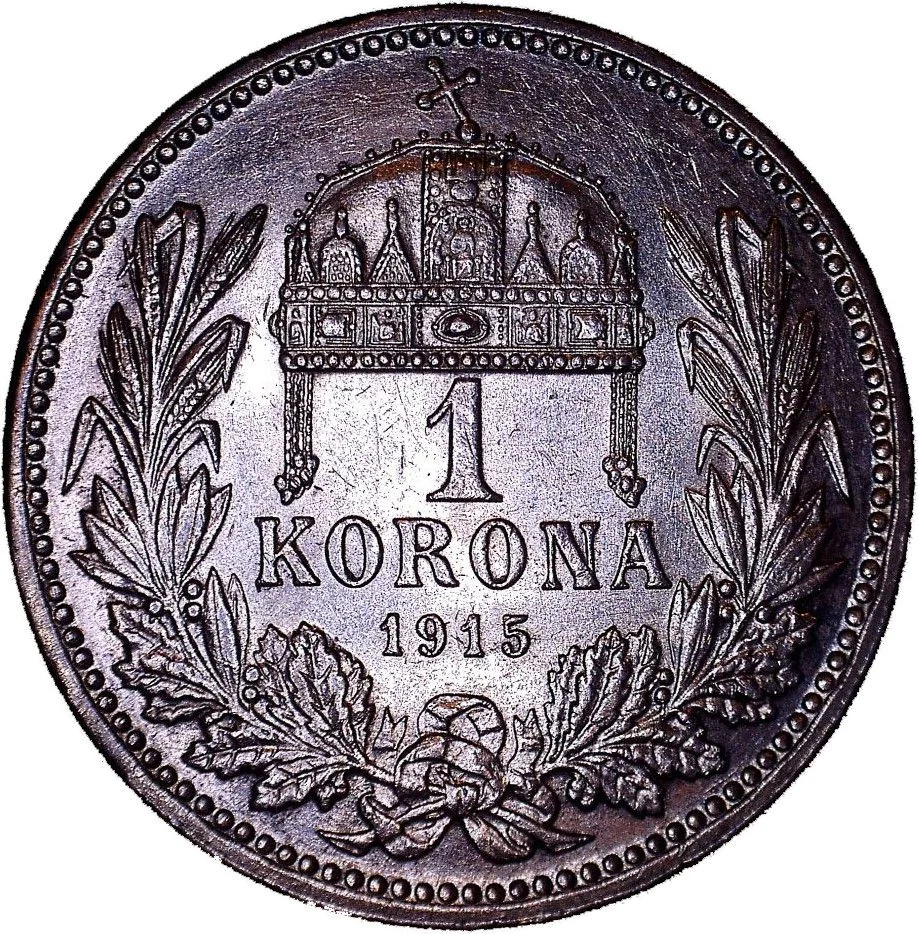
Reverse
Edge
Inscripted
Legend:
BIZALMAM AZ ŐSI ERÉNYBEN
Translation:
My trust is in ancient virtue.
Language: Hungarian
Categories
| Person> Military leader |
| Mustache/Beard |
| Symbol> Crown |
Mints
| Name | Mark |
|---|---|
| Kremnica | KB |
Mintings
Historical background
In 1912, Hungary operated within the complex monetary framework of the Austro-Hungarian Empire, sharing a common currency but managing its own distinct financial affairs. The official currency was the Austro-Hungarian gulden (or florin), which was on a de facto gold standard, though its convertibility was managed cautiously by the Austro-Hungarian Bank. This central bank, with headquarters in both Vienna and Budapest, issued banknotes that circulated throughout the Dual Monarchy, but Hungary had secured the right to have Hungarian-language notes circulate within its lands, a symbol of its political autonomy within the empire.
Economically, the period leading up to 1912 was one of relative stability and growth, often referred to as the "Belle Époque" in the region. The currency was stable, inflation was low, and Hungary was experiencing significant industrial and infrastructural development financed by both domestic capital and foreign investment. However, this stability was underpinned by delicate political compromises between Austria and Hungary, particularly regarding the sharing of common expenses and the management of the state debt, which were sources of continual negotiation and occasional tension between the two partner states.
Beneath this surface stability, there were underlying vulnerabilities. The monetary system was ultimately geared toward supporting the empire's political and military ambitions, with fiscal policy often subservient to the strategic goals set in Vienna. Furthermore, the gold coverage for the currency was not as robust as that of other major European powers, leaving it susceptible to crisis. The calm of 1912 was, therefore, a prelude to the severe monetary turmoil that would follow with the outbreak of the First World War just two years later, which would lead to the collapse of the gulden, hyperinflation, and the eventual disintegration of the common monetary area upon the empire's dissolution.
Economically, the period leading up to 1912 was one of relative stability and growth, often referred to as the "Belle Époque" in the region. The currency was stable, inflation was low, and Hungary was experiencing significant industrial and infrastructural development financed by both domestic capital and foreign investment. However, this stability was underpinned by delicate political compromises between Austria and Hungary, particularly regarding the sharing of common expenses and the management of the state debt, which were sources of continual negotiation and occasional tension between the two partner states.
Beneath this surface stability, there were underlying vulnerabilities. The monetary system was ultimately geared toward supporting the empire's political and military ambitions, with fiscal policy often subservient to the strategic goals set in Vienna. Furthermore, the gold coverage for the currency was not as robust as that of other major European powers, leaving it susceptible to crisis. The calm of 1912 was, therefore, a prelude to the severe monetary turmoil that would follow with the outbreak of the First World War just two years later, which would lead to the collapse of the gulden, hyperinflation, and the eventual disintegration of the common monetary area upon the empire's dissolution.
🌱 Very Common