

1 Falus – City of Qandahar
Afghanistan
Context
Material
References
KM: #Click to copy to clipboard87
Numista: #10468
Obverse
Description:
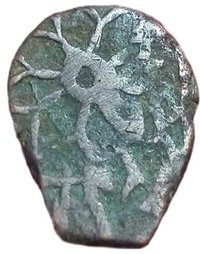
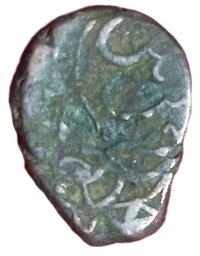
Flower encircled by four swords.
Reverse
Edge
Mints
| Name | Mark |
|---|---|
| Kandahar | — |
Mintings
| Year | Mint Mark | Mintage | Quality | Collection |
|---|---|---|---|---|
| 1813 | — | — |
Historical background
In 1813, the city of Qandahar existed within a complex and fragmented monetary landscape, characteristic of a major trading hub caught between declining empires and emerging regional powers. The city was nominally under the control of the Durrani Empire, but by this period, central authority from Kabul had significantly weakened following internal succession struggles and the loss of key territories. This political decentralization directly impacted the currency system, creating an environment where multiple coinages circulated simultaneously, their value based more on intrinsic metal content and merchant trust than on a single, enforceable state standard.
The primary circulating medium was the silver rupee, but its provenance varied. Older Durrani rupees minted under the empire's stronger rulers like Ahmad Shah Durrani still held value alongside newer, often debased coins issued by local Durrani princes in Qandahar and Kandahār province. Crucially, the influential Sikh Empire of Ranjit Singh, which had captured the key mint city of Multan in 1818, was extending its economic influence westward. Sikh rupees, along with Persian krans from the west and even older Mughal coins, flowed into the bazaars via long-distance trade caravans. The city's position on the routes between Central Asia, Persia, and the Indian subcontinent made it a natural conduit for diverse currencies.
This multiplicity of coins led to a daily reality of assay and exchange. Money changers (sarrafs) were essential figures in the marketplace, determining the precise weight and silver purity of each coin and assigning it a fluctuating value. Transactions required constant negotiation, as the reputation of a coin's mint and the date of its issue affected its worth. There was no unified "Qandahari" currency; instead, the monetary situation was a tangible reflection of the city's contested political environment and its enduring role as a commercial crossroads, where the economic currents of Persia, Central Asia, and India converged and competed.
The primary circulating medium was the silver rupee, but its provenance varied. Older Durrani rupees minted under the empire's stronger rulers like Ahmad Shah Durrani still held value alongside newer, often debased coins issued by local Durrani princes in Qandahar and Kandahār province. Crucially, the influential Sikh Empire of Ranjit Singh, which had captured the key mint city of Multan in 1818, was extending its economic influence westward. Sikh rupees, along with Persian krans from the west and even older Mughal coins, flowed into the bazaars via long-distance trade caravans. The city's position on the routes between Central Asia, Persia, and the Indian subcontinent made it a natural conduit for diverse currencies.
This multiplicity of coins led to a daily reality of assay and exchange. Money changers (sarrafs) were essential figures in the marketplace, determining the precise weight and silver purity of each coin and assigning it a fluctuating value. Transactions required constant negotiation, as the reputation of a coin's mint and the date of its issue affected its worth. There was no unified "Qandahari" currency; instead, the monetary situation was a tangible reflection of the city's contested political environment and its enduring role as a commercial crossroads, where the economic currents of Persia, Central Asia, and India converged and competed.
💎 Extremely Rare