

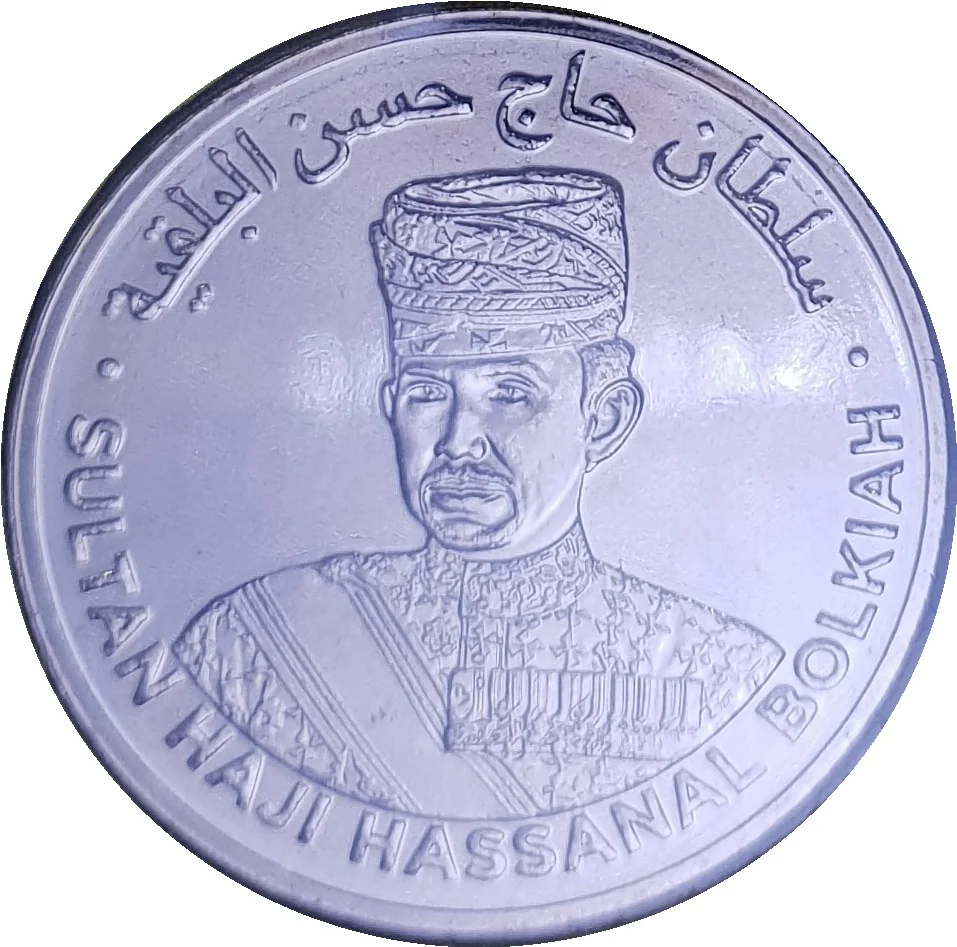
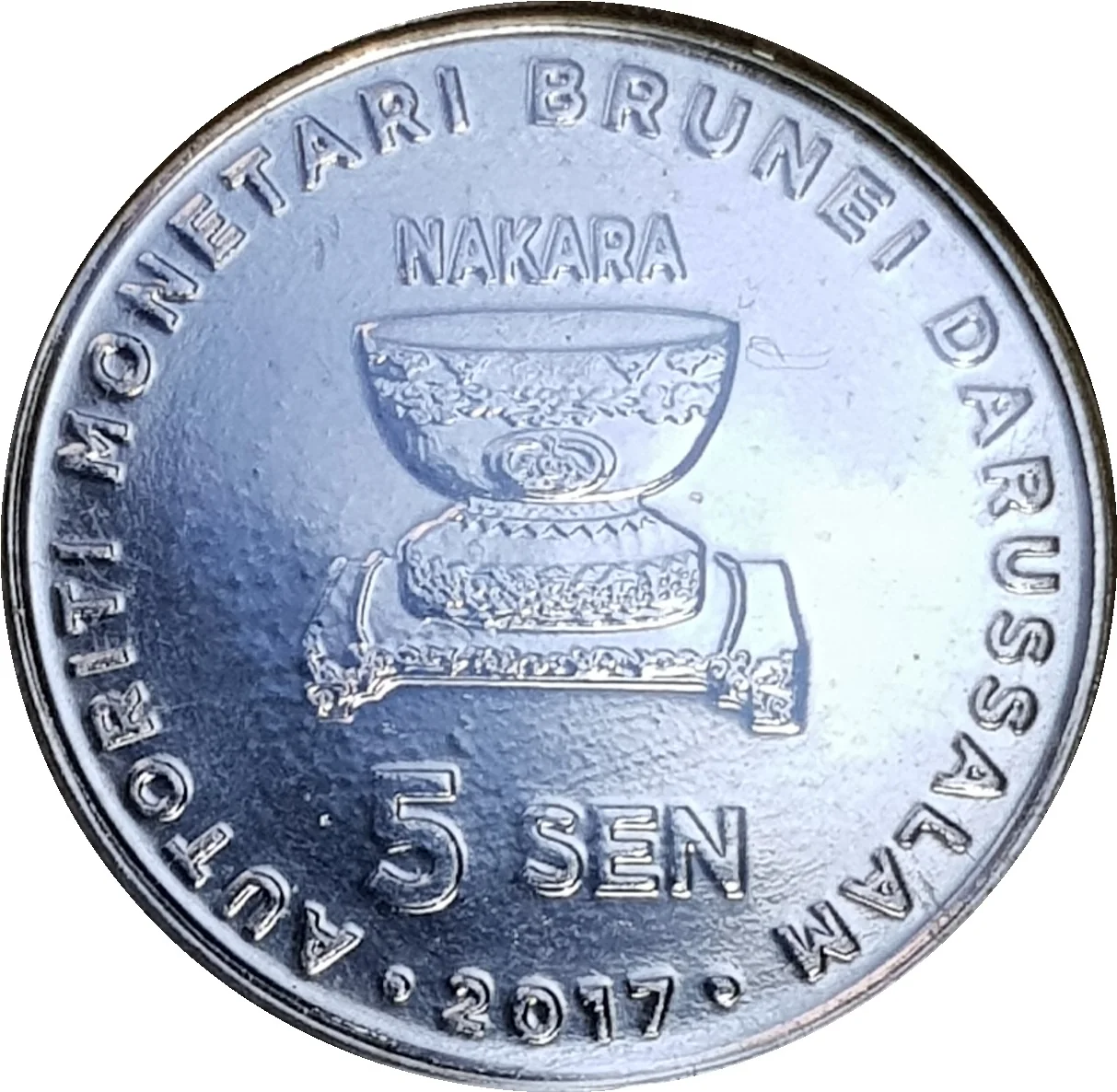
5 sen (Accession to the Throne) – Brunei
Add to wishlist
Circulating commemorative coins
Commemoration: Golden Jubilee - 50th Anniversary of Accession to the Throne
Brunei
Context
Material
Diameter: 16.31 mm
Weight: 1.96 g
Thickness: 0.9 mm
Shape: Round
Composition: Nickel brass
Magnetic: No
Technique: Milled
Alignment: Medal alignment
flip
References
KM: #
Numista: #128396
Value
Exchange value: 0.05 BND
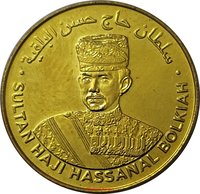
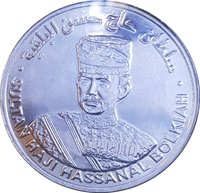
Obverse
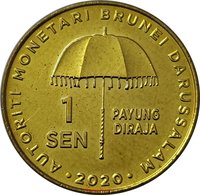
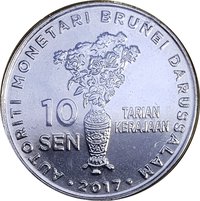
Reverse
Edge
Reeded
Mints
| Name | Mark |
|---|---|
| Singapore Mint | — |
Mintings
| Year | Mint Mark | Mintage | Quality | Collection |
|---|---|---|---|---|
| 2017 | — | 3,000 | ||
| 2018 | — | — | ||
| 2019 | — | — | ||
| 2021 | — | — |
Historical background
In 2017, Brunei Darussalam's currency situation was defined by its long-standing and stable peg to the Singapore Dollar (SGD). Established in 1967, this Currency Interchangeability Agreement meant that the Brunei Dollar (BND) and the SGD were accepted as customary tender in both countries and exchanged at a strict 1:1 parity. This arrangement provided a crucial anchor of monetary stability for Brunei, insulating its small, open economy from volatile currency fluctuations and bolstering investor confidence. The peg was particularly vital given Brunei's heavy dependence on hydrocarbon exports, which account for the majority of government revenue and exports, as it provided a predictable financial environment for trade and investment.
The year unfolded against a backdrop of moderate economic recovery for the Sultanate. Following a period of contraction due to lower global oil and gas prices, 2017 saw a return to positive GDP growth, supported by a slight rebound in energy prices and increased production from the Hengyi Industries refinery project. This economic improvement, however, did not translate into significant pressure on the currency peg. Brunei's substantial foreign exchange reserves, accumulated from decades of energy exports, continued to provide more than ample backing for the fixed exchange rate, ensuring its credibility remained unquestioned in the markets.
Consequently, there were no major currency crises or policy shifts in Brunei during 2017. The primary focus for monetary authorities, namely the Autoriti Monetari Brunei Darussalam (AMBD), remained on maintaining the integrity of the peg and managing domestic liquidity. The stability afforded by the peg allowed the government to concentrate on broader economic diversification goals outlined in its Wawasan 2035 (Vision 2035) blueprint, without the distraction of currency volatility. In essence, 2017 represented a period of continuity and reaffirmation for Brunei's currency regime, a cornerstone of its financial system.
The year unfolded against a backdrop of moderate economic recovery for the Sultanate. Following a period of contraction due to lower global oil and gas prices, 2017 saw a return to positive GDP growth, supported by a slight rebound in energy prices and increased production from the Hengyi Industries refinery project. This economic improvement, however, did not translate into significant pressure on the currency peg. Brunei's substantial foreign exchange reserves, accumulated from decades of energy exports, continued to provide more than ample backing for the fixed exchange rate, ensuring its credibility remained unquestioned in the markets.
Consequently, there were no major currency crises or policy shifts in Brunei during 2017. The primary focus for monetary authorities, namely the Autoriti Monetari Brunei Darussalam (AMBD), remained on maintaining the integrity of the peg and managing domestic liquidity. The stability afforded by the peg allowed the government to concentrate on broader economic diversification goals outlined in its Wawasan 2035 (Vision 2035) blueprint, without the distraction of currency volatility. In essence, 2017 represented a period of continuity and reaffirmation for Brunei's currency regime, a cornerstone of its financial system.
🌱 Fairly Common