

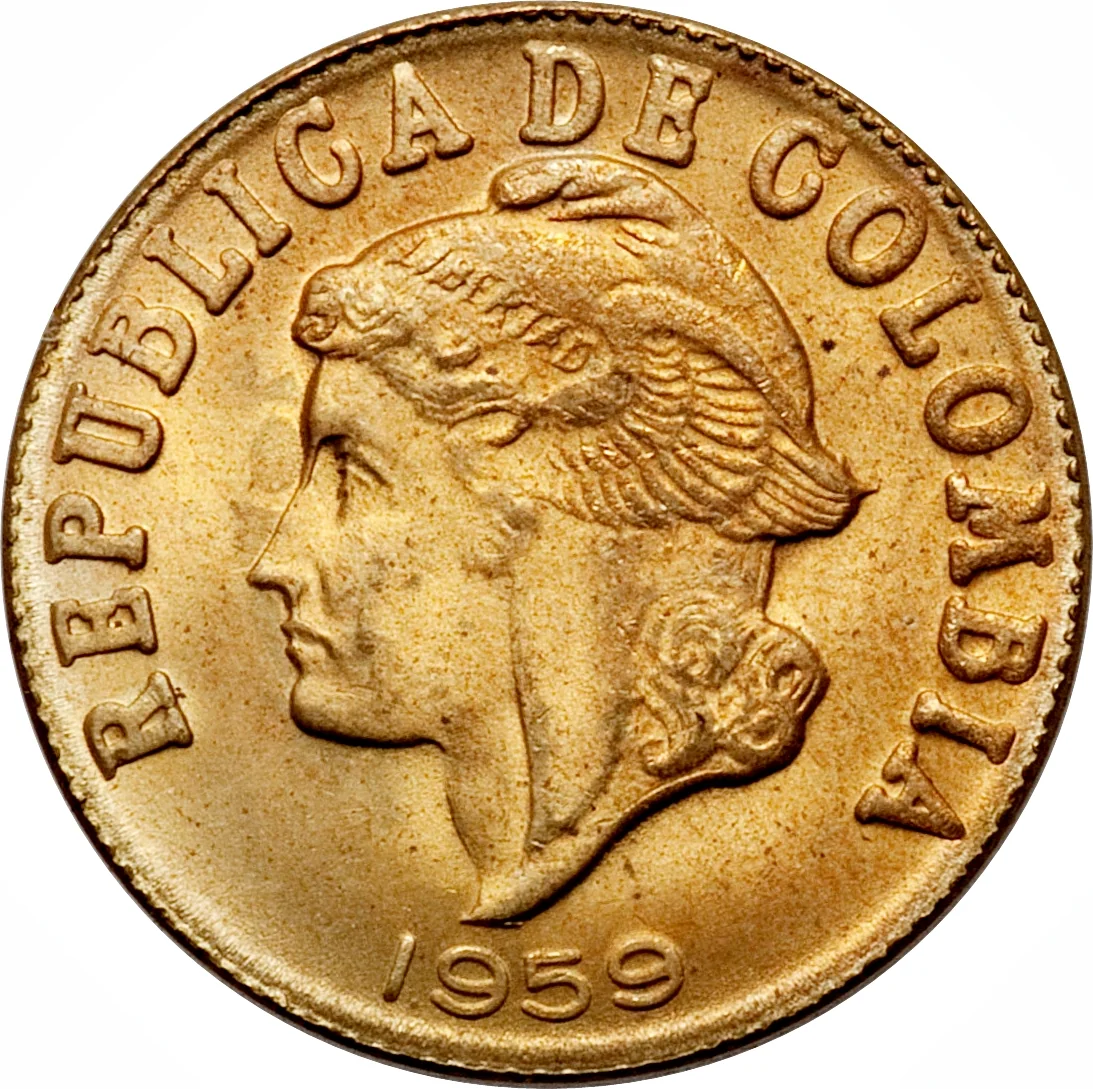
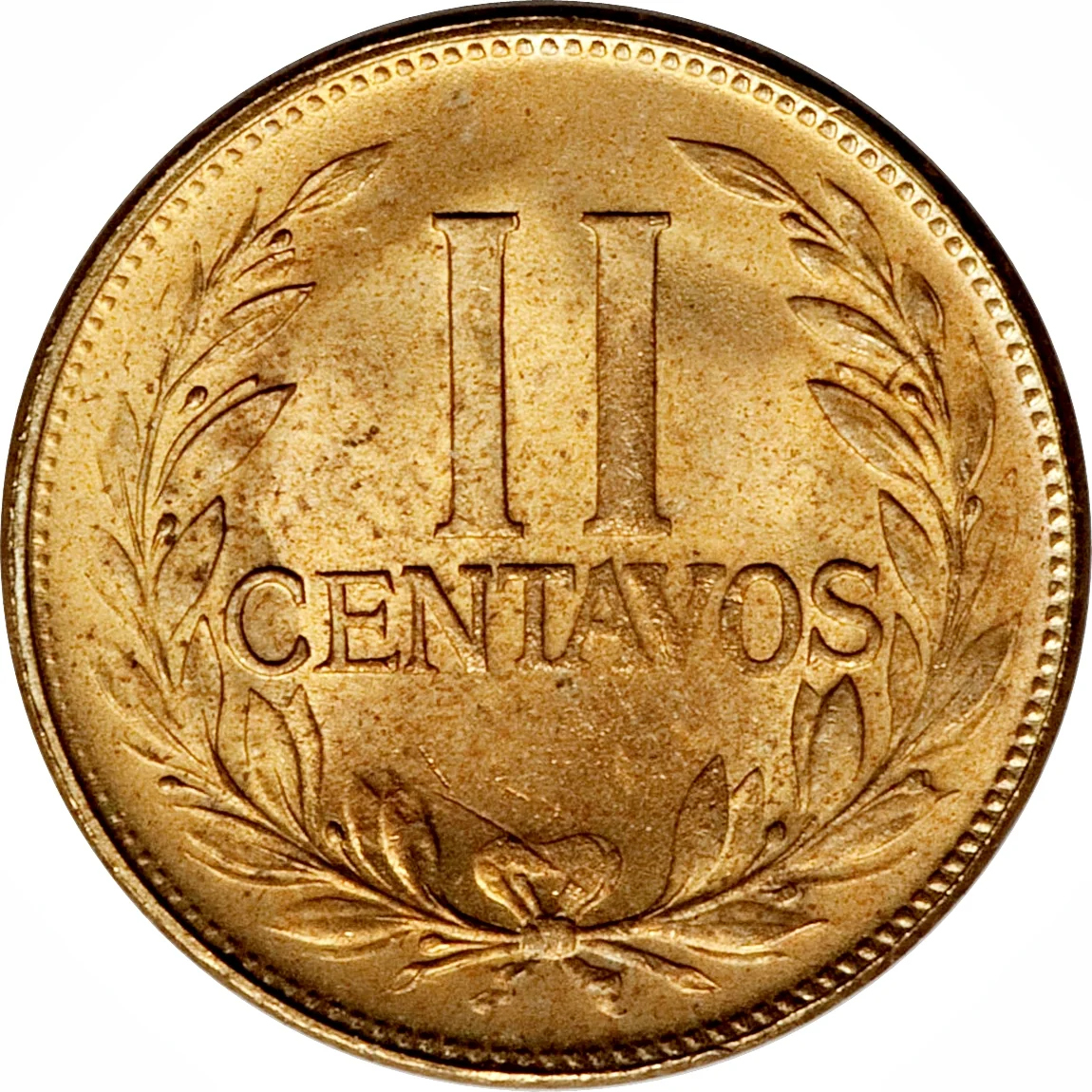
2 centavos – Colombia
Add to wishlist
Colombia
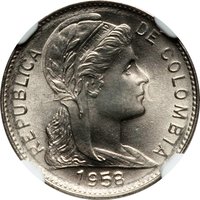
Obverse
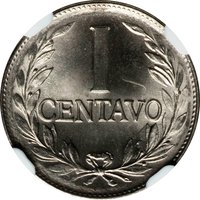
Reverse
Edge
Plain
Mints
| Name | Mark |
|---|---|
| Bogota Mint | B |
Mintings
| Year | Mint Mark | Mintage | Quality | Collection |
|---|---|---|---|---|
| 1955 | — | 2,513,000 | ||
| 1955 | B | — | ||
| 1959 | — | 4,609,000 |
Historical background
In 1955, Colombia operated under a fixed exchange rate system managed by the Banco de la República, with the peso pegged to the U.S. dollar. This regime, established in the early 1950s, aimed to provide monetary stability and control inflation. However, the system was under significant strain due to a combination of internal political turmoil—known as La Violencia—and a decline in global coffee prices, Colombia's primary export. These factors led to a growing balance of payments deficit, as export earnings fell while the demand for imported goods remained high, putting persistent downward pressure on the peso's official value.
The government of General Gustavo Rojas Pinilla, who had taken power in a 1953 coup, responded to these pressures with strict exchange and import controls rather than a devaluation. Multiple exchange rates were employed: a preferential official rate for essential imports and debt service, and a less favorable certificate rate for other transactions. This created a complex and restrictive environment, fostering a black market for dollars where the peso traded at a significant discount. The controls were intended to conserve scarce foreign reserves and protect domestic industries, but they also led to distortions, inefficiencies, and accusations of corruption in the allocation of foreign currency.
Overall, the currency situation in 1955 was characterized by a fragile and overvalued official peso, maintained through administrative controls that masked deeper economic vulnerabilities. While the fixed rate provided a facade of stability, the growing disparity between the official and black-market rates signaled a loss of confidence and underlying inflationary pressures. This unsustainable framework would contribute to the economic difficulties that culminated in a major devaluation and a shift toward a crawling peg system later in the decade.
The government of General Gustavo Rojas Pinilla, who had taken power in a 1953 coup, responded to these pressures with strict exchange and import controls rather than a devaluation. Multiple exchange rates were employed: a preferential official rate for essential imports and debt service, and a less favorable certificate rate for other transactions. This created a complex and restrictive environment, fostering a black market for dollars where the peso traded at a significant discount. The controls were intended to conserve scarce foreign reserves and protect domestic industries, but they also led to distortions, inefficiencies, and accusations of corruption in the allocation of foreign currency.
Overall, the currency situation in 1955 was characterized by a fragile and overvalued official peso, maintained through administrative controls that masked deeper economic vulnerabilities. While the fixed rate provided a facade of stability, the growing disparity between the official and black-market rates signaled a loss of confidence and underlying inflationary pressures. This unsustainable framework would contribute to the economic difficulties that culminated in a major devaluation and a shift toward a crawling peg system later in the decade.
🌱 Common