

200 lire – San Marino
Add to wishlist
Circulating commemorative coins
Commemoration: FAO
San Marino
Context
Year: 1981
Issuer: San Marino
Period:
(since 301)
Currency:
(1864—2001)
Demonetization: 1 March 2002
Total mintage: 600,000
Material
Diameter: 24 mm
Weight: 5 g
Shape: Round
Composition: Aluminium bronze
Magnetic: No
Technique: Milled
Alignment: Coin alignment
flip
References
KM: #
Numista: #12789
Value
Exchange value: 200 SML
Obverse
Description:
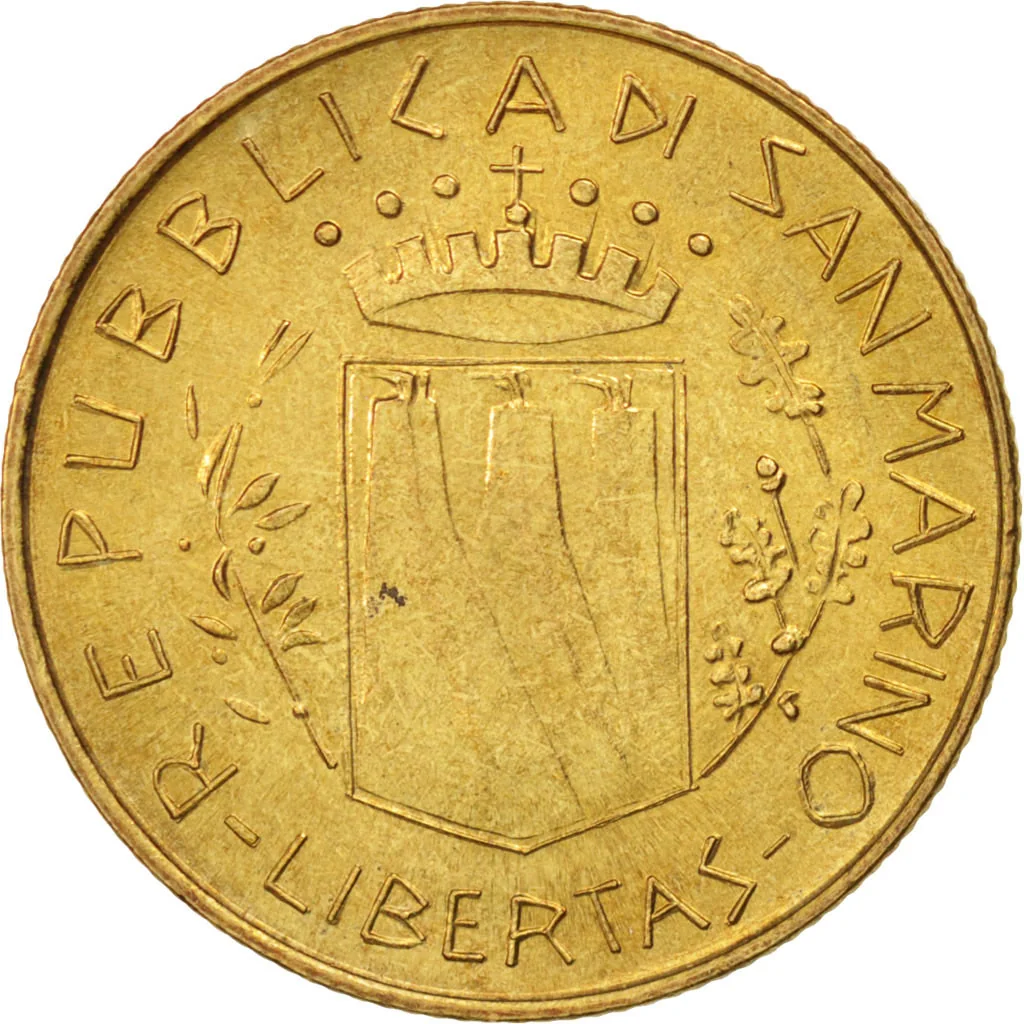
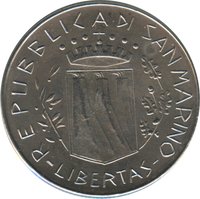
Crowned San Marino arms within sprigs.
Inscription:
REPUBBLICA DI SAN MARINO
LIBERTAS
LIBERTAS
Translation:
Liberty Republic of San Marino
Script: Latin
Designer: Angelo Grilli
Reverse
Description:
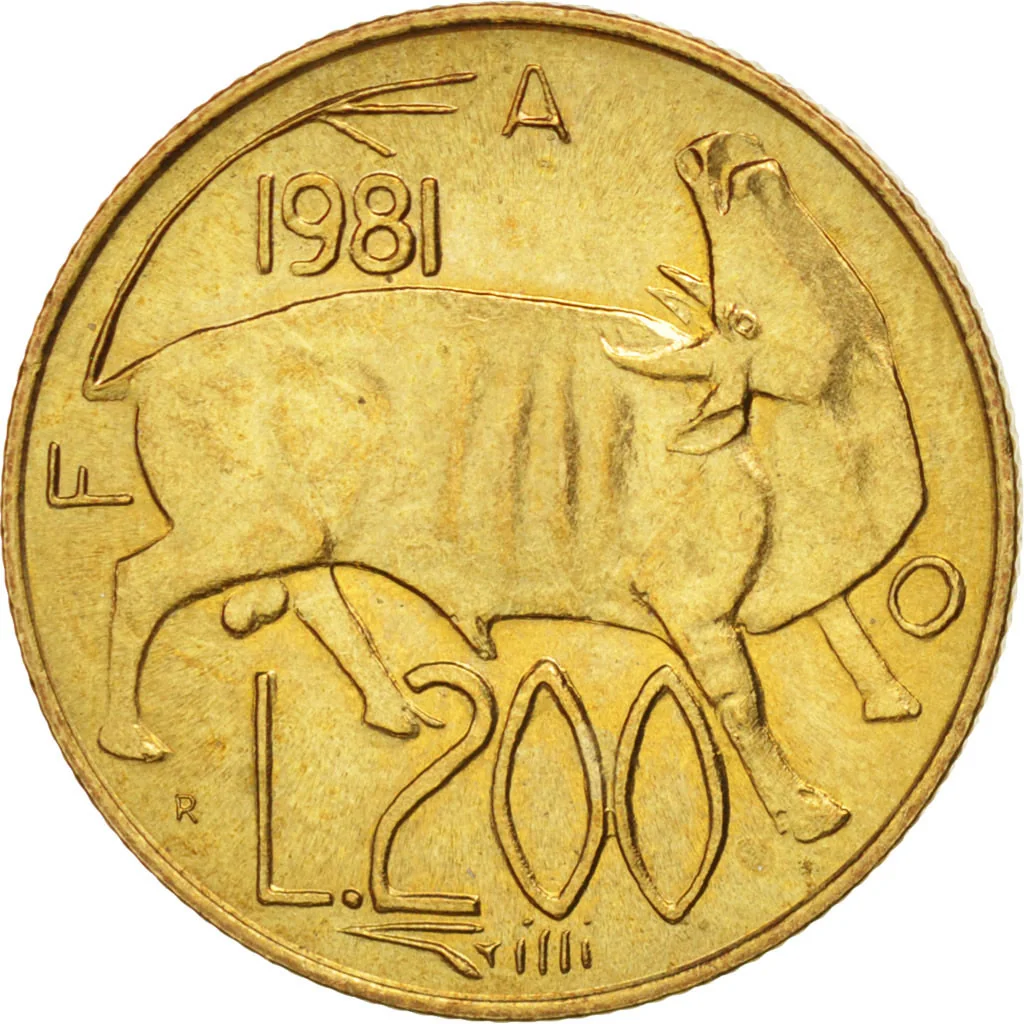
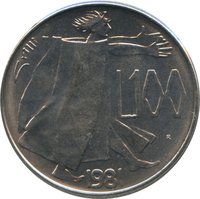
Bull facing right divides date and value. FAO Dairy Development.
Inscription:
1981
L 200
F A O
L 200
F A O
Script: Latin
Designer: Angelo Grilli
Edge
Reeded
Categories
| Animal> Cow |
| Organization> FAO |
Mints
| Name | Mark |
|---|---|
| Rome | R |
Mintings
| Year | Mint Mark | Mintage | Quality | Collection |
|---|---|---|---|---|
| 1981 | R | 600,000 |
Historical background
In 1981, the currency situation in the Republic of San Marino was defined by its intricate and dependent relationship with Italy, formalized through a series of bilateral conventions. As a microstate completely surrounded by Italian territory, San Marino lacked an independent central bank and did not issue its own free-floating currency. Instead, its monetary system was governed by a 1939 agreement with Italy, which granted it the limited right to mint its own coinage, the San Marino lira. This coinage was legally pegged at par with the Italian lira and circulated interchangeably within the country, though Italian currency formed the vast bulk of everyday transactions.
The year 1981 occurred within a turbulent period for the Italian lira, which directly dictated San Marino's monetary stability. Italy was grappling with high inflation, political instability, and pressure on its currency within the European Monetary System (EMS). These external Italian economic woes imported financial uncertainty into San Marino, limiting its own economic policy tools. While Sammarinese coins carried symbolic national designs and were prized by collectors, they represented a tiny fraction of the money supply and were a concession of sovereignty rather than a tool of independent monetary policy.
Consequently, San Marino's currency situation in 1981 was one of constrained sovereignty, operating as a de facto extension of the Italian monetary zone. The state benefited from the stability of using a larger neighbor's currency but was wholly susceptible to Italy's inflation and economic decisions. This arrangement underscored San Marino's unique status—a sovereign republic in political terms, yet economically and monetarily integrated with Italy, a dependency that would only begin to evolve with the negotiations for new European Union monetary agreements in the following decades.
The year 1981 occurred within a turbulent period for the Italian lira, which directly dictated San Marino's monetary stability. Italy was grappling with high inflation, political instability, and pressure on its currency within the European Monetary System (EMS). These external Italian economic woes imported financial uncertainty into San Marino, limiting its own economic policy tools. While Sammarinese coins carried symbolic national designs and were prized by collectors, they represented a tiny fraction of the money supply and were a concession of sovereignty rather than a tool of independent monetary policy.
Consequently, San Marino's currency situation in 1981 was one of constrained sovereignty, operating as a de facto extension of the Italian monetary zone. The state benefited from the stability of using a larger neighbor's currency but was wholly susceptible to Italy's inflation and economic decisions. This arrangement underscored San Marino's unique status—a sovereign republic in political terms, yet economically and monetarily integrated with Italy, a dependency that would only begin to evolve with the negotiations for new European Union monetary agreements in the following decades.
🌱 Common