

10 cents – Straits Settlements
Add to wishlist
Malaysia
Context
Years: 1918–1920
Country: Malaysia
Issuer: Straits Settlements
Ruler: George V
Currency:
(1845—1939)
Demonetized: Yes
Total mintage: 23,000,229
Material
References
KM: #
Numista: #12775
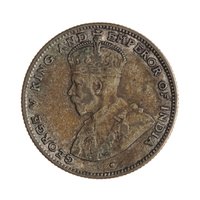
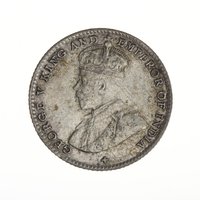
Obverse
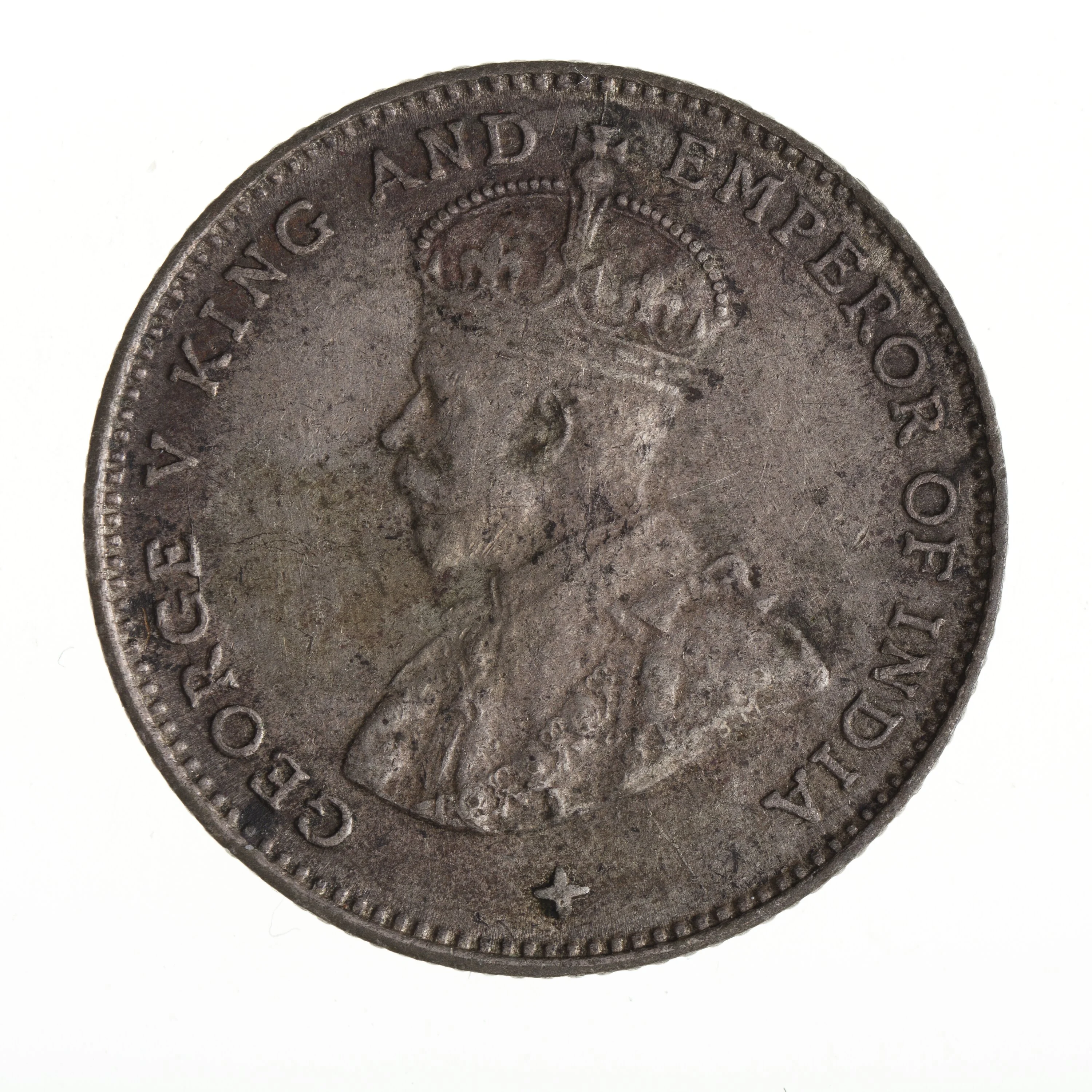
Description:
Crowned left-facing bust.
Inscription:
* GEORGE V KING AND EMPEROR OF INDIA
Translation:
GEORGE V KING AND EMPEROR OF INDIA
Script: Latin
Language: English
Engraver: Edgar Bertram MacKennal
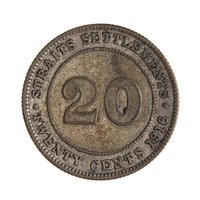
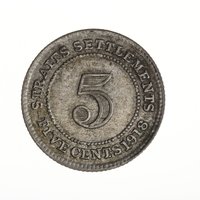
Reverse
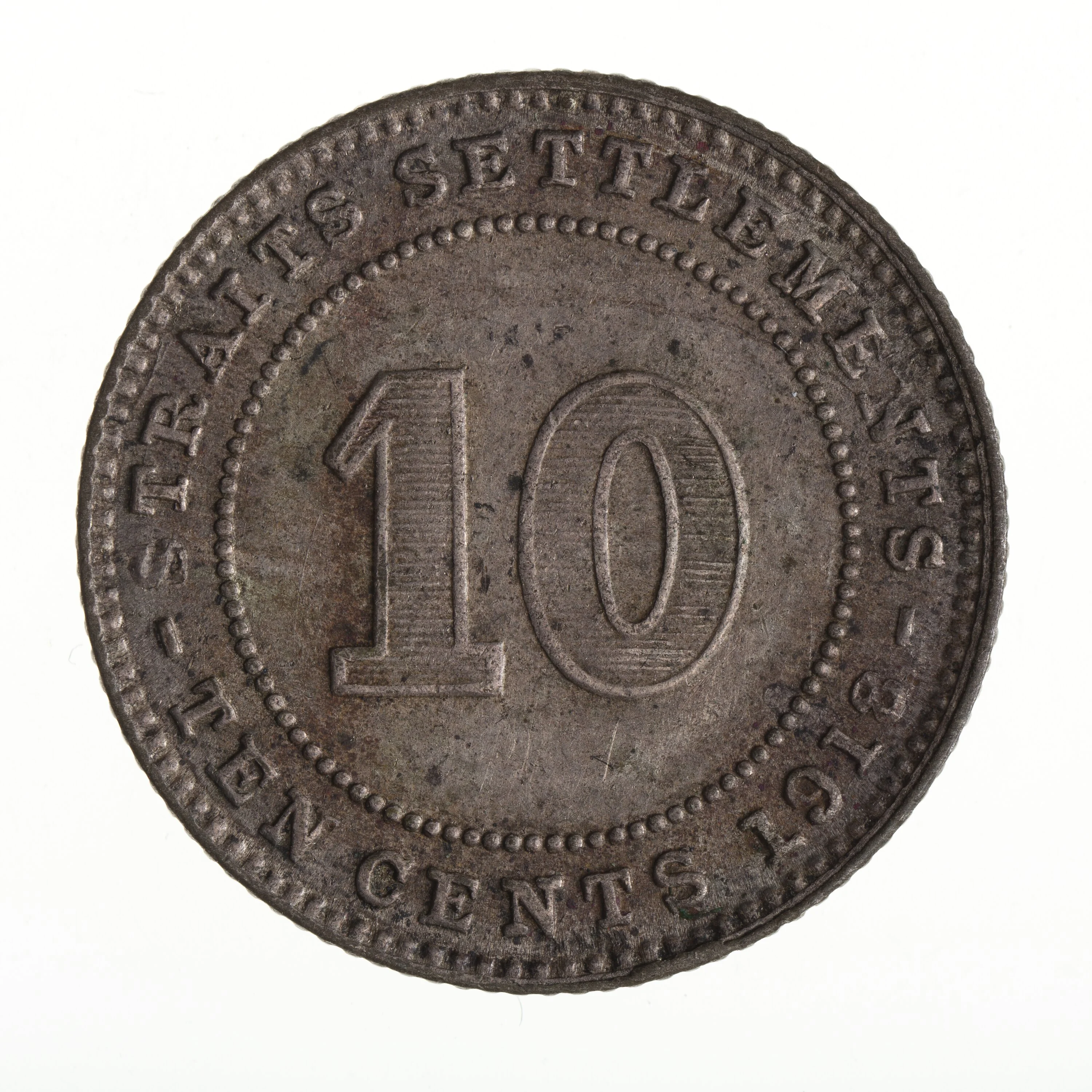
Description:
Denomination in beaded circle, date at lower right.
Inscription:
-STRAITS SETTLEMENTS-
10
TEN CENTS 1919
10
TEN CENTS 1919
Script: Latin
Edge
Reeded
Mints
| Name | Mark |
|---|---|
| Mumbai / Bombay | — |
Mintings
| Year | Mint Mark | Mintage | Quality | Collection |
|---|---|---|---|---|
| 1918 | — | 7,500,074 | ||
| 1919 | — | 11,500,121 | ||
| 1920 | — | 4,000,034 |
Historical background
In 1918, the Straits Settlements (comprising Singapore, Penang, and Malacca) operated under a unique currency board system, with the Straits dollar as its official currency. This system was designed to ensure full convertibility and stability by backing the local currency with sterling reserves held in London. However, the First World War profoundly disrupted this orderly arrangement. The massive demand for silver, a key strategic material for the war effort, caused its global price to soar far above the fixed gold-exchange value of the Straits dollar. This created a powerful incentive to melt down or export silver coins, leading to a severe shortage of circulating currency in the colony.
The colonial government responded with a series of emergency measures. To stem the outflow of silver, they first reduced the silver content in subsidiary coins and then, in 1917, demonetized the widely used silver "British Trade Dollars." Most critically, in 1918, the government issued Treasury notes of one-dollar and fifty-cent denominations, marking the first official use of paper money for low-value transactions. These notes were initially legal tender only within the Straits Settlements and were not automatically convertible into sterling, representing a temporary departure from the strict principles of the currency board to address the acute physical shortage of coins.
Consequently, by the end of 1918, the currency situation was a strained hybrid system. The core gold-exchange standard remained officially in place for larger transactions and international trade, but locally, the economy relied heavily on emergency paper issues and debased subsidiary coins. This period exposed the vulnerability of a metallic currency to global commodity shocks and set a precedent for the future adoption of permanent paper money, which would eventually evolve into the Malayan dollar after the war as the system stabilized and reformed.
The colonial government responded with a series of emergency measures. To stem the outflow of silver, they first reduced the silver content in subsidiary coins and then, in 1917, demonetized the widely used silver "British Trade Dollars." Most critically, in 1918, the government issued Treasury notes of one-dollar and fifty-cent denominations, marking the first official use of paper money for low-value transactions. These notes were initially legal tender only within the Straits Settlements and were not automatically convertible into sterling, representing a temporary departure from the strict principles of the currency board to address the acute physical shortage of coins.
Consequently, by the end of 1918, the currency situation was a strained hybrid system. The core gold-exchange standard remained officially in place for larger transactions and international trade, but locally, the economy relied heavily on emergency paper issues and debased subsidiary coins. This period exposed the vulnerability of a metallic currency to global commodity shocks and set a precedent for the future adoption of permanent paper money, which would eventually evolve into the Malayan dollar after the war as the system stabilized and reformed.
🌱 Common