

10 bahts (Department of Internal Trade) – Thailand
Add to wishlist
Circulating commemorative coins
Commemoration: 60th Anniversary of Department of Internal Trade
Thailand
Context
Year: 2002
Thai Year:: 2545
Issuer: Thailand
Ruler: Bhumibol Adulyadej
Currency:
(since 1897)
Total mintage: 3,000,000
Material
References
Y: #
Numista: #10016
Value
Exchange value: 10 THB
Obverse
Description:
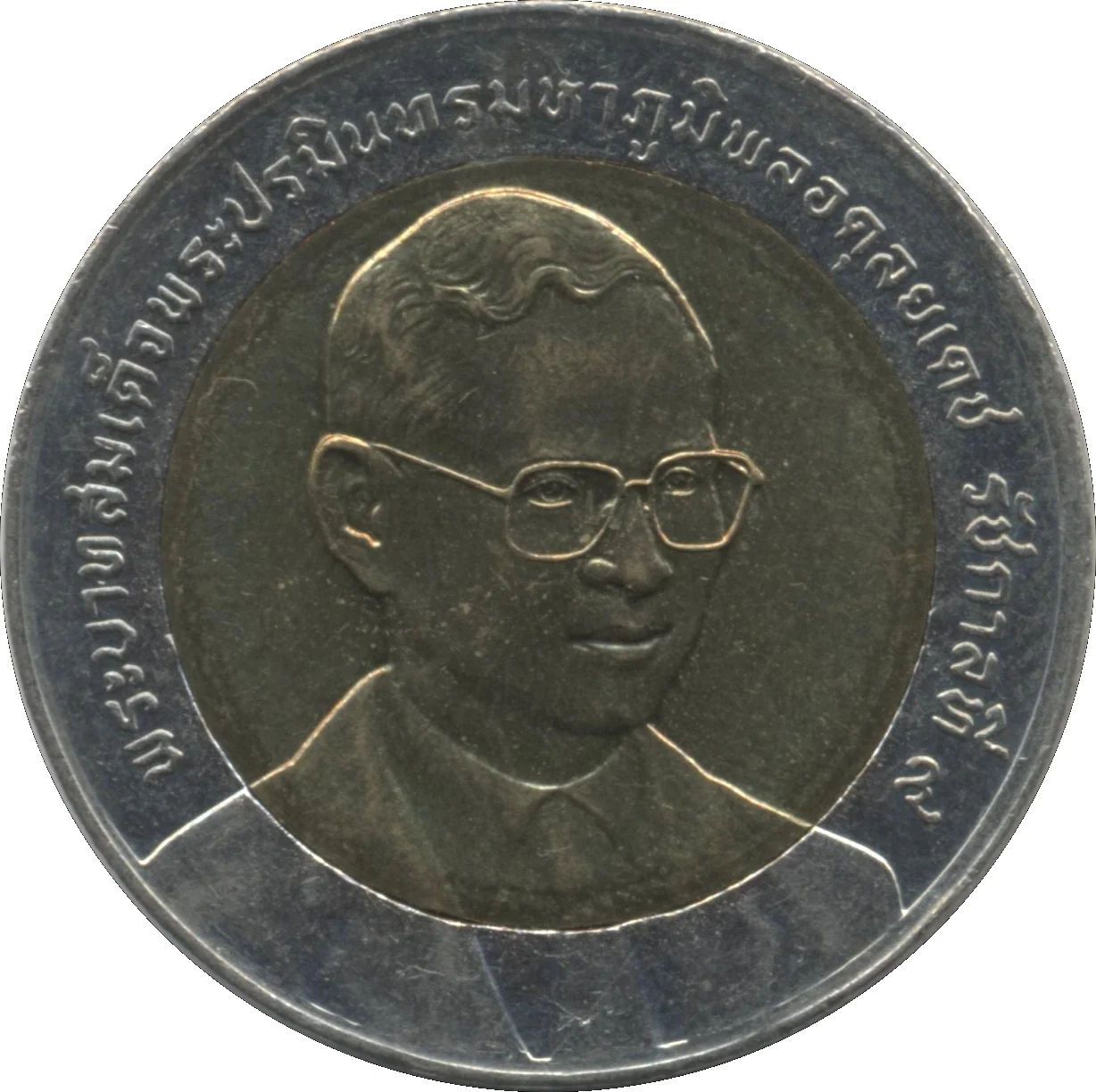
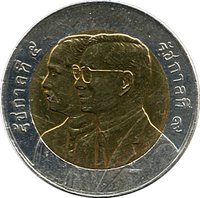
Bust of King Bhumibol.
Reverse
Description:
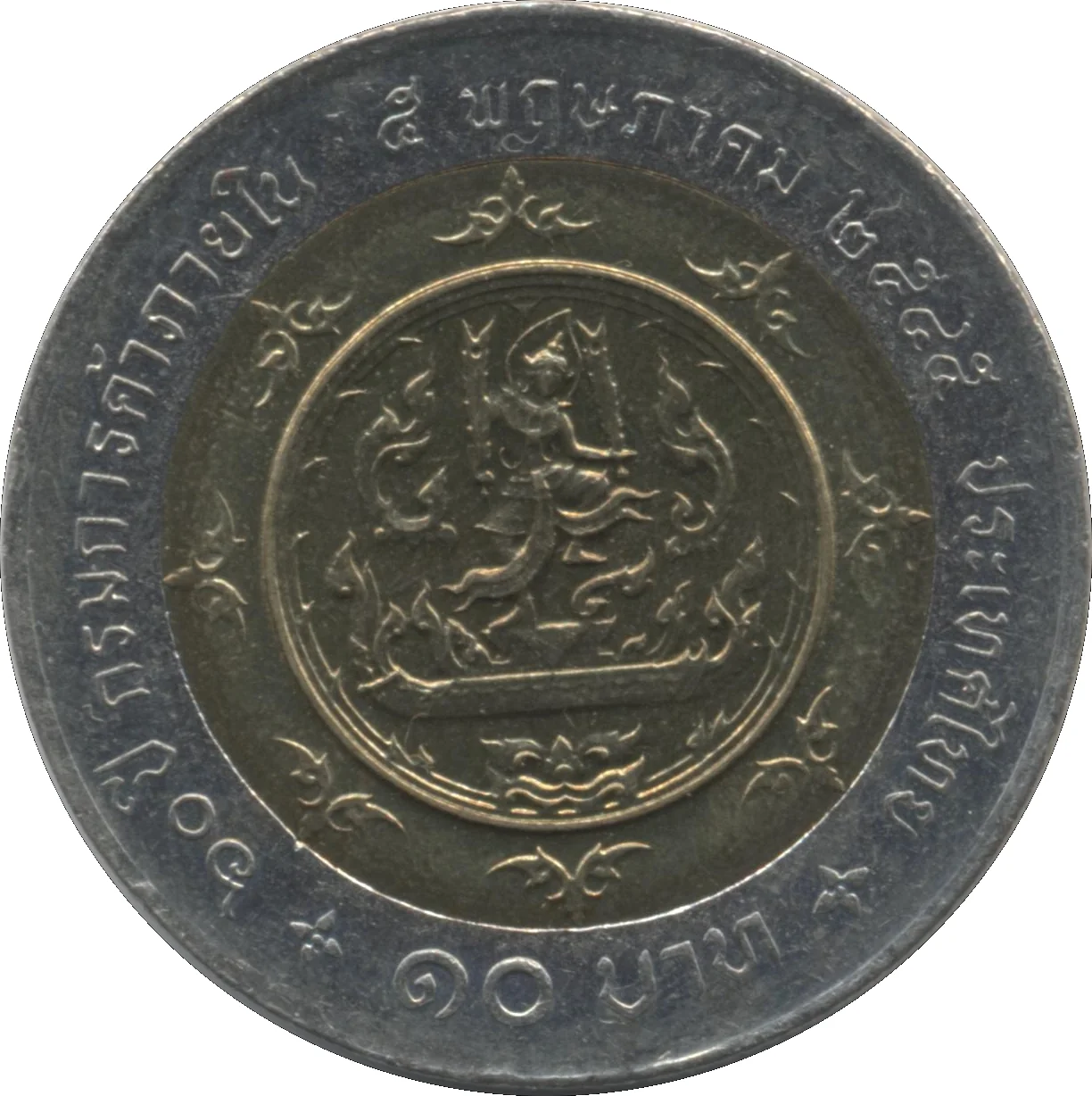
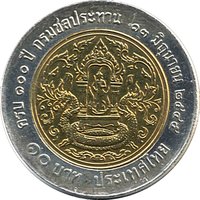
Seal of the Department of Internal Trade. Vishvakarma holding a double-edged sword.
Edge
Segmented reeding
Mintings
| Year | Mint Mark | Mintage | Quality | Collection |
|---|---|---|---|---|
| 2002 | — | 3,000,000 |
Historical background
In 2002, Thailand's currency situation was defined by a period of cautious stability and recovery, five years after the devastating 1997 Asian Financial Crisis that originated with the collapse of the Thai baht. The country was operating under a managed float exchange rate regime, a system adopted in the immediate aftermath of abandoning the dollar peg. The Bank of Thailand (BoT) actively intervened in the foreign exchange market to prevent excessive volatility, allowing the baht to move within an unofficial band. During this year, the baht traded in a relatively stable range, generally between 42 to 44 baht per US dollar, reflecting growing investor confidence and a gradual return of capital inflows as the economy regained its footing.
This stability was underpinned by significant macroeconomic reforms and a buildup of foreign reserves. The government, under Prime Minister Thaksin Shinawatra, pursued expansionary domestic policies known as "Thaksinomics," which stimulated domestic consumption and reduced reliance on volatile foreign capital for growth. Concurrently, the BoT had rebuilt international reserves to over $38 billion by year's end, a stark contrast to the depleted reserves of 1997. This substantial reserve buffer served as a critical shield against speculative attacks and provided the monetary authority with greater credibility and leverage to manage the exchange rate.
However, the situation was not without its underlying tensions and external pressures. The BoT faced a persistent challenge in balancing its desire for a stable and competitive baht to support export-led growth with the risks of attracting destabilizing "hot money" inflows. There were concerns that prolonged intervention to suppress the baht's value could lead to inflationary pressures and asset bubbles. Furthermore, the global economic slowdown in the early 2000s and competitive devaluations in other regional currencies created a complex environment for Thai monetary policy, setting the stage for ongoing debates about the optimal management of the currency in the years to follow.
This stability was underpinned by significant macroeconomic reforms and a buildup of foreign reserves. The government, under Prime Minister Thaksin Shinawatra, pursued expansionary domestic policies known as "Thaksinomics," which stimulated domestic consumption and reduced reliance on volatile foreign capital for growth. Concurrently, the BoT had rebuilt international reserves to over $38 billion by year's end, a stark contrast to the depleted reserves of 1997. This substantial reserve buffer served as a critical shield against speculative attacks and provided the monetary authority with greater credibility and leverage to manage the exchange rate.
However, the situation was not without its underlying tensions and external pressures. The BoT faced a persistent challenge in balancing its desire for a stable and competitive baht to support export-led growth with the risks of attracting destabilizing "hot money" inflows. There were concerns that prolonged intervention to suppress the baht's value could lead to inflationary pressures and asset bubbles. Furthermore, the global economic slowdown in the early 2000s and competitive devaluations in other regional currencies created a complex environment for Thai monetary policy, setting the stage for ongoing debates about the optimal management of the currency in the years to follow.
🌱 Fairly Common