

1 van – Nông Văn Vân Rebellion
Add to wishlist
Vietnam
Context
Years: 1823–1833
Country: Vietnam
Issuer: Nông Văn Vân Rebellion
Ruler: Nông Văn Vân Uprising
Demonetized: Yes
Material
Diameter: 22.1 mm
Weight: 1.46 g
Shape: Round with a square hole
Composition: Copper
Magnetic: No
Technique: Cast
References
KM: #
Numista: #127499
Obverse
Description:
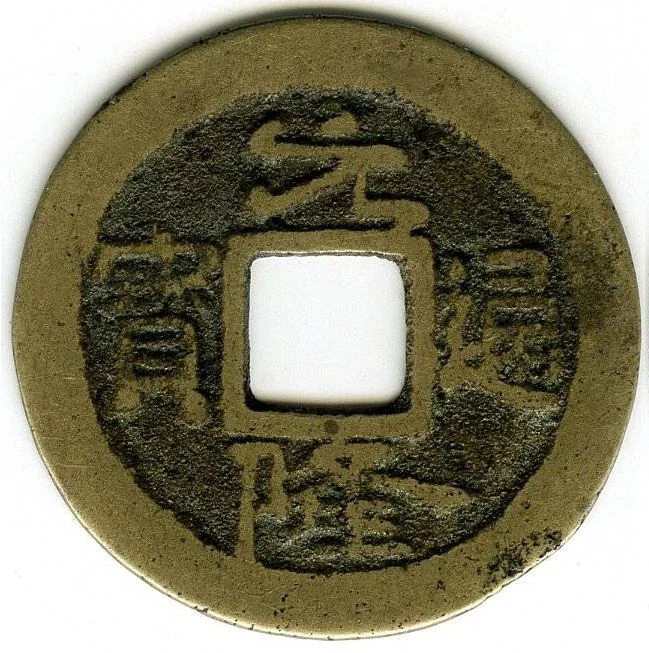
Four Chinese characters read vertically, right to left.
Inscription:
元
寶 通
隆
寶 通
隆
Translation:
Yuanbao Tonglong
Language: Chinese
Reverse
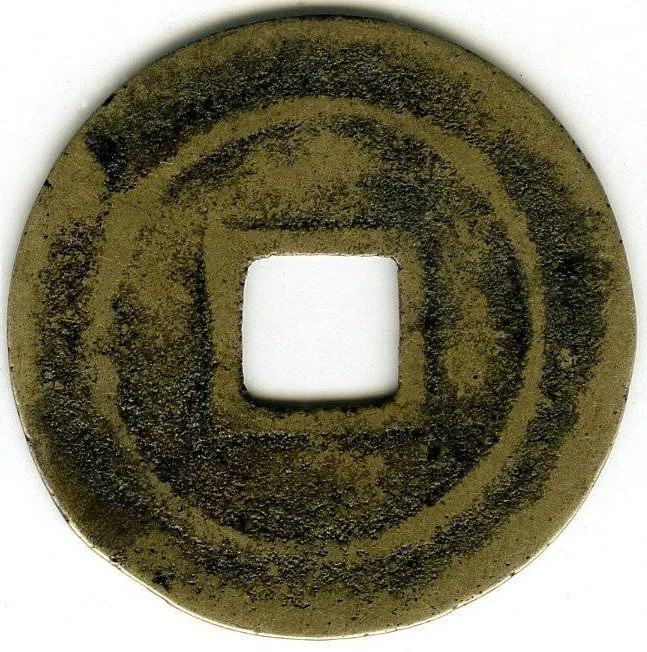
Description:
Circle
Edge
Script:Chinese (traditional, regular script)
Mintings
| Year | Mint Mark | Mintage | Quality | Collection |
|---|---|---|---|---|
| — | — | — |
Historical background
The Nông Văn Vân Rebellion (1833-1835) in the northern Vietnamese highlands occurred during a period of significant monetary instability under Emperor Minh Mạng. While the rebellion's core causes were ethnic discontent, administrative grievances, and local power struggles, the broader currency crisis of the era exacerbated social tensions. The early Nguyễn dynasty faced severe fiscal strain, partly due to the costs of unifying the country and extensive state projects. This led to the debasement of currency, particularly through the minting of low-quality zinc tiền coins, which flooded the market and caused inflation, harming local economies and eroding trust in the central government's authority.
In the specific context of the rebellion, the currency situation likely impacted the highland regions in two key ways. First, the devalued coinage would have disrupted local trade and tribute relations, adding economic hardship to communities already marginalized by the court's centralizing policies. Second, and more critically, the state's demand for taxes and levies to be paid in standardized, scarce silver—despite circulating poor-quality coinage—placed an immense burden on the populace. This fiscal pressure, seen as an extractive and unjust imposition from the lowland capital, became a tangible grievance that fueled resistance against Huế's control.
Therefore, while not the primary spark, the chaotic currency situation under Minh Mạng served as a crucial background factor. It exemplified the intrusive and destabilizing nature of imperial administration from the perspective of the Tày, Nùng, and Hmong rebels. The rebellion's suppression was followed by further administrative reorganization, but the monetary crisis continued, reflecting deep-seated fiscal challenges that would persist within the Nguyễn dynasty.
In the specific context of the rebellion, the currency situation likely impacted the highland regions in two key ways. First, the devalued coinage would have disrupted local trade and tribute relations, adding economic hardship to communities already marginalized by the court's centralizing policies. Second, and more critically, the state's demand for taxes and levies to be paid in standardized, scarce silver—despite circulating poor-quality coinage—placed an immense burden on the populace. This fiscal pressure, seen as an extractive and unjust imposition from the lowland capital, became a tangible grievance that fueled resistance against Huế's control.
Therefore, while not the primary spark, the chaotic currency situation under Minh Mạng served as a crucial background factor. It exemplified the intrusive and destabilizing nature of imperial administration from the perspective of the Tày, Nùng, and Hmong rebels. The rebellion's suppression was followed by further administrative reorganization, but the monetary crisis continued, reflecting deep-seated fiscal challenges that would persist within the Nguyễn dynasty.
✨ Legendary