

10 Euro (Božena Slančíková Timrava) – Slovakia
Non-circulating coins
Commemoration: 150th Anniversary of the Birth of Božena Slančíková Timrava
Slovakia
Context
Material
References
KM: #Click to copy to clipboard150
Numista: #126875
Value
Exchange value: 10 EUR = $11.81
Bullion value: $46.95
Inflation-adjusted value: 14.85 EUR
Obverse
Description:
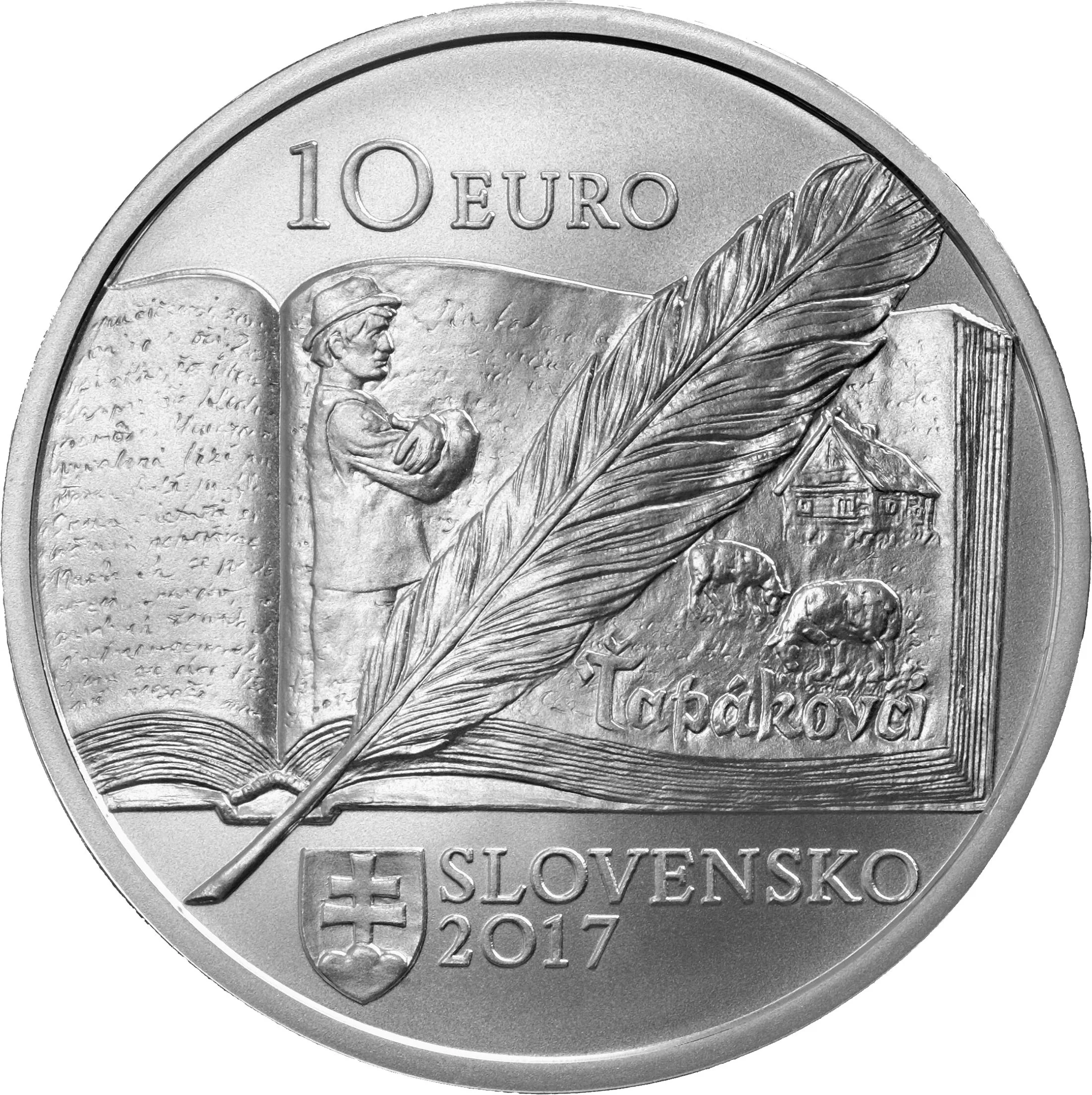
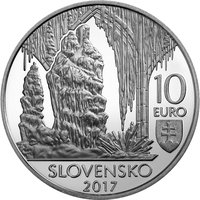
The coin's obverse features an open book with a motif from Timrava's "The Ťapáks," overlaid by a quill. Below are the Slovak coat of arms, "SLOVENSKO," and the year "2017." The denomination "10 EURO" appears at the top.
Inscription:
10 EURO
SLOVENSKO
2017
SLOVENSKO
2017
Translation:
10 EURO
SLOVAKIA
2017
SLOVAKIA
2017
Script: Latin
Engraver: Filip Čerťaský
Reverse
Description:
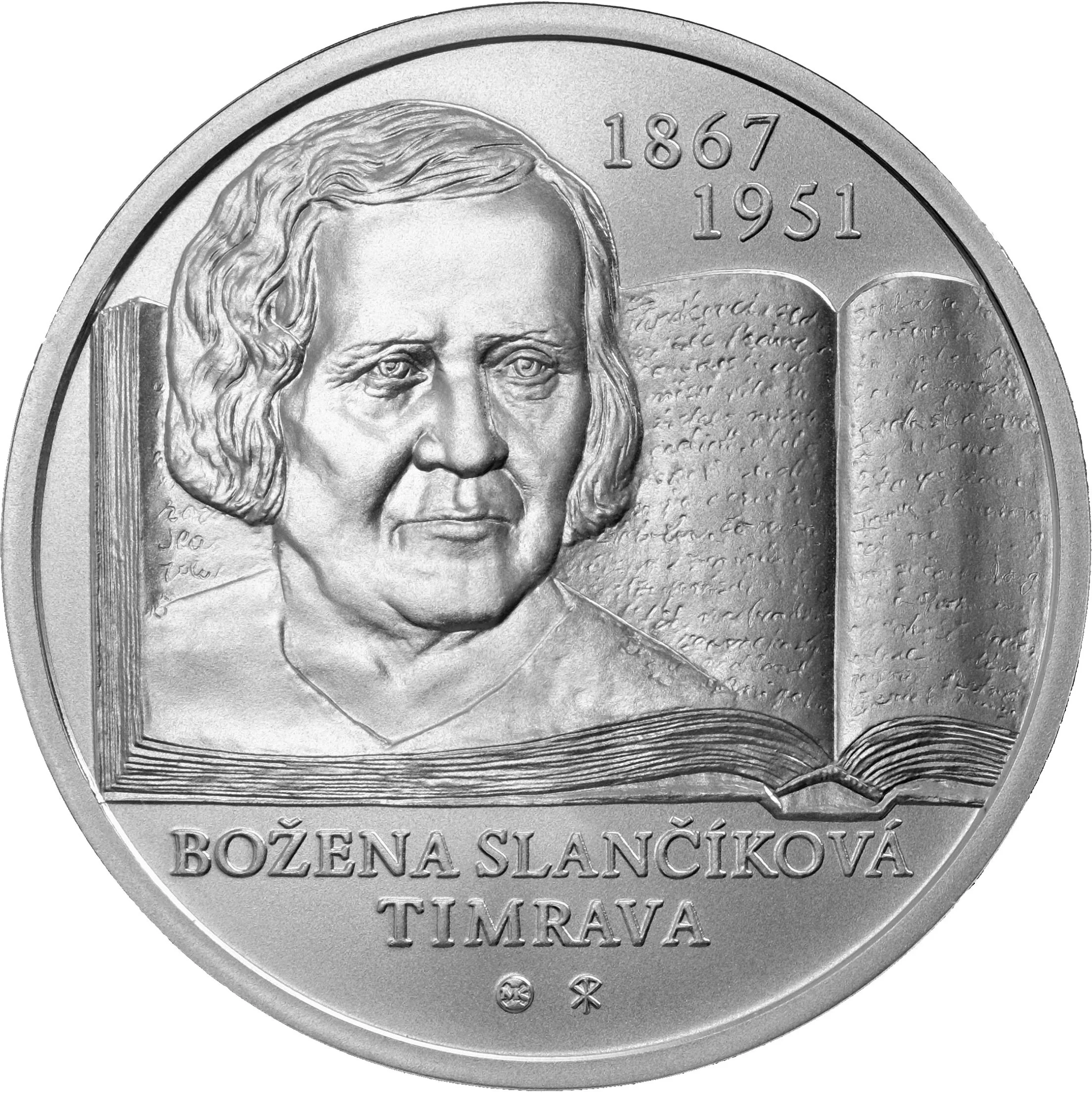
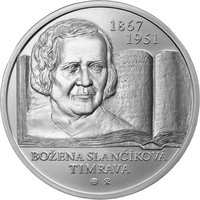
The reverse depicts Božena Slančíková Timrava against an open book, with her name and pseudonym 'TIMRAVA' below. Her birth and death dates '1867' and '1951' appear at the top, while the Kremnica Mint mark and designer's initials are at the bottom.
Inscription:
BOŽENA SLANČÍKOVÁ
TIMRAVA
1867
1951
TIMRAVA
1867
1951
Translation:
Božena Slančíková
Timrava
1867
1951
Timrava
1867
1951
Script: Latin
Language: Slovak
Engraver: Filip Čerťaský
Edge
Smooth with inscriptions in hollow
Legend:
PREDSTAVITEĽKA NESKORÉHO LITERÁRNEHO REALIZMU
Translation:
Representative of Late Literary Realism
Language: Slovak
Categories
| Event> Birth anniversary |
Mints
| Name | Mark |
|---|---|
| Kremnica | (MK) |
Mintings
| Year | Mint Mark | Mintage | Quality | Collection |
|---|---|---|---|---|
| 2017 | MK | 3,100 | ||
| 2017 | MK | 5,400 | Proof |
Historical background
In 2017, Slovakia was a well-established member of the Eurozone, having adopted the euro as its official currency on January 1, 2009. This meant the country had fully replaced its previous currency, the Slovak koruna, and its monetary policy was set by the European Central Bank (ECB) in Frankfurt. The year was characterized by Slovakia operating within a stable single-currency framework, which facilitated trade and investment within the euro area and eliminated exchange rate risk with its key European partners. The primary domestic discussions around currency were not about its existence, but rather about its management at the Eurozone level, particularly regarding ECB policies on interest rates and quantitative easing.
The economic context of 2017 was one of robust growth, with Slovakia's GDP expanding by over 3%, significantly outpacing the Eurozone average. This strong performance was driven largely by a surge in exports, particularly from the automotive sector, which benefited from the euro's stability and seamless access to the single market. However, the shared currency also meant Slovakia had no independent monetary tools to address specific national inflationary pressures or to competitively devalue its currency, a trade-off accepted for deeper European integration.
Public sentiment towards the euro in Slovakia during this period remained broadly positive, with polls consistently showing strong majority support. The perceived benefits of price transparency, easier travel, and economic stability outweighed concerns for most citizens and businesses. The main financial debates in the country in 2017 were thus focused on national fiscal policy, banking sector stability, and harnessing the economic upswing to address regional disparities and public investment, all within the fixed framework of the European single currency.
The economic context of 2017 was one of robust growth, with Slovakia's GDP expanding by over 3%, significantly outpacing the Eurozone average. This strong performance was driven largely by a surge in exports, particularly from the automotive sector, which benefited from the euro's stability and seamless access to the single market. However, the shared currency also meant Slovakia had no independent monetary tools to address specific national inflationary pressures or to competitively devalue its currency, a trade-off accepted for deeper European integration.
Public sentiment towards the euro in Slovakia during this period remained broadly positive, with polls consistently showing strong majority support. The perceived benefits of price transparency, easier travel, and economic stability outweighed concerns for most citizens and businesses. The main financial debates in the country in 2017 were thus focused on national fiscal policy, banking sector stability, and harnessing the economic upswing to address regional disparities and public investment, all within the fixed framework of the European single currency.
💎 Very Rare