

250 fils (Saddam Hussein inauguration) – Iraq
Add to wishlist
Circulating commemorative coins
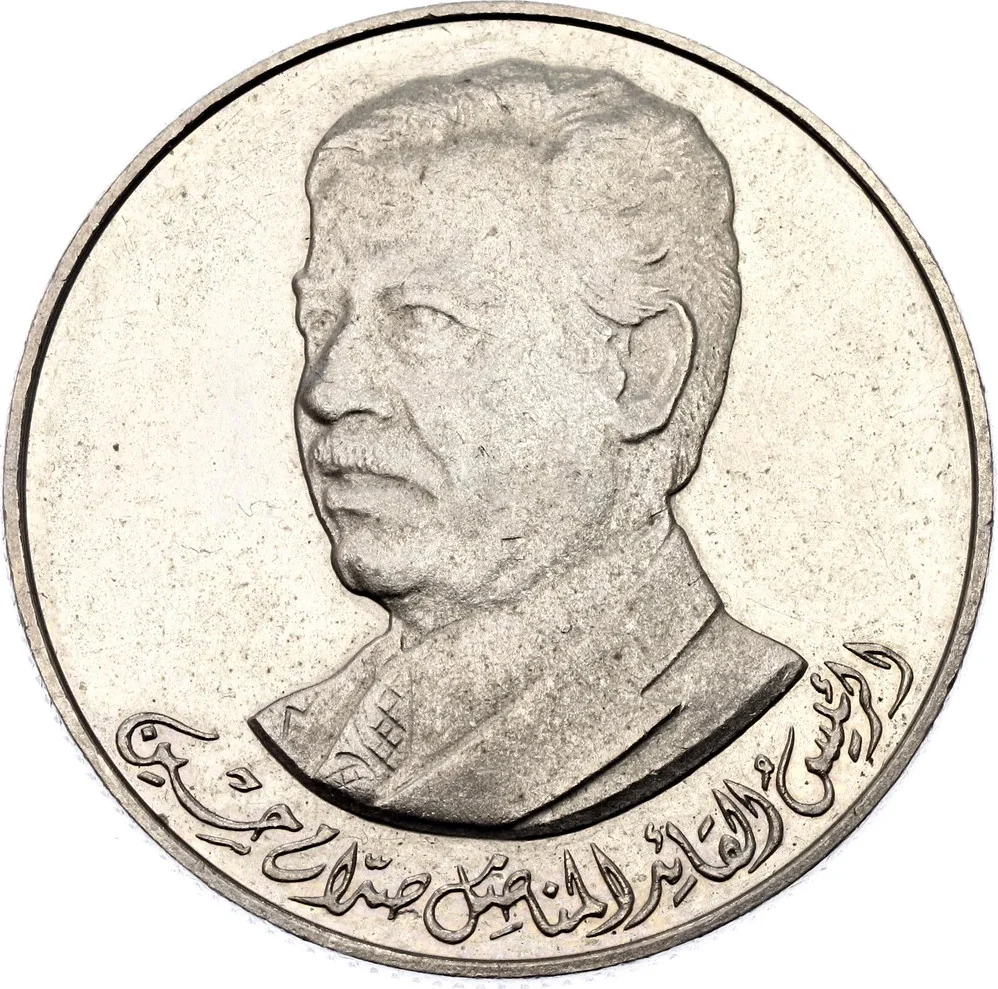
Commemoration: 1st Anniversary of the Inauguration of President Saddam Hussein
Iraq
Context
Year: 1980
Islamic (Hijri) Year:: 1400
Issuer: Iraq
Period:
(since 1958)
Currency:
(since 1931)
Demonetized: Yes
Material
References
KM: #
Numista: #12686
Value
Exchange value: 0.250 IQD
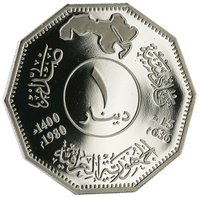
Obverse
Description:
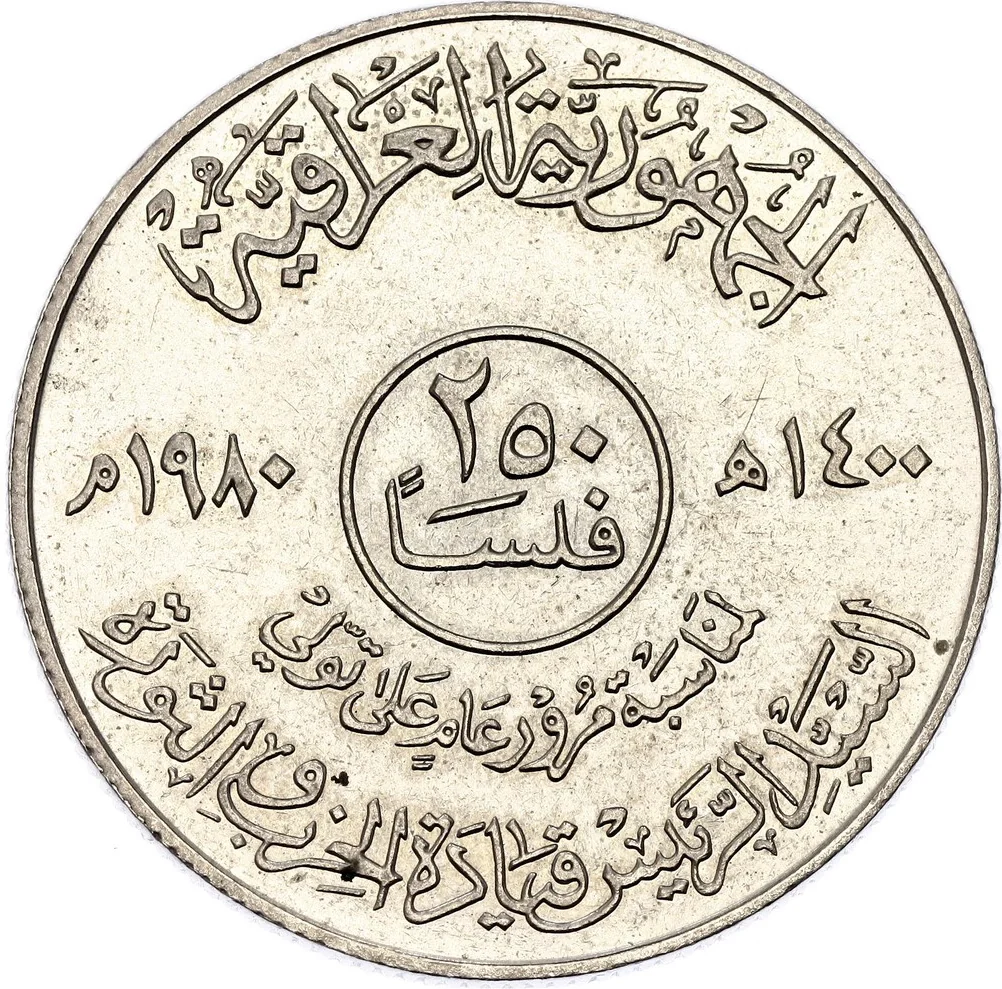
Denomination and lettering.
Inscription:
الجُمهُوريّة العِراقيّة
١٤٠٠هـ ١٩٨٠م
٢٥٠
فلسَاً
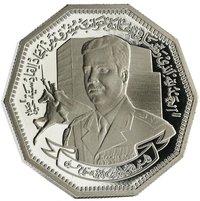
لمنَاسَبة مُرور عَامٍ عَلى توّلي
السّيّدِ الرَّئيس قيَادَة الحِزبِ الثورَة
١٤٠٠هـ ١٩٨٠م
٢٥٠
فلسَاً
لمنَاسَبة مُرور عَامٍ عَلى توّلي
السّيّدِ الرَّئيس قيَادَة الحِزبِ الثورَة
Translation:
The Republic of Iraq
1400 AH 1980 AD
250
Fils
On the occasion of the one-year anniversary of Mr. President assuming the leadership of the party and the revolution.
1400 AH 1980 AD
250
Fils
On the occasion of the one-year anniversary of Mr. President assuming the leadership of the party and the revolution.
Script: Arabic
Language: Arabic
Reverse
Edge
Reeded
Categories
| Event> Revolution |
| Person> Politician |
| Mustache/Beard |
Mints
| Name | Mark |
|---|---|
| Royal Mint | — |
Mintings
| Year | Mint Mark | Mintage | Quality | Collection |
|---|---|---|---|---|
| 1980 | — | — |
Historical background
In 1980, Iraq's currency, the Iraqi dinar (IQD), was in a period of relative strength and stability, a legacy of the oil boom of the 1970s. Pegged to the US dollar at a robust official rate of approximately 1 IQD = $3.38, the dinar was considered one of the world's stronger currencies. This peg was underpinned by substantial foreign exchange reserves accumulated from soaring oil revenues, which financed massive state-led development projects and a growing public sector. The currency's stability was a point of national pride and a symbol of the Ba'athist regime's economic management under Saddam Hussein, who had formally assumed the presidency the previous year.
However, this apparent stability was precarious and on the cusp of dramatic change due to geopolitical decisions. The outbreak of the Iran-Iraq War in September 1980 initiated an eight-year conflict that would catastrophically strain the Iraqi economy. While the immediate currency impact in 1980 was limited, the war committed the nation to enormous and sustained military expenditures. The government began drawing down its financial reserves to fund the war effort, marking the start of a long-term drain that would eventually undermine the dinar's foundation.
Consequently, 1980 represents the final chapter of the dinar's pre-war strength. The currency still circulated in high denominations, reflecting its value, and international confidence remained. Yet, the decision for war set in motion an irreversible economic trajectory. The coming years would see the introduction of currency controls, the rise of a black-market exchange rate as reserves dwindled, and the beginning of a long decline from which the Iraqi dinar would never fully recover its former prestige, making 1980 the end of an era for Iraq's monetary system.
However, this apparent stability was precarious and on the cusp of dramatic change due to geopolitical decisions. The outbreak of the Iran-Iraq War in September 1980 initiated an eight-year conflict that would catastrophically strain the Iraqi economy. While the immediate currency impact in 1980 was limited, the war committed the nation to enormous and sustained military expenditures. The government began drawing down its financial reserves to fund the war effort, marking the start of a long-term drain that would eventually undermine the dinar's foundation.
Consequently, 1980 represents the final chapter of the dinar's pre-war strength. The currency still circulated in high denominations, reflecting its value, and international confidence remained. Yet, the decision for war set in motion an irreversible economic trajectory. The coming years would see the introduction of currency controls, the rise of a black-market exchange rate as reserves dwindled, and the beginning of a long decline from which the Iraqi dinar would never fully recover its former prestige, making 1980 the end of an era for Iraq's monetary system.
🌱 Fairly Common