

20 Đồng – South Vietnam
Circulating commemorative coins
Commemoration: FAO
Vietnam
Context
Year: 1968
Country: Vietnam 
Issuer: South Vietnam
Period:
(1967—1976)
Currency:
(1953—1975)
Demonetized: Yes
Total mintage: 500,000
Material
Diameter: 30 mm
Weight: 9 g
Thickness: 2.1 mm
Shape: Dodecagonal
Technique: Milled
Alignment: Medal alignment
flip
References
KM: #Click to copy to clipboard11
Numista: #12667
Obverse
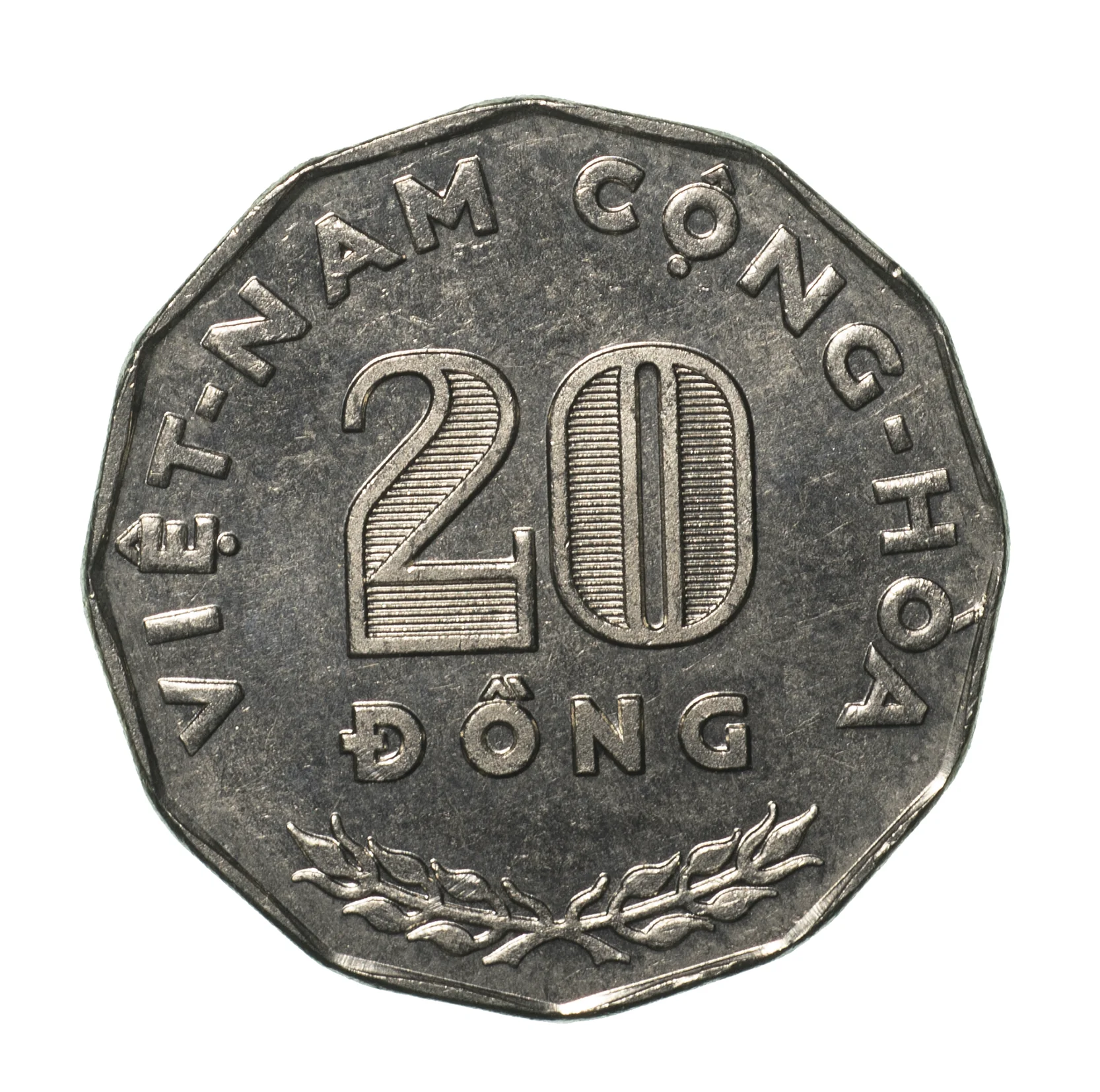
Description:
Face value with surrounding legends.
Inscription:
VIỆT-NAM CỘNG-HOÀ
20
ĐỒNG
20
ĐỒNG
Translation:
VIETNAM REPUBLIC
20
DONG
20
DONG
Script: Latin
Language: Vietnamese
Reverse
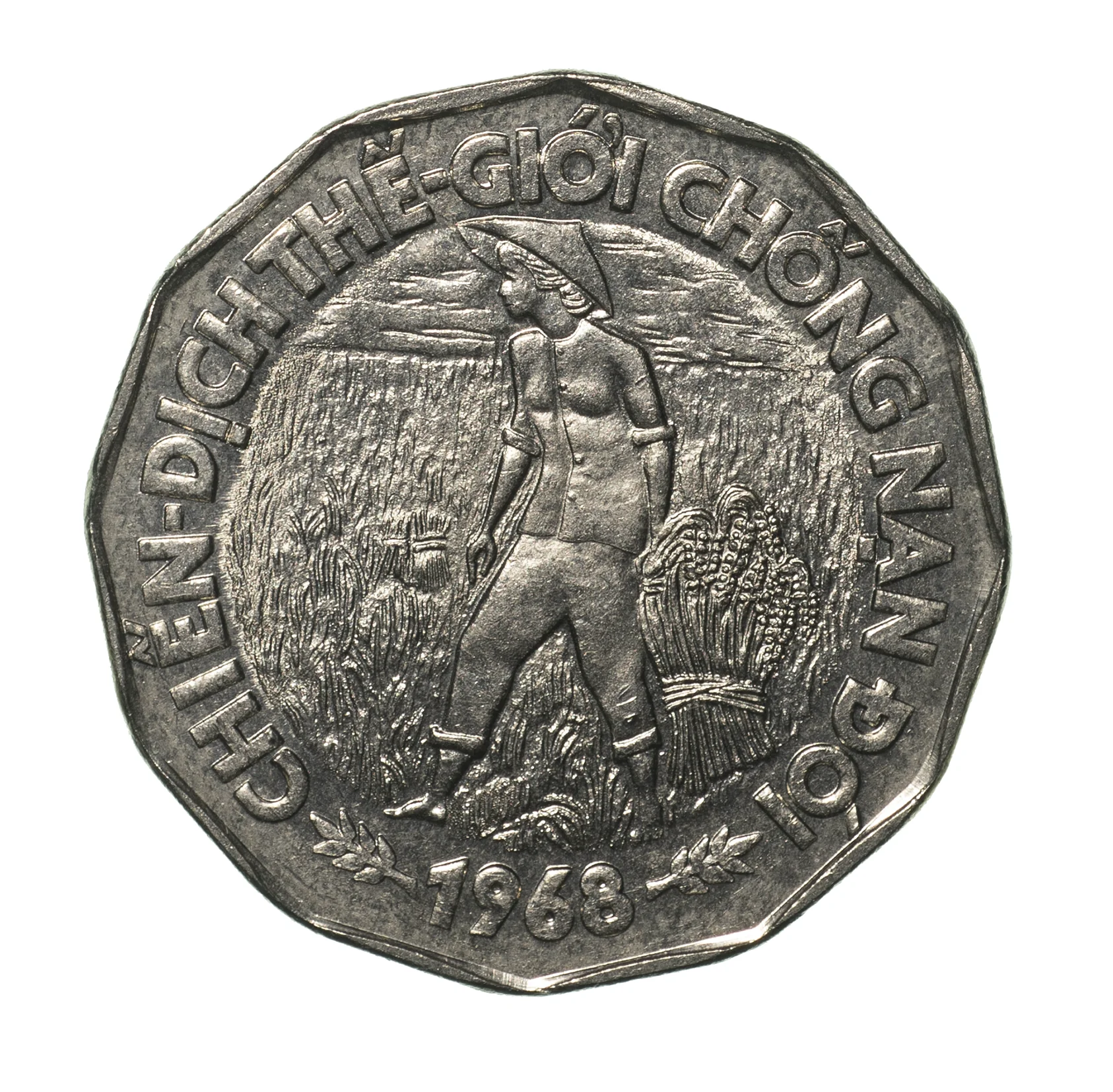
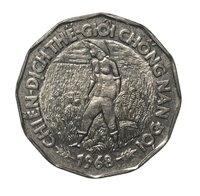
Description:
Farmer in a rice field.
Inscription:
CHIẾN-DỊCH THẾ-GIỚI CHỐNG NẠN ÐÓI
1968
1968
Translation:
World Campaign Against Famine
1968
1968
Script: Latin
Language: Vietnamese
Edge
Plain
Categories
| Agriculture |
| Organization> FAO |
Mints
| Name | Mark |
|---|---|
| Hamburgische Münze | — |
Mintings
| Year | Mint Mark | Mintage | Quality | Collection |
|---|---|---|---|---|
| 1968 | — | 500,000 |
Historical background
By 1968, the currency situation in South Vietnam was a critical reflection of the broader economic and political instability caused by the protracted war. The official currency, the South Vietnamese piastre (đồng), was under severe pressure from rampant inflation, which had been steadily accelerating since the mid-1960s. This inflationary spiral was driven by the massive influx of U.S. aid dollars, the enormous costs of financing the war effort, and the disruption of domestic agriculture and industry. The government in Saigon, heavily dependent on American financial support, was printing money to cover its deficits, further devaluing the piastre and eroding public confidence.
Alongside the official economy, a vast and influential black market for currency flourished, particularly in urban centers. The most significant feature of this parallel system was the widespread use of U.S. dollars, which had become a preferred and more stable store of value than the rapidly depreciating piastre. American military personnel, contractors, and aid agencies brought in large amounts of dollars, creating a dual-currency economy where the greenback was often required for major transactions or luxury goods. The black market exchange rate for dollars to piastres far exceeded the official fixed rate, providing lucrative opportunities for arbitrage and corruption, and further undermining the authority of the Saigon government.
This fractured monetary environment had profound social consequences. Inflation devastated the living standards of urban workers, civil servants, and soldiers paid in piastres, fueling discontent and contributing to a sense of societal breakdown. The economic disparity between those with access to dollars and those without became a stark dividing line. Ultimately, the currency chaos of 1968 was not merely a financial issue but a potent symbol of the South Vietnamese state's fragility, its deep dependency on the United States, and the corrosive impact of the war on the very fabric of the nation it sought to defend.
Alongside the official economy, a vast and influential black market for currency flourished, particularly in urban centers. The most significant feature of this parallel system was the widespread use of U.S. dollars, which had become a preferred and more stable store of value than the rapidly depreciating piastre. American military personnel, contractors, and aid agencies brought in large amounts of dollars, creating a dual-currency economy where the greenback was often required for major transactions or luxury goods. The black market exchange rate for dollars to piastres far exceeded the official fixed rate, providing lucrative opportunities for arbitrage and corruption, and further undermining the authority of the Saigon government.
This fractured monetary environment had profound social consequences. Inflation devastated the living standards of urban workers, civil servants, and soldiers paid in piastres, fueling discontent and contributing to a sense of societal breakdown. The economic disparity between those with access to dollars and those without became a stark dividing line. Ultimately, the currency chaos of 1968 was not merely a financial issue but a potent symbol of the South Vietnamese state's fragility, its deep dependency on the United States, and the corrosive impact of the war on the very fabric of the nation it sought to defend.
🌱 Common