

100 Korun (Communist Party) – Czechoslovakia
Non-circulating coins
Commemoration: 30th Anniversary - Communist Party
Context
Year: 1951
Issuer: Czechoslovakia 
Period:
(1948—1960)
Currency:
(1945—1953)
Demonetization: 31 May 1953
Total mintage: 1,000,000
Material
References
KM: #Click to copy to clipboard33
Numista: #12652
Value
Bullion value: $19.88
Obverse
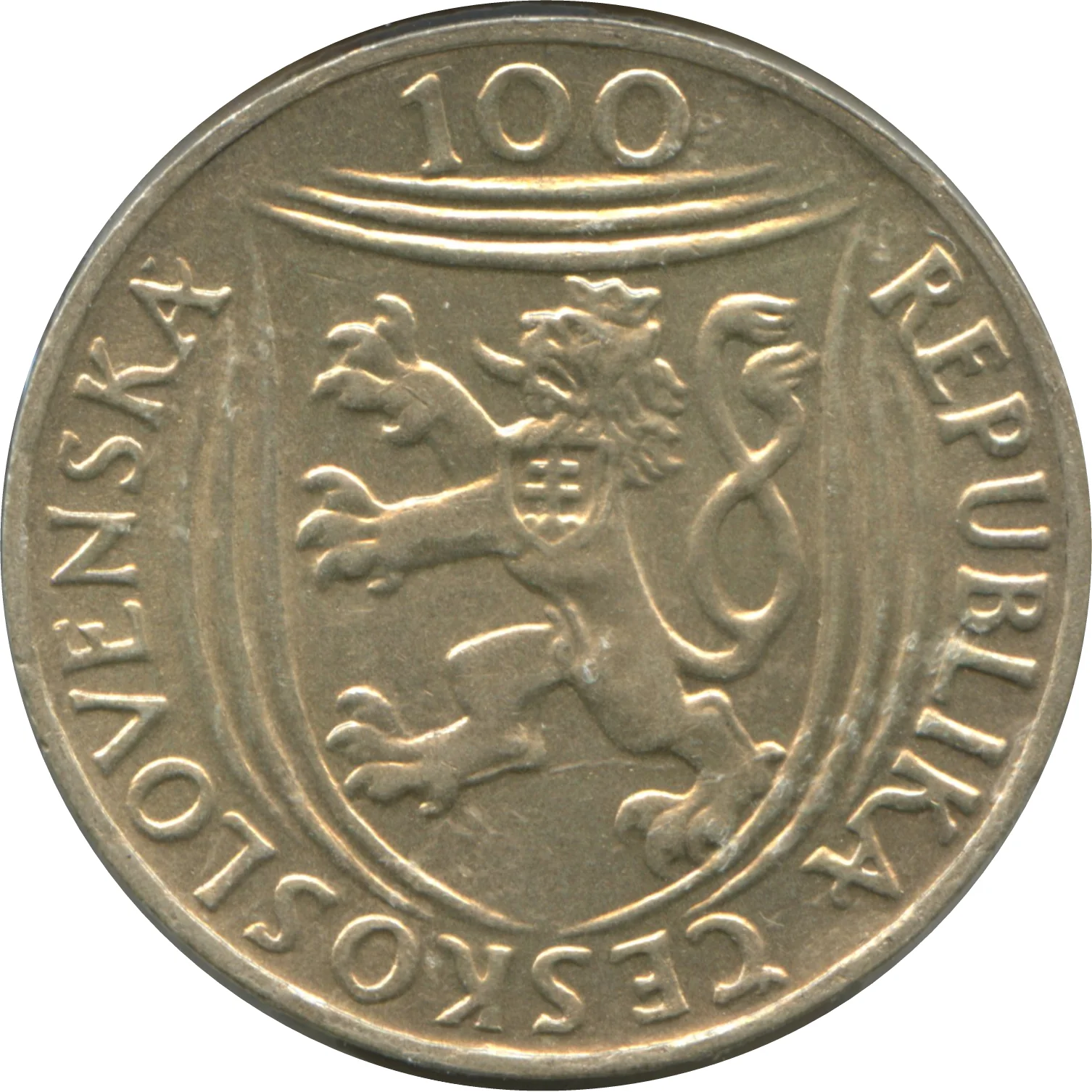
Description:
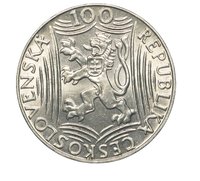
Czech lion, Slovak shield.
Inscription:
REPUBLIKA ČESKOSLOVENSKÁ
100
100
Translation:
REPUBLIC OF CZECHOSLOVAKIA
100
100
Script: Latin
Engraver: Otakar Španiel
Reverse
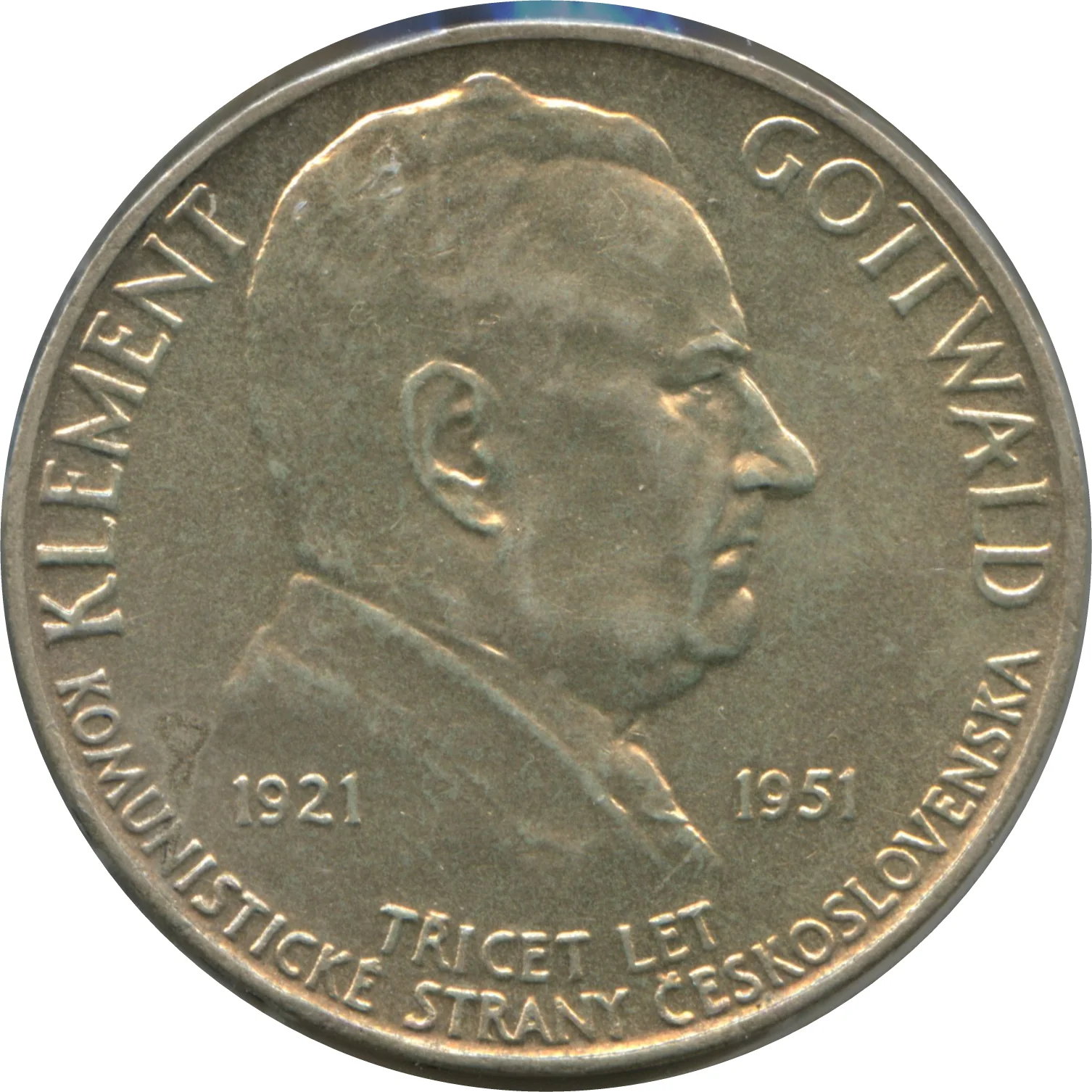
Description:
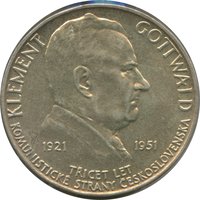
Bust of Klement Gottwald
Inscription:
KLEMENT GOTTWALD
TRICET LET KOMUNISTICKÉ STRANY ČESKOSLOVENSKA
1921 1951
TRICET LET KOMUNISTICKÉ STRANY ČESKOSLOVENSKA
1921 1951
Translation:
KLEMENT GOTTWALD
THIRTY YEARS OF THE COMMUNIST PARTY OF CZECHOSLOVAKIA
1921 1951
THIRTY YEARS OF THE COMMUNIST PARTY OF CZECHOSLOVAKIA
1921 1951
Script: Latin
Language: Czech
Engraver: Otakar Španiel
Edge
Plain with stars and waves
Mintings
| Year | Mint Mark | Mintage | Quality | Collection |
|---|---|---|---|---|
| 1951 | — | 1,000,000 |
Historical background
In 1951, Czechoslovakia's currency situation was firmly embedded within the rigid framework of a Soviet-style centrally planned economy. The Czechoslovak koruna (Kčs) was a non-convertible "soft currency," meaning it could not be freely exchanged for foreign hard currencies like the US dollar or Swiss franc. Its value and use were strictly controlled by the state, with an official exchange rate set arbitrarily for accounting purposes, bearing little relation to its actual purchasing power or market value. The primary function of money was as an internal unit of account to facilitate the state plan, rather than as a tool for market exchange.
The monetary landscape was characterized by a complex system of currency separation and repressed inflation. A key feature was the existence of two distinct types of money: the domestic koruna used by citizens for everyday goods, and the internally convertible "foreign exchange koruna" used in special Tuzex hard-currency stores. These stores, stocked with high-quality imported or luxury goods unavailable in regular shops, could only be accessed with vouchers purchased using Western hard currencies or special certificates. This created a privileged economic channel for those with access to foreign remittances or export bonuses, starkly highlighting the disparity between the official economy and the reality of scarcity.
This system was a direct result of the state's prioritization of heavy industry and military production, which led to chronic consumer goods shortages. With wages paid but little of value to buy in state shops, excess koruna piled up in savings accounts, creating a massive "monetary overhang" – pent-up inflationary pressure held in check only by administrative controls and rationing. The black market thrived as a necessary corrective, where the koruna traded at a fraction of its official rate against hard currencies, revealing its true, much weaker value. Thus, the currency situation in 1951 was one of strict control masking underlying economic weakness and social inequality.
The monetary landscape was characterized by a complex system of currency separation and repressed inflation. A key feature was the existence of two distinct types of money: the domestic koruna used by citizens for everyday goods, and the internally convertible "foreign exchange koruna" used in special Tuzex hard-currency stores. These stores, stocked with high-quality imported or luxury goods unavailable in regular shops, could only be accessed with vouchers purchased using Western hard currencies or special certificates. This created a privileged economic channel for those with access to foreign remittances or export bonuses, starkly highlighting the disparity between the official economy and the reality of scarcity.
This system was a direct result of the state's prioritization of heavy industry and military production, which led to chronic consumer goods shortages. With wages paid but little of value to buy in state shops, excess koruna piled up in savings accounts, creating a massive "monetary overhang" – pent-up inflationary pressure held in check only by administrative controls and rationing. The black market thrived as a necessary corrective, where the koruna traded at a fraction of its official rate against hard currencies, revealing its true, much weaker value. Thus, the currency situation in 1951 was one of strict control masking underlying economic weakness and social inequality.
🌱 Common