

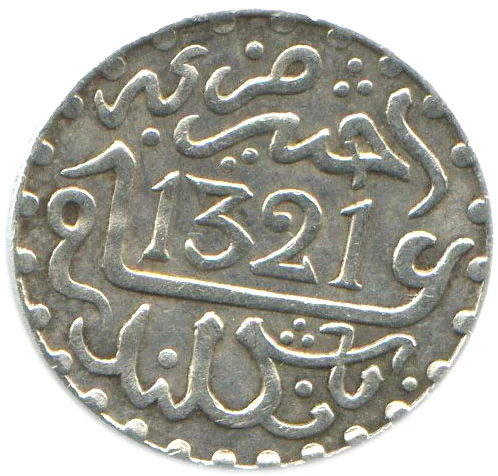
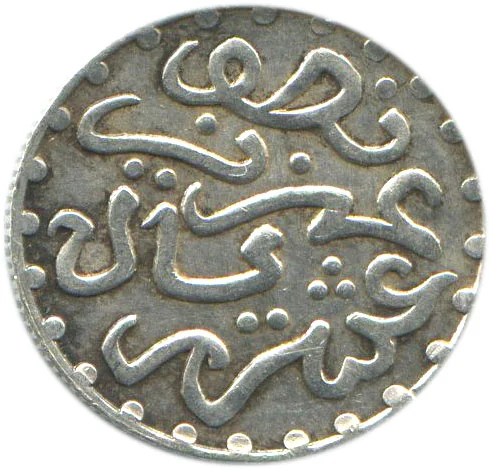
Mints
| Name | Mark |
|---|---|
| Royal Mint (Tower Hill) | — |
Mintings
| Year | Mint Mark | Mintage | Quality | Collection |
|---|---|---|---|---|
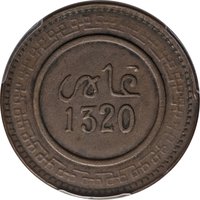
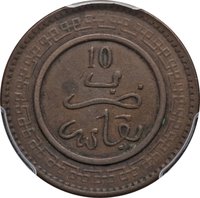
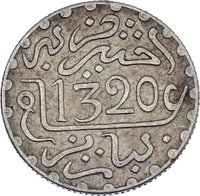
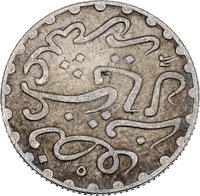
| 1903 | — | 3,920,000 | ||
| 1903 | — | 2,105,000 |
Historical background
In 1903, Morocco's currency situation was a complex and unstable reflection of the nation's precarious political and economic position. The country, still nominally independent under Sultan Abdelaziz, was caught in the crosshairs of European imperial rivalries, particularly between France, Spain, and Britain. The monetary system was a chaotic mixture of domestic and foreign coins. The primary official unit was the silver dirham, but its value and purity were inconsistent. More significantly, a multitude of foreign silver coins—especially the Spanish peseta, the French franc, and the British sovereign—circulated freely and were often preferred for major transactions, undermining the Sultan's monetary sovereignty and creating a confusing exchange environment for trade.
This monetary disorder was exacerbated by a severe financial crisis. The Moroccan government, burdened by heavy debts from excessive spending and indemnities paid to foreign powers after local revolts, had resorted to debasing the silver coinage. By reducing the silver content of newly minted dirhams while demanding taxes in older, purer coins, the Makhzen (government) sparked widespread inflation and a collapse in public trust. Merchants and the population began hoarding older coins and foreign currency, leading to a shortage of reliable money and further destabilizing the economy.
The currency chaos of 1903 was a critical symptom of Morocco's weakening state control and became a direct pretext for deeper European intervention. France, seeking to stabilize the situation to protect its growing economic interests and loans to the Sultan, began pushing for financial supervision. This pressure would culminate just a year later, in 1904, with the creation of the State Bank of Morocco, a consortium controlled by European powers to manage the Sultan's debt and reform the currency. Thus, the monetary disarray of 1903 was a pivotal step on the path to the establishment of a French and Spanish protectorate in 1912.
This monetary disorder was exacerbated by a severe financial crisis. The Moroccan government, burdened by heavy debts from excessive spending and indemnities paid to foreign powers after local revolts, had resorted to debasing the silver coinage. By reducing the silver content of newly minted dirhams while demanding taxes in older, purer coins, the Makhzen (government) sparked widespread inflation and a collapse in public trust. Merchants and the population began hoarding older coins and foreign currency, leading to a shortage of reliable money and further destabilizing the economy.
The currency chaos of 1903 was a critical symptom of Morocco's weakening state control and became a direct pretext for deeper European intervention. France, seeking to stabilize the situation to protect its growing economic interests and loans to the Sultan, began pushing for financial supervision. This pressure would culminate just a year later, in 1904, with the creation of the State Bank of Morocco, a consortium controlled by European powers to manage the Sultan's debt and reform the currency. Thus, the monetary disarray of 1903 was a pivotal step on the path to the establishment of a French and Spanish protectorate in 1912.
🌱 Fairly Common