

¼ Rupia – Italian Somaliland
Somalia
Context
Years: 1910–1913
Country: Somalia 
Issuer: Italian Somaliland
Ruler: Victor Emmanuel III
Currency:
(1893—1925)
Demonetized: Yes
Total mintage: 500,000
Material
References
KM: #Click to copy to clipboard4
Numista: #12617
Value
Bullion value: $7.72
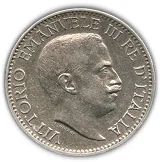
Obverse
Description:
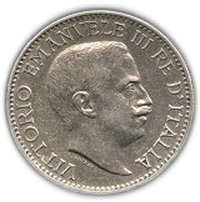
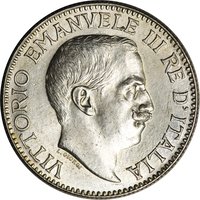
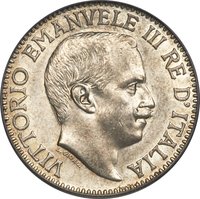
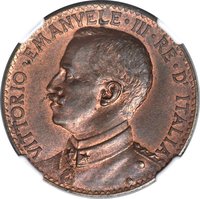
Vittorio Emanuele III in profile.
Inscription:
VITTORIO EMANVELE III RE D'ITALIA
Translation:
Victor Emmanuel III King of Italy
Script: Latin
Language: Italian
Engraver: Luigi Giorgi
Reverse
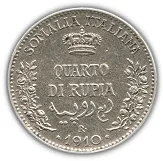
Inscription:
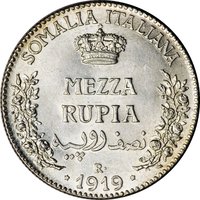
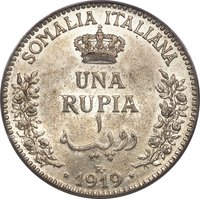
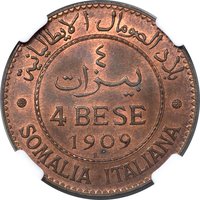
SOMALIA ITALIANA
QUARTO
DI RUPIA
ربع روپیه
R
·1910·
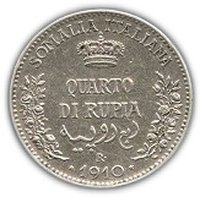
QUARTO
DI RUPIA
ربع روپیه
R
·1910·
Translation:
Italian Somaliland
Quarter
of Rupee
Quarter Rupee
R
·1910·
Quarter
of Rupee
Quarter Rupee
R
·1910·
Engraver: Luigi Giorgi
Edge
Mints
| Name | Mark |
|---|---|
| Rome | R |
Historical background
In 1910, Italian Somaliland operated under a complex and fragmented monetary system, a direct reflection of its status as a nascent and underdeveloped colony. The Italian lira, introduced as the official currency after the establishment of the colony in the 1880s, circulated only weakly outside of administrative centers and among Italian officials and traders. The Italian state lacked both the economic penetration and administrative control to enforce a uniform currency across the vast territory, leading to a persistent reliance on pre-existing mediums of exchange.
The most widespread and trusted currency in daily use was the Maria Theresa thaler (MT$), a large silver coin minted in Austria but ubiquitous throughout the Horn of Africa and the Arabian Peninsula. Its high silver content and consistent weight made it the preferred unit for significant transactions, pastoralist trade, and savings. Alongside the thaler, the Indian rupee and its subsidiary coins were also prevalent, particularly in coastal trade hubs like Mogadishu and Merca, due to longstanding commercial links with British India and the neighboring British East Africa Protectorate.
This monetary pluralism created significant challenges for the colonial administration. The fluctuating values between the thaler, rupee, and lira complicated tax collection and government accounting, while hindering broader economic integration and development projects. Efforts to formally demonetize the thaler and rupee had repeatedly failed, as the local population distrusted the paper money and token coins the Italians attempted to introduce. Consequently, 1910 represented a period of monetary stalemate, where colonial authority was continually undermined by the enduring practical and cultural dominance of older, external currencies.
The most widespread and trusted currency in daily use was the Maria Theresa thaler (MT$), a large silver coin minted in Austria but ubiquitous throughout the Horn of Africa and the Arabian Peninsula. Its high silver content and consistent weight made it the preferred unit for significant transactions, pastoralist trade, and savings. Alongside the thaler, the Indian rupee and its subsidiary coins were also prevalent, particularly in coastal trade hubs like Mogadishu and Merca, due to longstanding commercial links with British India and the neighboring British East Africa Protectorate.
This monetary pluralism created significant challenges for the colonial administration. The fluctuating values between the thaler, rupee, and lira complicated tax collection and government accounting, while hindering broader economic integration and development projects. Efforts to formally demonetize the thaler and rupee had repeatedly failed, as the local population distrusted the paper money and token coins the Italians attempted to introduce. Consequently, 1910 represented a period of monetary stalemate, where colonial authority was continually undermined by the enduring practical and cultural dominance of older, external currencies.
⭐ Rare