

50 centesimi – Trust Territory of Somaliland
Add to wishlist
Somalia
Context
Year: 1950
Country: Somalia
Issuer: Trust Territory of Somaliland
Issuing organization: Somalia Monetary Circulation Fund
Period:
(1950—1960)
Currency:
(1950—1962)
Demonetized: Yes
Total mintage: 1,800,000
Material
References
KM: #
Numista: #12616
Obverse
Description:
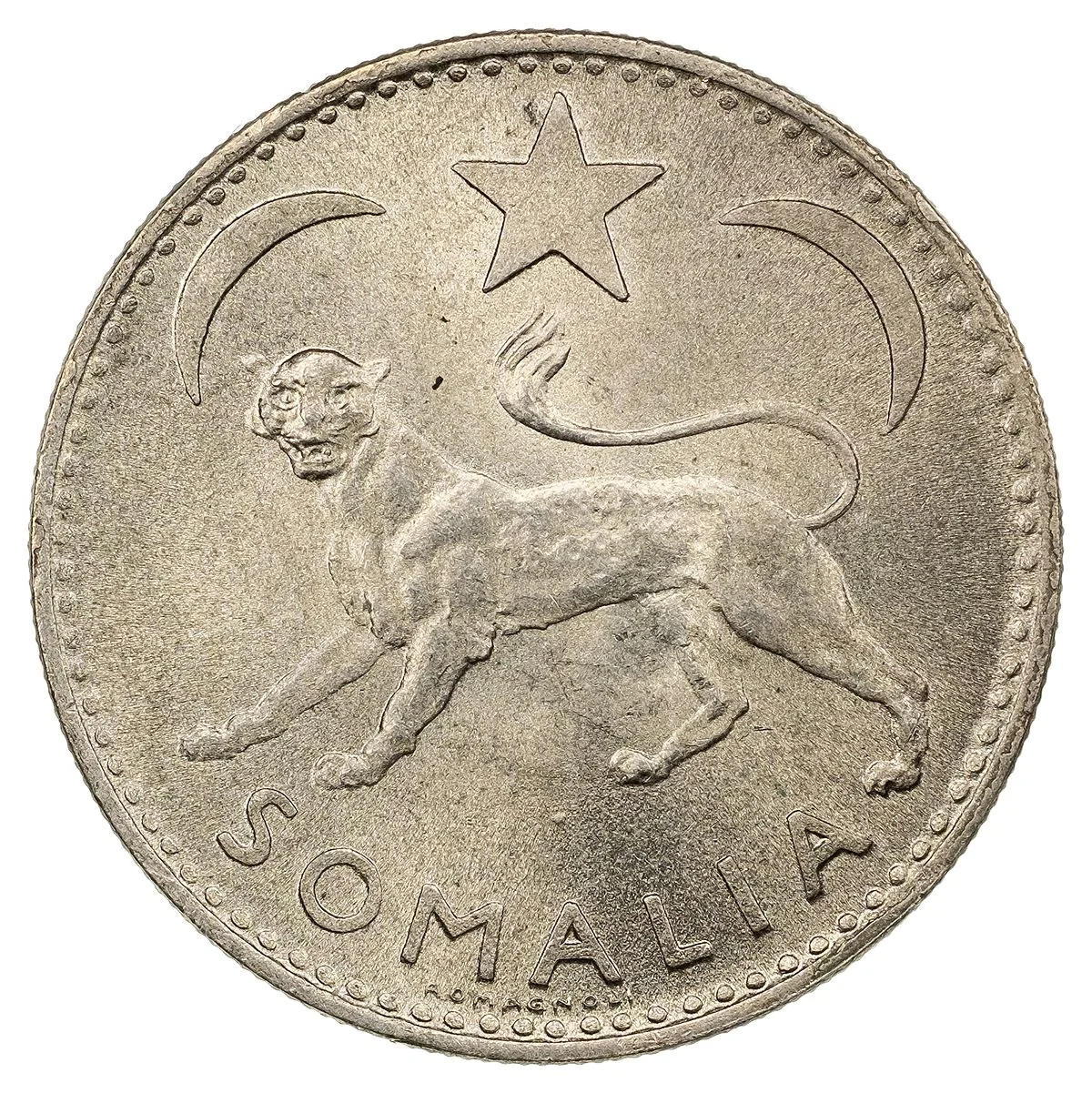
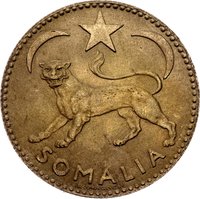
Leopard above a star flanked by crescents; country and engraver below.
Inscription:
SOMALIA
ROMAGNOLI
ROMAGNOLI
Script: Latin
Engraver: Giuseppe Romagnoli
Reverse
Description:
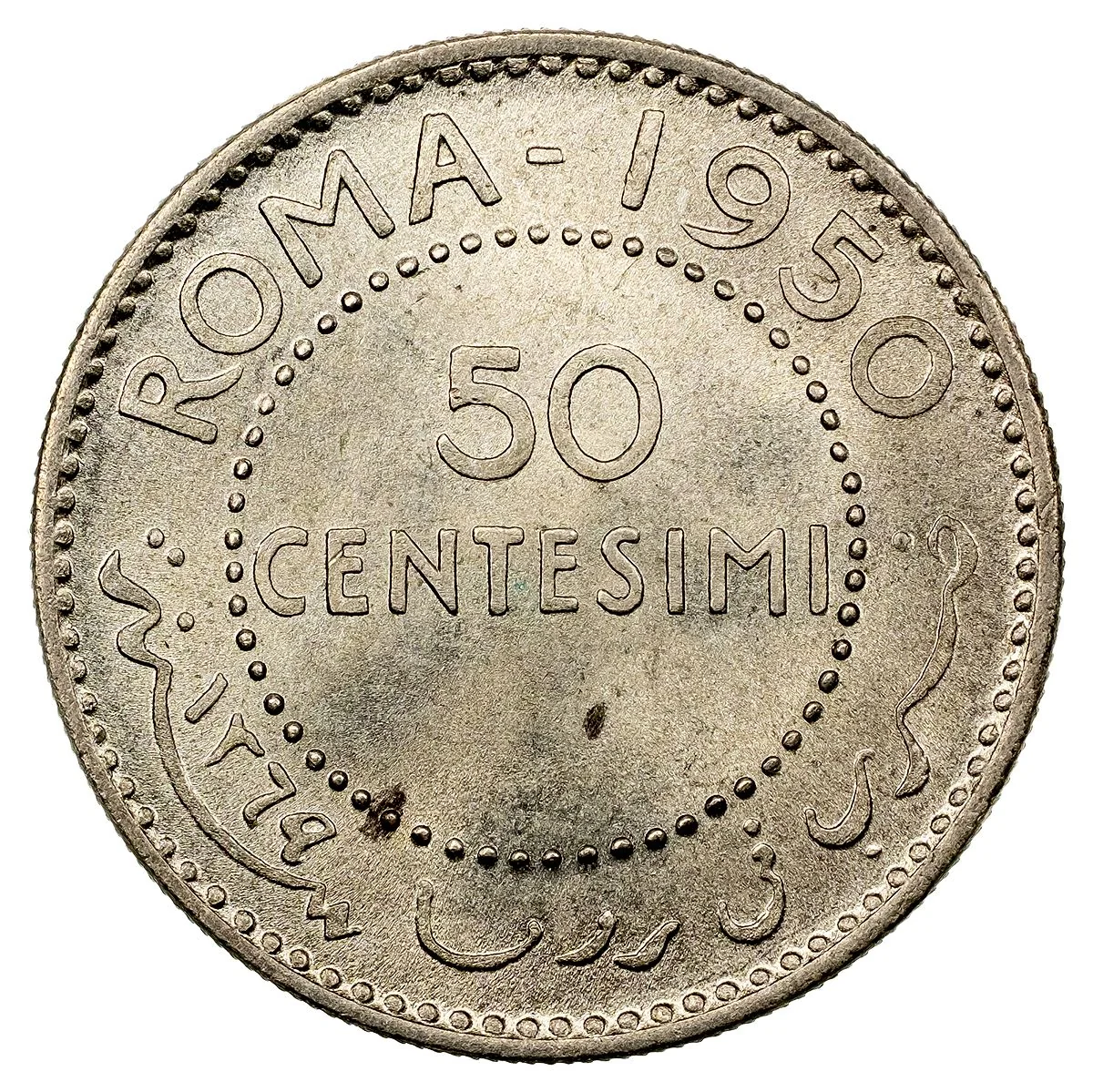
Value inside beaded circle; legend and date outside: Italian above, Arabic below.
Inscription:
ROMA - 1950
50 CENTESIMI
ضرب في روما سنة ١٣٦٩
50 CENTESIMI
ضرب في روما سنة ١٣٦٩
Translation:
ROME - 1950
50 CENTESIMI
Struck in Rome in the year 1369
50 CENTESIMI
Struck in Rome in the year 1369
Script: Latin
Engraver: Giuseppe Romagnoli
Edge
Reeded
Mints
| Name | Mark |
|---|---|
| Rome | — |
Mintings
| Year | Mint Mark | Mintage | Quality | Collection |
|---|---|---|---|---|
| 1950 | — | 1,800,000 |
Historical background
In 1950, the currency situation in the Trust Territory of Somaliland (officially administered by Italy under a UN mandate) was one of transition and dual circulation. The territory, which would become independent Somalia in 1960, was moving away from the monetary legacy of British military administration (1941-1950). During that period, the East African shilling had been the official currency, creating a financial link to the British sphere of influence.
To re-establish Italian economic ties and prepare for eventual self-governance, the Italian administration introduced the Somalo in 1950. It was issued by the Cassa per la Circolazione Monetaria della Somalia (Fund for Monetary Circulation in Somalia). The Somalo was pegged at par to the Italian lira, symbolizing the renewed administrative connection. However, the transition was not instantaneous, and the East African shilling remained in widespread use for several years, creating a practical, dual-currency economy.
This currency duality reflected the territory's complex post-war position, caught between its recent British-administered past and its Italian-guided future under UN trusteeship. The introduction of the Somalo was a key step in Italy's efforts to rebuild its economic infrastructure and influence, setting the stage for the monetary system that would continue after independence, until the Somali shilling eventually replaced the Somalo in 1962.
To re-establish Italian economic ties and prepare for eventual self-governance, the Italian administration introduced the Somalo in 1950. It was issued by the Cassa per la Circolazione Monetaria della Somalia (Fund for Monetary Circulation in Somalia). The Somalo was pegged at par to the Italian lira, symbolizing the renewed administrative connection. However, the transition was not instantaneous, and the East African shilling remained in widespread use for several years, creating a practical, dual-currency economy.
This currency duality reflected the territory's complex post-war position, caught between its recent British-administered past and its Italian-guided future under UN trusteeship. The introduction of the Somalo was a key step in Italy's efforts to rebuild its economic infrastructure and influence, setting the stage for the monetary system that would continue after independence, until the Somali shilling eventually replaced the Somalo in 1962.
🌱 Fairly Common