

50 Pence (Queen Mother) – Falkland Islands
Non-circulating coins
Commemoration: 80th Anniversary of the Queen Mother
United Kingdom
Context
Year: 1980
Country: United Kingdom 
Issuer: Falkland Islands 
Ruler: Elizabeth II
Currency:
(since 1971)
Material
Diameter: 38.61 mm
Weight: 28.28 g
Thickness: 3 mm
Shape: Round
Composition: Copper-nickel
Technique: Milled
Alignment: Medal alignment
flip
References
KM: #Click to copy to clipboard15
Numista: #12576
Value
Exchange value: 0.50 FKP
Inflation-adjusted value: 3.23 FKP
Obverse
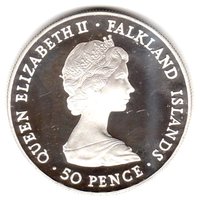
Description:
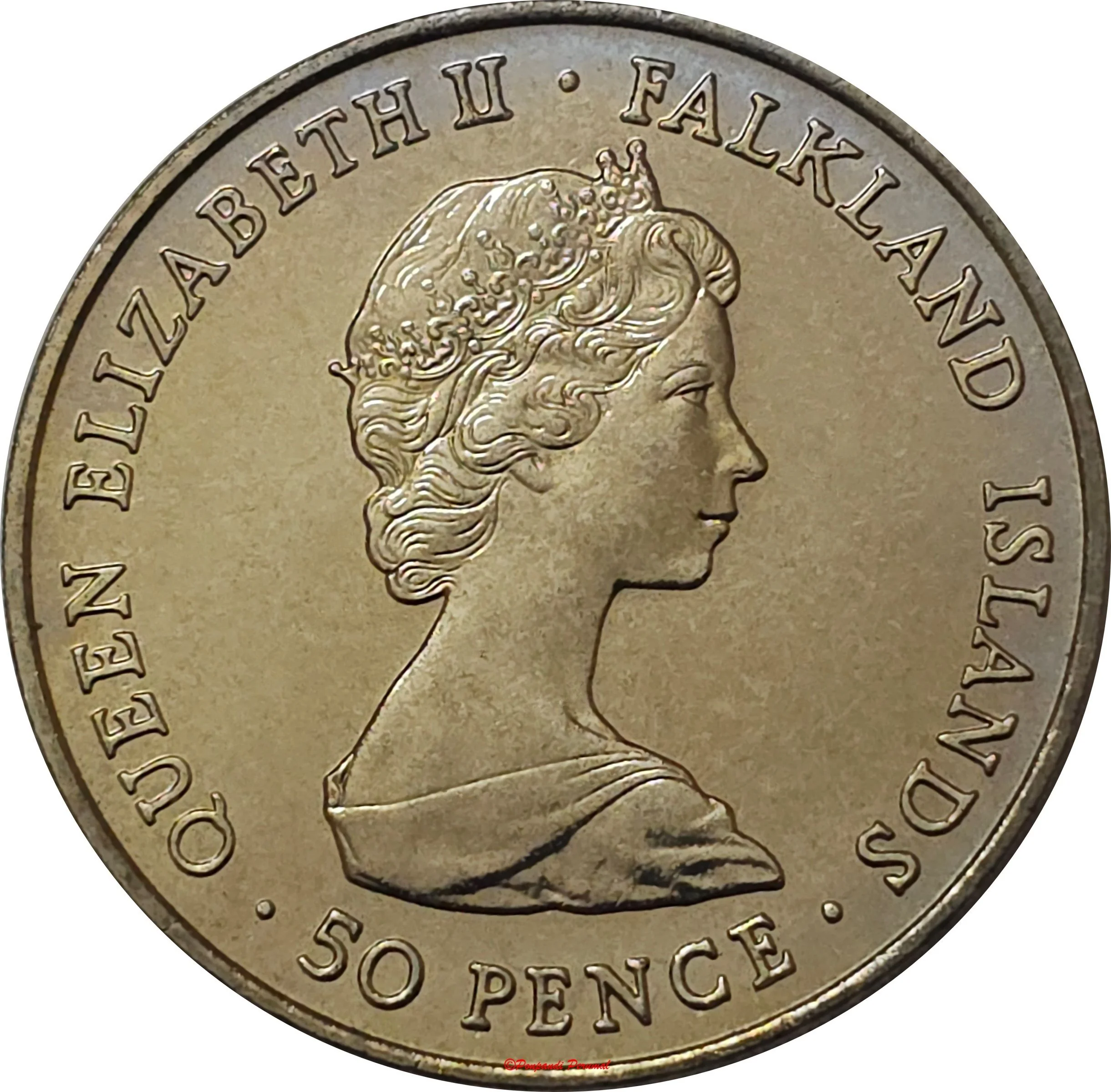
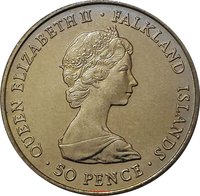
Young Queen Elizabeth II bust
Inscription:
QUEEN ELIZABETH II · FALKLAND ISLANDS
· 50 PENCE ·
· 50 PENCE ·
Script: Latin
Engraver: Arnold Machin
Reverse
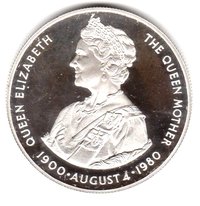
Description:
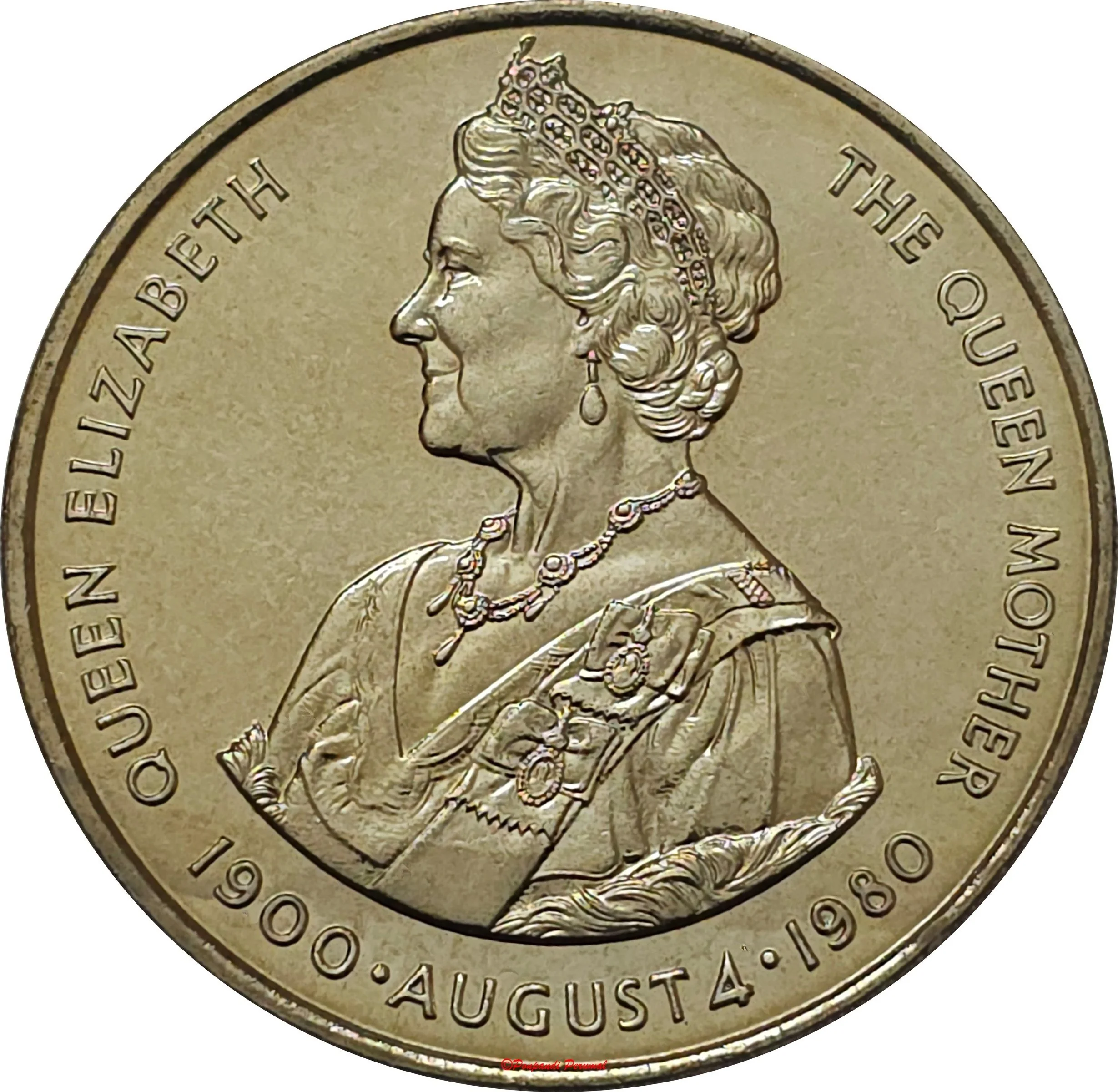
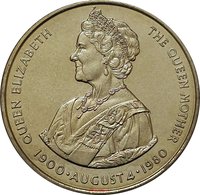
Bust of Queen Elizabeth The Queen Mother.
Inscription:
QUEEN ELIZABETH THE QUEEN MOTHER
1900·AUGUST 4·1980
1900·AUGUST 4·1980
Script: Latin
Engraver: Philip Nathan
Edge
Reeded
Categories
| Event> Birth anniversary |
Mintings
| Year | Mint Mark | Mintage | Quality | Collection |
|---|---|---|---|---|
| 1980 | — | — |
Historical background
In 1980, the Falkland Islands operated under a unique currency system that reflected both its historical ties and its isolated economic reality. The official currency was the Falkland Islands pound (FKP), which was pegged at par with the British pound sterling (GBP). This parity was a cornerstone of financial policy, ensuring stability and simplifying trade with the United Kingdom, which was the islands' dominant economic partner and source of subsidies. However, sterling banknotes and coins did not physically circulate; instead, the local government issued its own distinctive notes and coins, which were legal tender only within the territory.
The economy was small, pastoral, and heavily dependent on the wool trade, with limited need for complex monetary policy. There was no central bank; currency issuance was managed by the Falkland Islands Government, backed by sterling reserves held in London. This currency board system meant that for every Falkland Islands pound note issued, an equivalent pound sterling was held in reserve, guaranteeing convertibility. Consequently, the monetary situation was stable but entirely derivative, with the islands' financial health inextricably linked to the value and management of the British pound.
This quiet and stable arrangement existed against a backdrop of rising political tensions with Argentina, which renewed its sovereignty claim in the late 1970s. While the currency itself was not a point of contention, the underlying dispute threatened the very governance that guaranteed the currency's stability. The economic and monetary system of 1980 was, therefore, one of orderly colonial dependency, functioning smoothly in peacetime but ultimately vulnerable to the geopolitical storm that would erupt just two years later with the Argentine invasion.
The economy was small, pastoral, and heavily dependent on the wool trade, with limited need for complex monetary policy. There was no central bank; currency issuance was managed by the Falkland Islands Government, backed by sterling reserves held in London. This currency board system meant that for every Falkland Islands pound note issued, an equivalent pound sterling was held in reserve, guaranteeing convertibility. Consequently, the monetary situation was stable but entirely derivative, with the islands' financial health inextricably linked to the value and management of the British pound.
This quiet and stable arrangement existed against a backdrop of rising political tensions with Argentina, which renewed its sovereignty claim in the late 1970s. While the currency itself was not a point of contention, the underlying dispute threatened the very governance that guaranteed the currency's stability. The economic and monetary system of 1980 was, therefore, one of orderly colonial dependency, functioning smoothly in peacetime but ultimately vulnerable to the geopolitical storm that would erupt just two years later with the Argentine invasion.
🌱 Fairly Common