

10 Dollars – Sierra Leone
Non-circulating coins
Commemoration: 2004 - Presidents
Sierra Leone
Context

Material
References
KM: #Click to copy to clipboard301
Numista: #173333
Value
Bullion value: $80.90
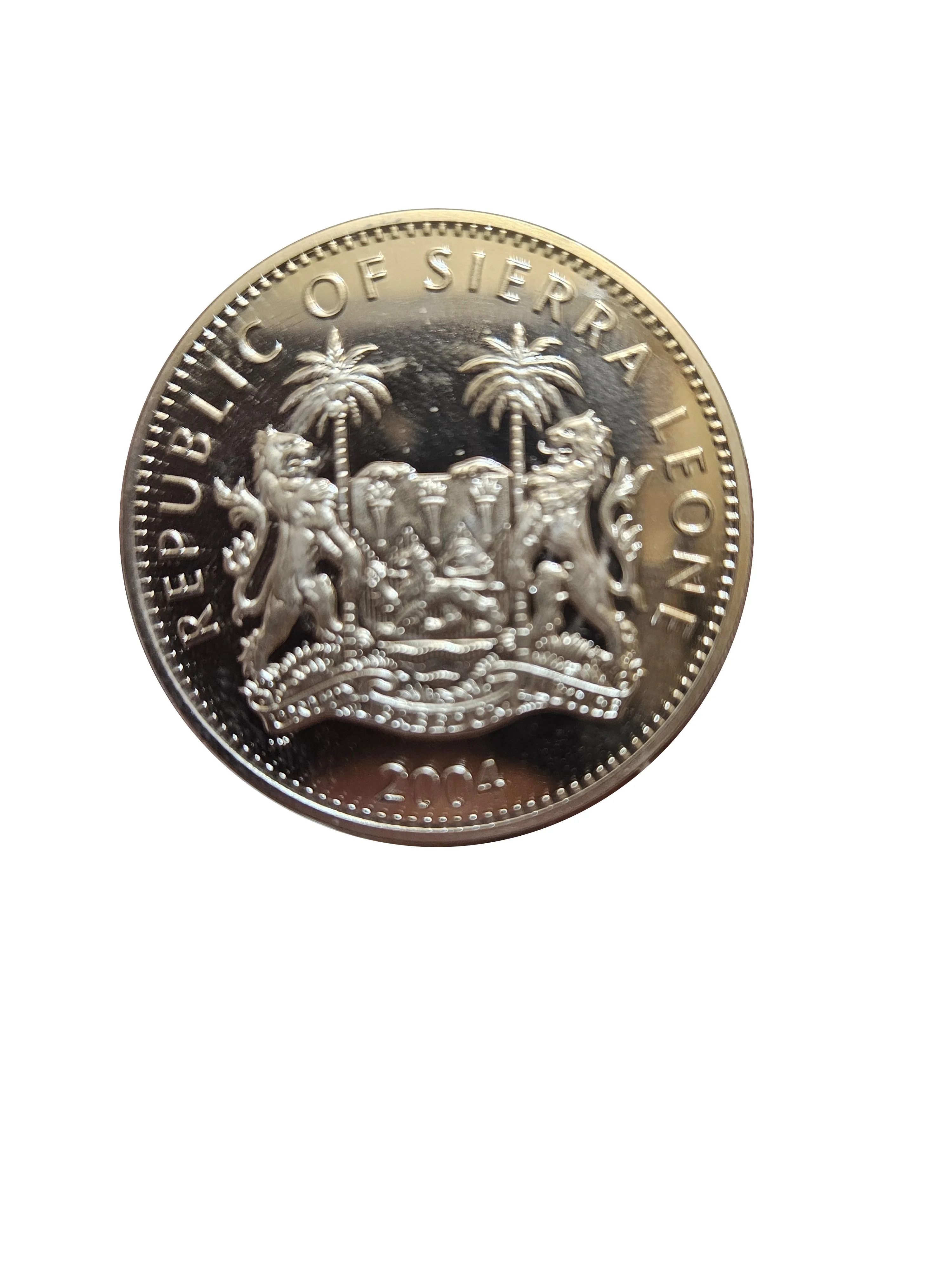
Obverse
Description:
Heraldic emblem
Inscription:
REPUBLIC OF SIERRA LEONE
2004
2004
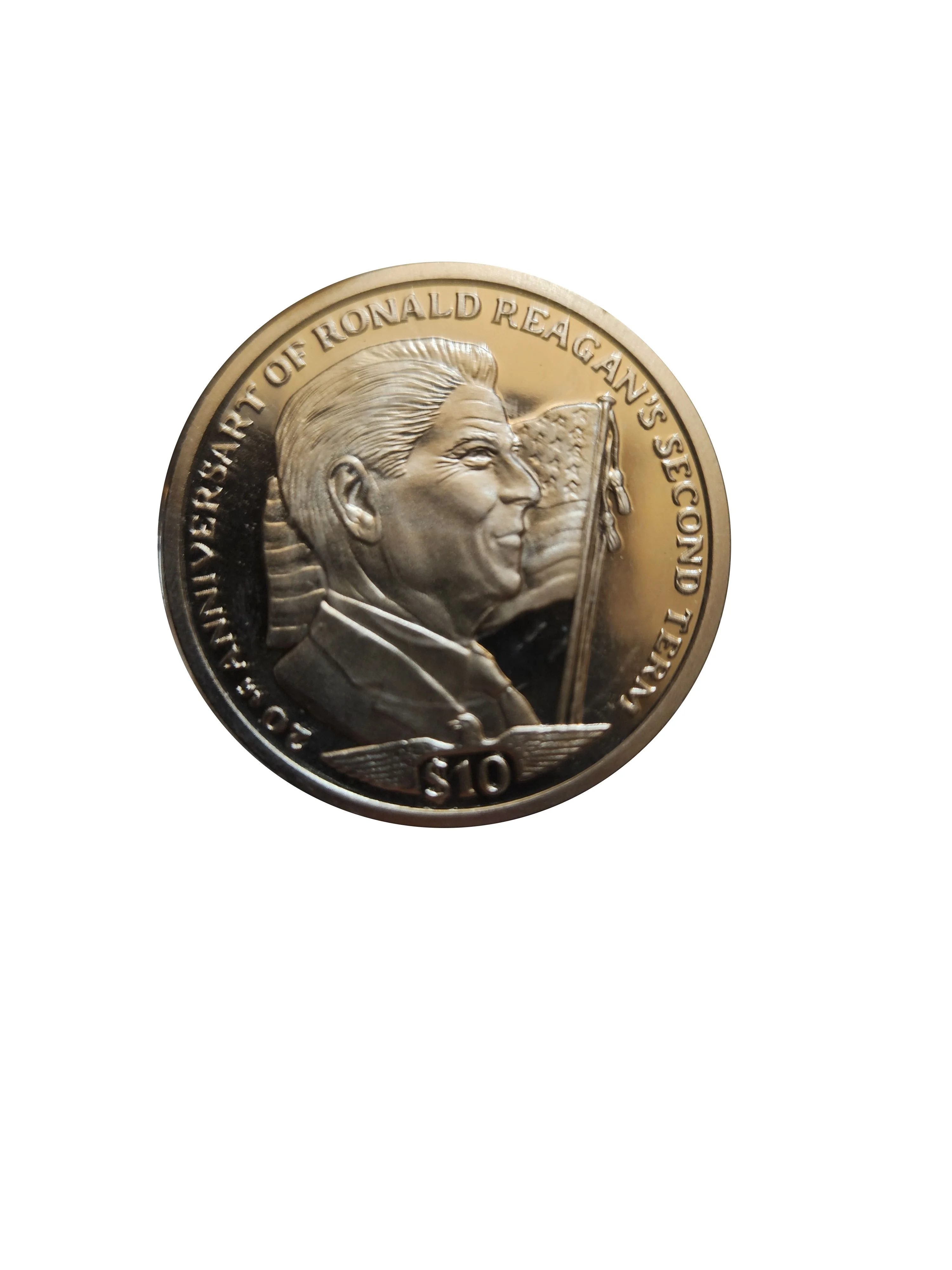
Reverse
Description:
Portrait, facing right.
Inscription:
20th ANNIVERSARY OF RONALD REAGAN'S SECOND TERM
$10
$10
Edge
Reeded
Mints
| Name | Mark |
|---|---|
| Pobjoy Mint | — |
Mintings
| Year | Mint Mark | Mintage | Quality | Collection |
|---|---|---|---|---|
| 2004 | — | 10,000 |
Historical background
In 2004, Sierra Leone was in the early stages of a fragile recovery from a devastating decade-long civil war that ended in 2002. The national currency, the Leone (SLL), was characterized by severe instability and depreciation, a legacy of wartime economic collapse, rampant money printing to finance deficits, and a collapse in public confidence. Inflation was a critical problem, eroding purchasing power and hindering efforts to rebuild livelihoods. The economy was heavily dependent on foreign aid, and the informal sector dominated transactions, often favoring the use of US dollars in major transactions due to the Leone's weakness.
The government, under President Ahmad Tejan Kabbah, was implementing reforms under an IMF Poverty Reduction and Growth Facility (PRGF) to stabilize the macroeconomic environment. Key objectives included tightening monetary policy, rebuilding foreign exchange reserves, and restoring fiscal discipline to curb inflation and slow the Leone's depreciation. The Bank of Sierra Leone intervened periodically in the foreign exchange market, but the currency remained under pressure due to structural issues like a narrow export base (reliant largely on diamonds and titanium ore) and a high import dependency for essential goods.
Consequently, 2004 saw a continued trend of a depreciating Leone against major currencies, though authorities aimed to manage a controlled float. The dual-currency system, with the US dollar circulating alongside the Leone, persisted. This environment posed significant challenges for poverty reduction and private sector development, as currency instability created uncertainty for investment and planning. The success of the ongoing IMF-supported program was seen as crucial for establishing a foundation for longer-term monetary stability and economic growth in the post-conflict era.
The government, under President Ahmad Tejan Kabbah, was implementing reforms under an IMF Poverty Reduction and Growth Facility (PRGF) to stabilize the macroeconomic environment. Key objectives included tightening monetary policy, rebuilding foreign exchange reserves, and restoring fiscal discipline to curb inflation and slow the Leone's depreciation. The Bank of Sierra Leone intervened periodically in the foreign exchange market, but the currency remained under pressure due to structural issues like a narrow export base (reliant largely on diamonds and titanium ore) and a high import dependency for essential goods.
Consequently, 2004 saw a continued trend of a depreciating Leone against major currencies, though authorities aimed to manage a controlled float. The dual-currency system, with the US dollar circulating alongside the Leone, persisted. This environment posed significant challenges for poverty reduction and private sector development, as currency instability created uncertainty for investment and planning. The success of the ongoing IMF-supported program was seen as crucial for establishing a foundation for longer-term monetary stability and economic growth in the post-conflict era.

✨ Legendary