

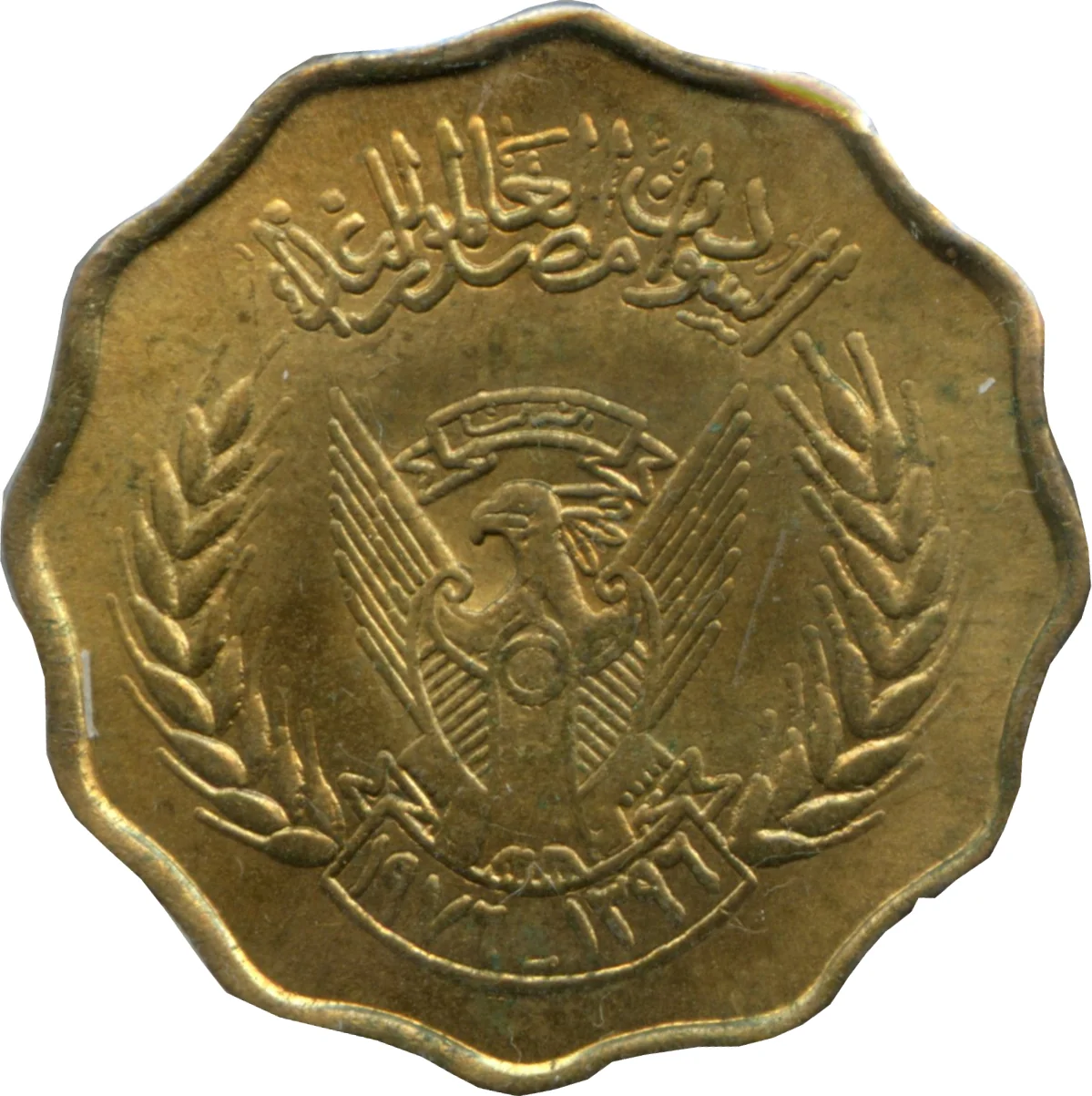
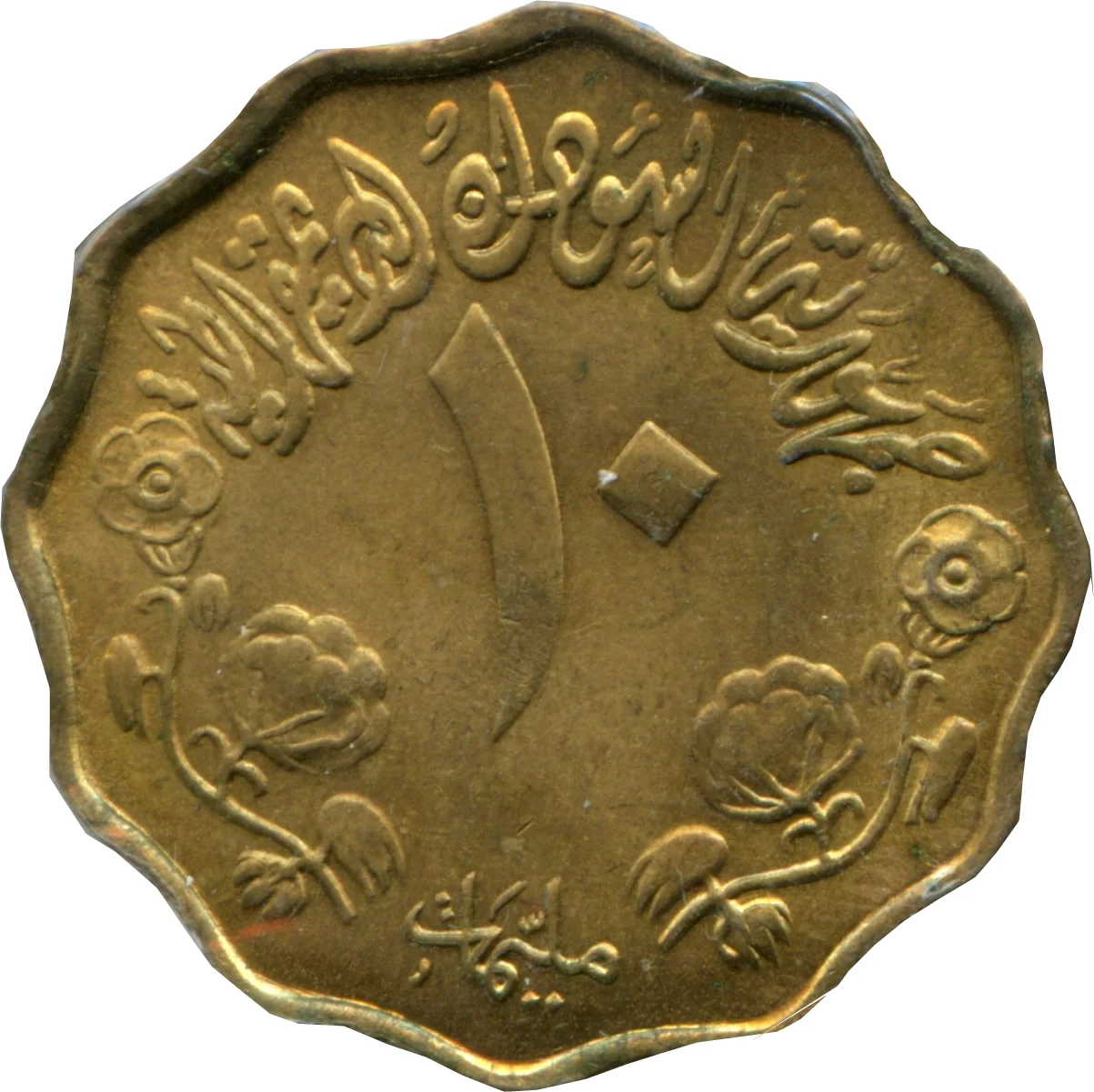
10 Milliemes – Sudan
Circulating commemorative coins
Commemoration: FAO
Sudan

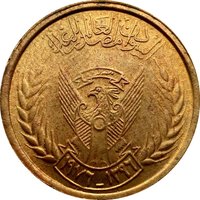
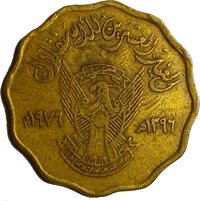
Obverse
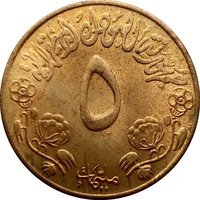
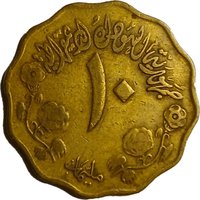
Reverse
Edge
Plain
Categories
| Organization> FAO |
Mintings
| Year | Mint Mark | Mintage | Quality | Collection |
|---|---|---|---|---|
| 1976 | — | 2,960,000 | ||
| 1978 | — | 1,270,000 |
Historical background
In 1976, Sudan’s currency situation was characterized by significant strain and devaluation, a direct consequence of the country's deepening economic crisis. The government of President Gaafar Nimeiry, which had come to power in a 1969 coup, pursued ambitious development projects and state-led industrialization, heavily financed by foreign borrowing. By the mid-1970s, a combination of falling global prices for its primary export, cotton, soaring costs for essential imports like oil and wheat, and a burdensome external debt led to severe balance of payments deficits. This economic pressure forced a major devaluation of the Sudanese pound, which was officially pegged to the U.S. dollar but maintained through strict exchange controls.
The official exchange rate became increasingly divorced from reality, giving rise to a thriving black market for foreign currency, particularly U.S. dollars. This parallel market offered exchange rates far more favorable than the official bank rate, drawing hard currency away from government channels and undermining official economic policy. The disparity between the two rates created major distortions, encouraging corruption and smuggling, while making it exceedingly difficult for legitimate businesses to access the foreign exchange needed for imports. This environment eroded confidence in the national currency and exacerbated inflationary pressures.
These currency troubles were a critical symptom of broader structural weaknesses. In response to the crisis, the Sudanese government began negotiating with the International Monetary Fund (IMF), setting the stage for a stabilization program. The discussions in 1976 would lead to Sudan's first IMF agreement in 1978, which mandated austerity measures, further devaluation, and the reduction of subsidies—policies that aimed to restore monetary stability but would also contribute to social unrest in the coming years. Thus, 1976 represented a pivotal year where the unsustainable currency regime necessitated a turn toward external intervention and economic liberalization.
The official exchange rate became increasingly divorced from reality, giving rise to a thriving black market for foreign currency, particularly U.S. dollars. This parallel market offered exchange rates far more favorable than the official bank rate, drawing hard currency away from government channels and undermining official economic policy. The disparity between the two rates created major distortions, encouraging corruption and smuggling, while making it exceedingly difficult for legitimate businesses to access the foreign exchange needed for imports. This environment eroded confidence in the national currency and exacerbated inflationary pressures.
These currency troubles were a critical symptom of broader structural weaknesses. In response to the crisis, the Sudanese government began negotiating with the International Monetary Fund (IMF), setting the stage for a stabilization program. The discussions in 1976 would lead to Sudan's first IMF agreement in 1978, which mandated austerity measures, further devaluation, and the reduction of subsidies—policies that aimed to restore monetary stability but would also contribute to social unrest in the coming years. Thus, 1976 represented a pivotal year where the unsustainable currency regime necessitated a turn toward external intervention and economic liberalization.
🌱 Common