

1 Tögrög – Mongolia
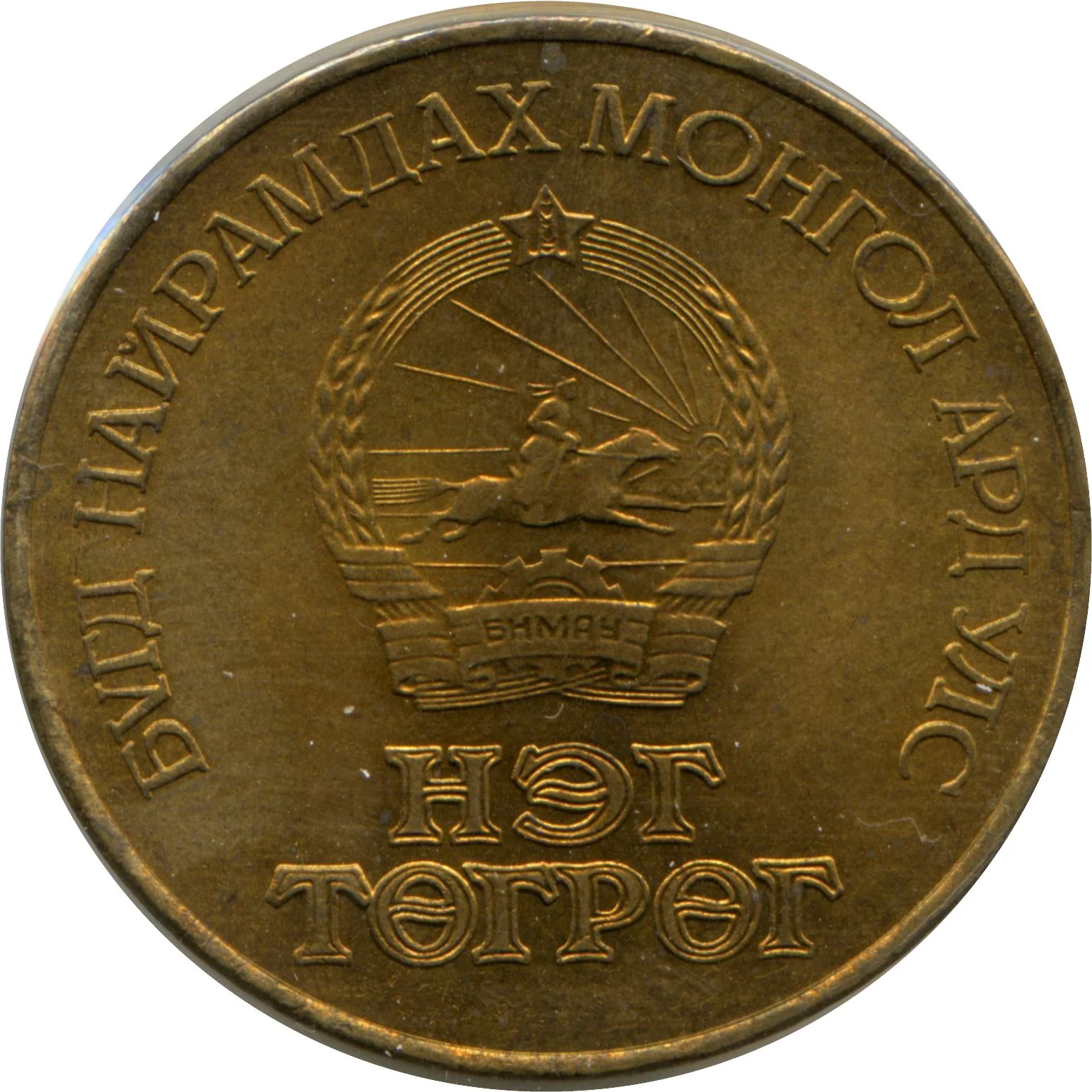
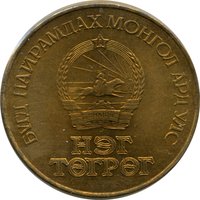
Circulating commemorative coins
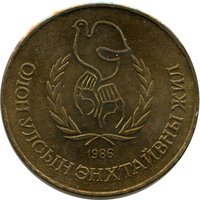
Commemoration: International Year of Peace
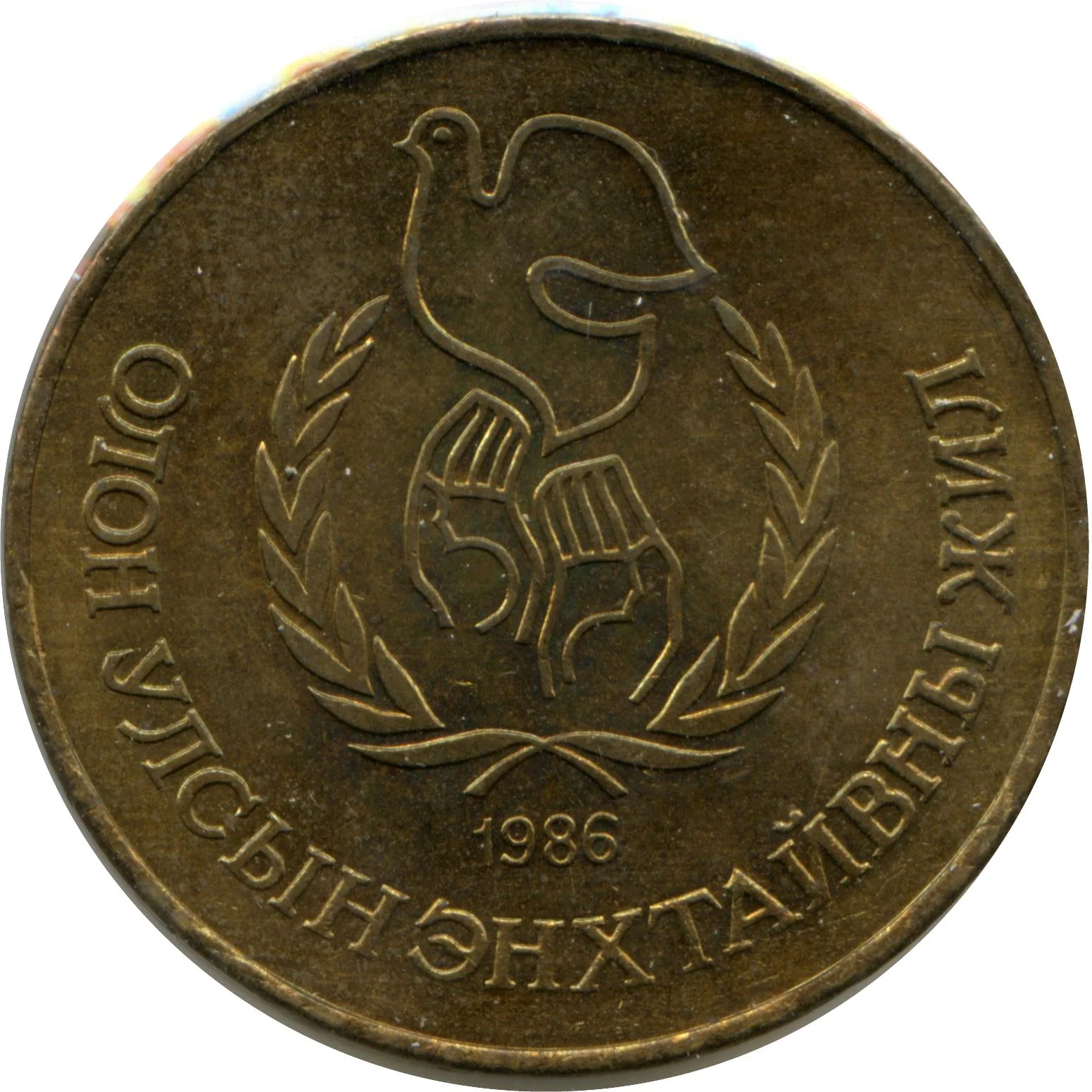
Mongolia
Context
Material
Diameter: 32 mm
Weight: 14.9 g
Shape: Round
Composition: Aluminium bronze
Magnetic: No
Technique: Milled
Alignment: Medal alignment
flip
References
KM: #Click to copy to clipboard48
Numista: #12532
Value
Exchange value: 1 MNT
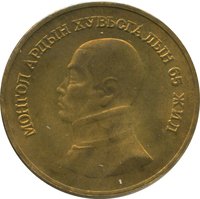
Obverse
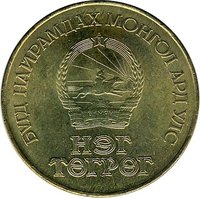
Reverse
Edge
Smooth with inscription
Mintings
| Year | Mint Mark | Mintage | Quality | Collection |
|---|---|---|---|---|
| 1986 | — | — |
Historical background
In 1986, Mongolia's currency situation was fundamentally defined by its status as a satellite state of the Soviet Union within the Council for Mutual Economic Assistance (COMECON). The national currency, the tögrög (MNT), operated under a rigid, centrally planned economic system. Its value was administratively set by the State Bank of Mongolia and was not convertible on global markets. The exchange rate was pegged at an artificial, highly overvalued rate to the Soviet ruble (approximately 1 ruble = 4.5 tögrög), which itself was a non-convertible currency, insulating Mongolia from international financial flows and price signals.
Economically, the tögrög functioned primarily as an accounting unit within the state's comprehensive planning apparatus. Money played a passive role, as the allocation of resources, production targets, and distribution of goods were dictated by five-year plans rather than market forces. The currency facilitated transactions between state-owned enterprises and for paying wages, but consumer choice was severely limited. Chronic shortages of goods were common, leading to a suppressed inflationary pressure where money in hand often could not purchase desired items, creating a disconnect between the currency's nominal value and its real purchasing power.
This period represented the final phase of a stable but stagnant monetary environment before the impending upheaval. The policies of perestroika and glasnost initiated by Soviet leader Mikhail Gorbachev were beginning to ripple through the socialist bloc, but in 1986, Mongolia's currency and financial system remained locked in its Soviet-style framework. The severe distortions, overvaluation, and lack of convertibility would, within a few years, necessitate a painful and abrupt transition to a market-based currency system following the democratic revolution of 1990 and the collapse of the Soviet Union.
Economically, the tögrög functioned primarily as an accounting unit within the state's comprehensive planning apparatus. Money played a passive role, as the allocation of resources, production targets, and distribution of goods were dictated by five-year plans rather than market forces. The currency facilitated transactions between state-owned enterprises and for paying wages, but consumer choice was severely limited. Chronic shortages of goods were common, leading to a suppressed inflationary pressure where money in hand often could not purchase desired items, creating a disconnect between the currency's nominal value and its real purchasing power.
This period represented the final phase of a stable but stagnant monetary environment before the impending upheaval. The policies of perestroika and glasnost initiated by Soviet leader Mikhail Gorbachev were beginning to ripple through the socialist bloc, but in 1986, Mongolia's currency and financial system remained locked in its Soviet-style framework. The severe distortions, overvaluation, and lack of convertibility would, within a few years, necessitate a painful and abrupt transition to a market-based currency system following the democratic revolution of 1990 and the collapse of the Soviet Union.
🌟 Uncommon