

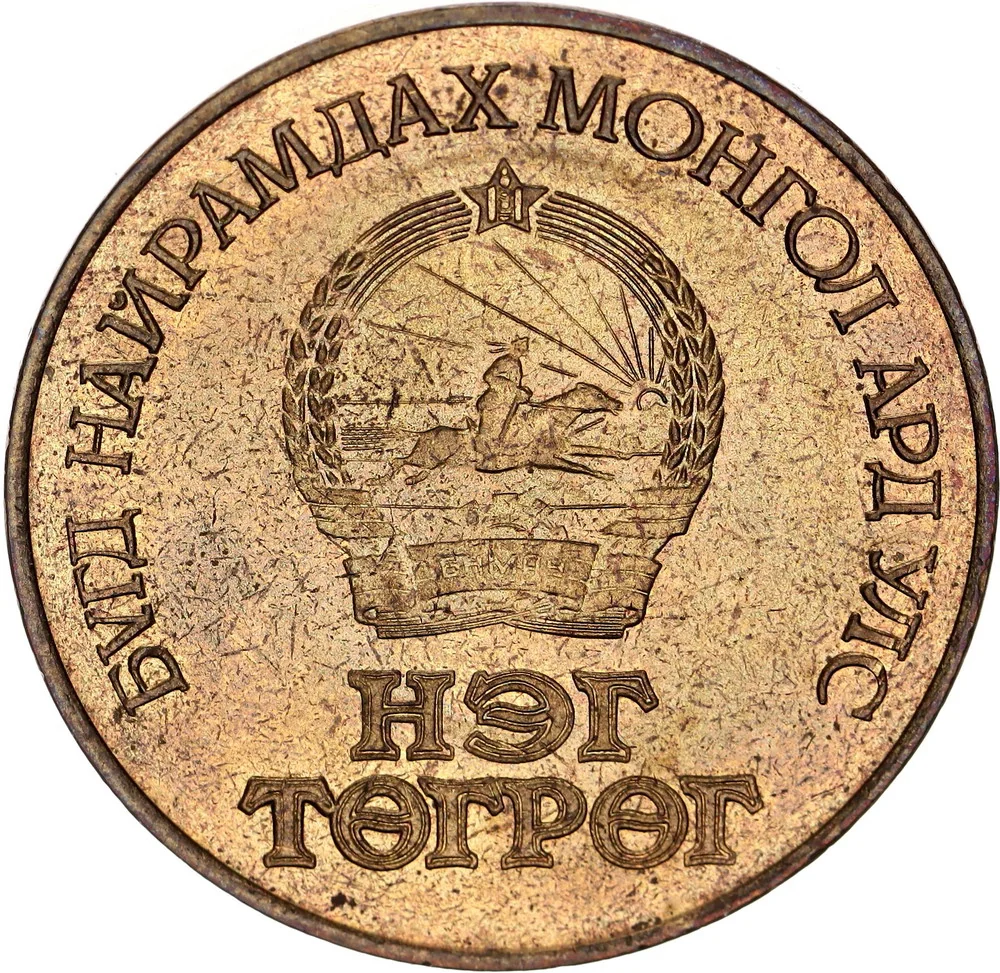
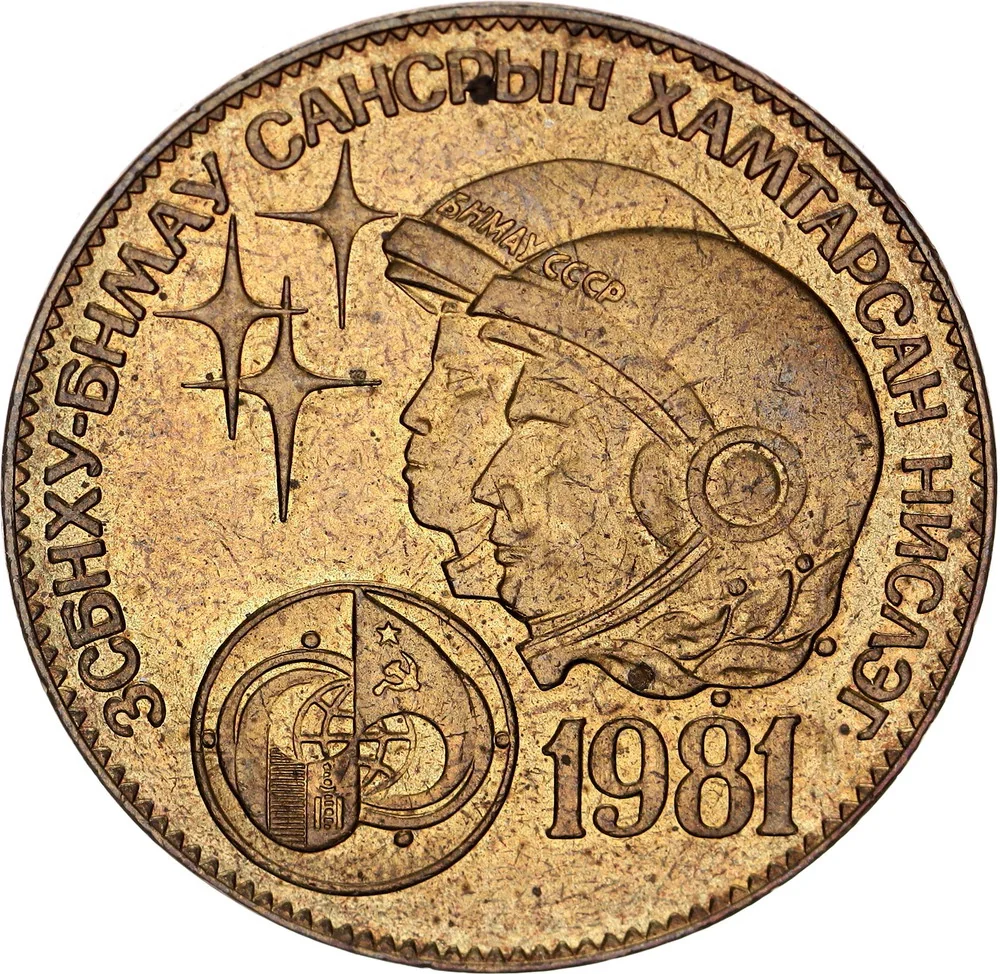
1 Tögrög – Mongolia
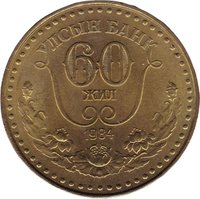
Circulating commemorative coins
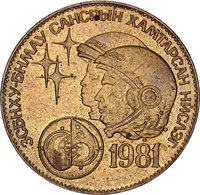
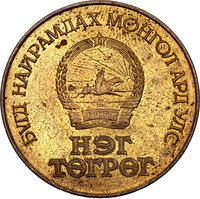
Commemoration: Soviet-Mongolian Space Flight
Mongolia
Context
Material
Diameter: 32 mm
Weight: 14.9 g
Thickness: 2.65 mm
Shape: Round
Composition: Aluminium bronze
Magnetic: No
Technique: Milled
Alignment: Medal alignment
flip
References
KM: #Click to copy to clipboard42
Numista: #12529
Value
Exchange value: 1 MNT
Obverse
Reverse
Edge
Plain
Categories
| Space |
Mintings
| Year | Mint Mark | Mintage | Quality | Collection |
|---|---|---|---|---|
| 1981 | — | — |
Historical background
In 1981, Mongolia's currency situation was entirely defined by its status as a Soviet satellite state and a member of the Council for Mutual Economic Assistance (COMECON). The national currency, the tögrög (MNT), was a non-convertible, centrally planned instrument with an official exchange rate set arbitrarily by the state. Its value was pegged at a rate of approximately 1 Soviet ruble = 4 tögrög, a rate divorced from market realities and used primarily for accounting purposes within the socialist bloc. The tögrög's function was to facilitate the state-controlled domestic economy, where prices for essential goods and services were heavily subsidized and set by central planners.
Internationally, the tögrög was meaningless, as Mongolia's foreign trade was conducted almost exclusively with the USSR and other COMECON partners through a system of bilateral trade agreements and clearing rubles. Hard currency (like US dollars) was scarce and tightly controlled by the state, reserved for importing critical goods from outside the socialist bloc. For ordinary citizens, access to foreign currency was virtually non-existent, and there was no legal private foreign exchange market. Any black market for currency was small and operated clandestinely, often connected to limited cross-border trade.
This rigid system reflected the broader Mongolian economy of the era: a monolithic, Moscow-directed command economy dependent on Soviet subsidies, which made up over 30% of GDP. The currency was not a tool of monetary policy but an administrative unit for allocating resources within the state plan. While it provided a facade of stability with fixed prices, it masked deep economic inefficiencies, a growing debt burden to the USSR, and a complete lack of integration with the global financial system—issues that would culminate in a severe economic crisis following the withdrawal of Soviet support at the decade's end.
Internationally, the tögrög was meaningless, as Mongolia's foreign trade was conducted almost exclusively with the USSR and other COMECON partners through a system of bilateral trade agreements and clearing rubles. Hard currency (like US dollars) was scarce and tightly controlled by the state, reserved for importing critical goods from outside the socialist bloc. For ordinary citizens, access to foreign currency was virtually non-existent, and there was no legal private foreign exchange market. Any black market for currency was small and operated clandestinely, often connected to limited cross-border trade.
This rigid system reflected the broader Mongolian economy of the era: a monolithic, Moscow-directed command economy dependent on Soviet subsidies, which made up over 30% of GDP. The currency was not a tool of monetary policy but an administrative unit for allocating resources within the state plan. While it provided a facade of stability with fixed prices, it masked deep economic inefficiencies, a growing debt burden to the USSR, and a complete lack of integration with the global financial system—issues that would culminate in a severe economic crisis following the withdrawal of Soviet support at the decade's end.
🌱 Fairly Common