

500 Mils – Cyprus
Non-circulating coins
Commemoration: FAO - World Food Day
Cyprus
Obverse
Description:
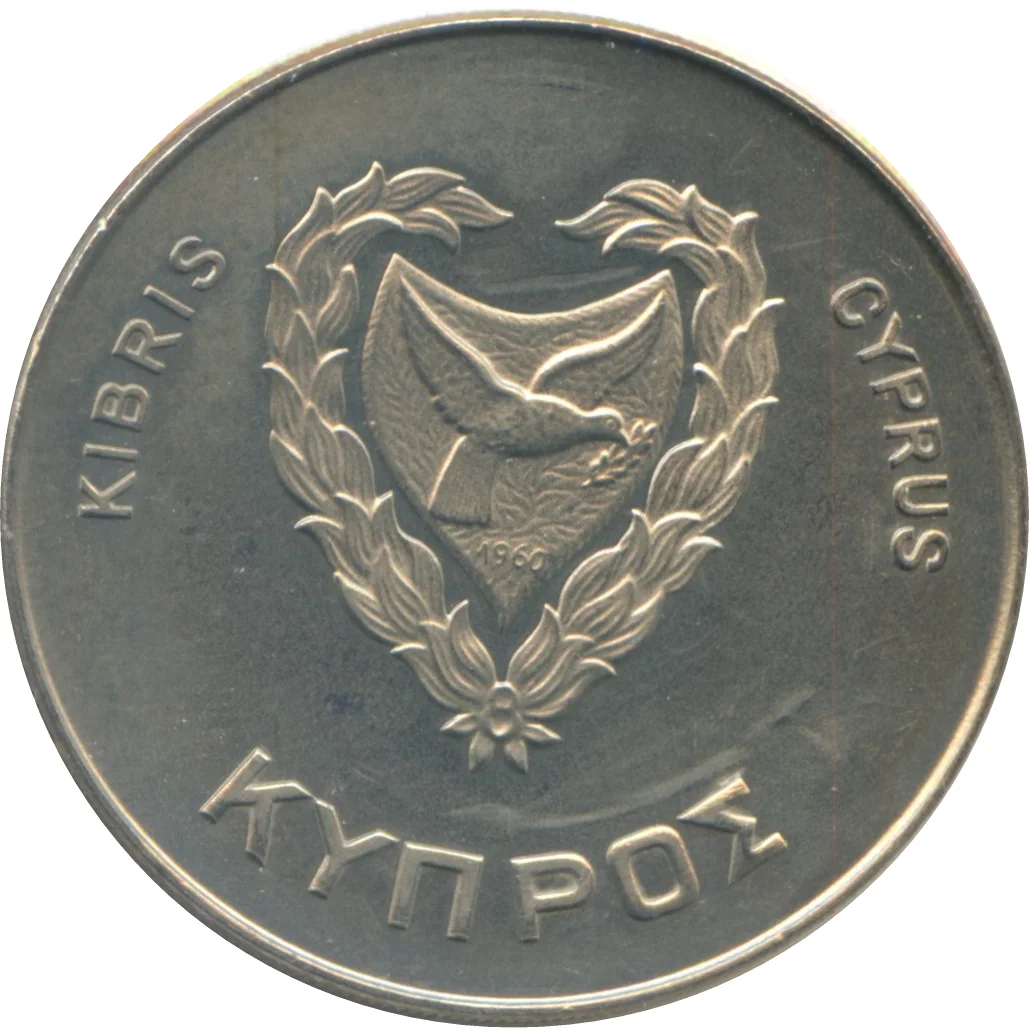
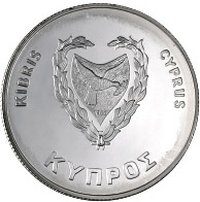
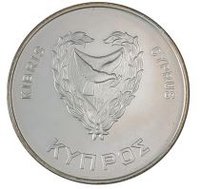
Cyprus coat of arms: a dove with an olive twig above "1960," encircled by laurels and the word "Cyprus" in Greek, Turkish, and English.
Inscription:
ΚΥΠΡΟΣ
KIBRIS
CYPRUS
KIBRIS
CYPRUS
Translation:
Cyprus
Cyprus
Cyprus
Cyprus
Cyprus
Engraver: Clara Zacharaki - Georghiou
Reverse
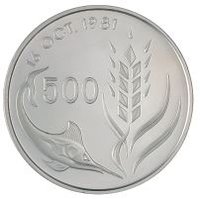
Description:
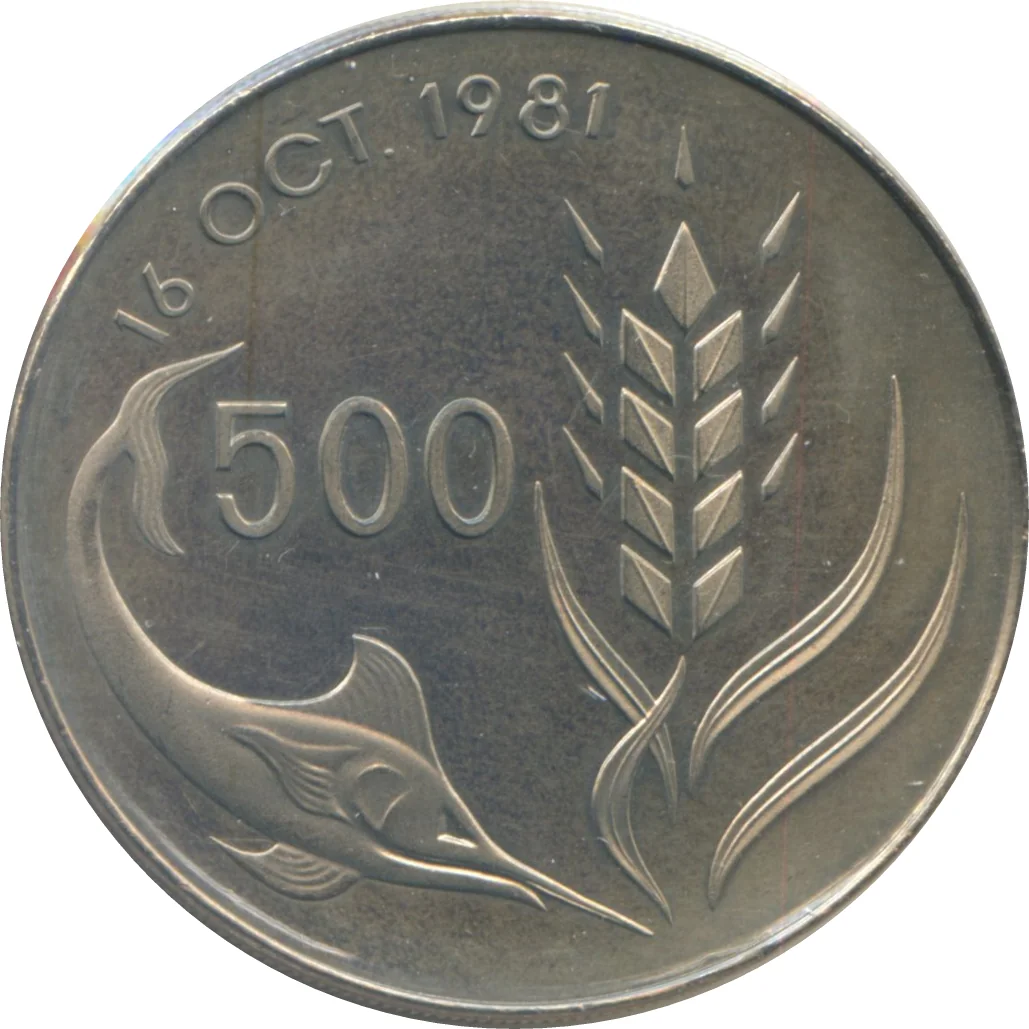
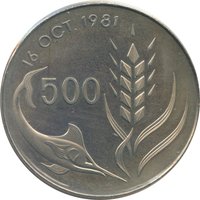
Grain and swordfish, Cyprus's staple foods.
Inscription:
16 OCT. 1981
500
500
Edge
Reeded
Categories
| Animal> Fish |
| Organization> FAO |
Mints
| Name | Mark |
|---|---|
| Royal Mint | — |
Mintings
| Year | Mint Mark | Mintage | Quality | Collection |
|---|---|---|---|---|
| 1981 | — | 50,000 |
Historical background
In 1981, the currency situation in Cyprus was defined by the continued use of the Cypriot pound (CYP), which was pegged to a basket of weighted currencies. This basket primarily included the British pound sterling, the US dollar, and the Greek drachma, reflecting the island's key economic and political ties. The Central Bank of Cyprus managed this peg to maintain stability, a crucial objective for a small, open economy heavily reliant on tourism, services, and foreign trade. This system provided a buffer against the volatility of any single currency and had successfully controlled inflation in the preceding years.
The period was one of relative monetary stability, but not without underlying economic pressures. The early 1980s saw Cyprus recovering from the severe shocks of the 1974 war, which had divided the island and devastated its economy. While growth was steady, the government faced challenges such as a growing public sector deficit and the need for infrastructure development. The currency peg, while stabilizing, also meant that the Central Bank had to actively manage foreign reserves and interest rates to defend the fixed exchange rate, limiting its ability to use independent monetary policy for domestic stimulation.
Furthermore, the currency situation existed within a unique political context. Since 1963, the Cypriot pound was the sole legal tender in the government-controlled Republic of Cyprus in the south, while the Turkish lira circulated in the northern area following the 1974 division. This de facto partition created a dual-currency reality on the island, though the internationally recognized Cypriot pound remained the cornerstone of the formal economy. The stability of the pound in 1981 was therefore seen as essential not only for economic prosperity but also as a symbol of resilience and continuity for the Republic.
The period was one of relative monetary stability, but not without underlying economic pressures. The early 1980s saw Cyprus recovering from the severe shocks of the 1974 war, which had divided the island and devastated its economy. While growth was steady, the government faced challenges such as a growing public sector deficit and the need for infrastructure development. The currency peg, while stabilizing, also meant that the Central Bank had to actively manage foreign reserves and interest rates to defend the fixed exchange rate, limiting its ability to use independent monetary policy for domestic stimulation.
Furthermore, the currency situation existed within a unique political context. Since 1963, the Cypriot pound was the sole legal tender in the government-controlled Republic of Cyprus in the south, while the Turkish lira circulated in the northern area following the 1974 division. This de facto partition created a dual-currency reality on the island, though the internationally recognized Cypriot pound remained the cornerstone of the formal economy. The stability of the pound in 1981 was therefore seen as essential not only for economic prosperity but also as a symbol of resilience and continuity for the Republic.
🌱 Fairly Common