

1 Grosso – Papal States
Circulating commemorative coins
Commemoration: Vacant Seat 1691
Vatican City
Context
Material
References
KM: #Click to copy to clipboard534
Numista: #553511
Value
Bullion value: $4.71
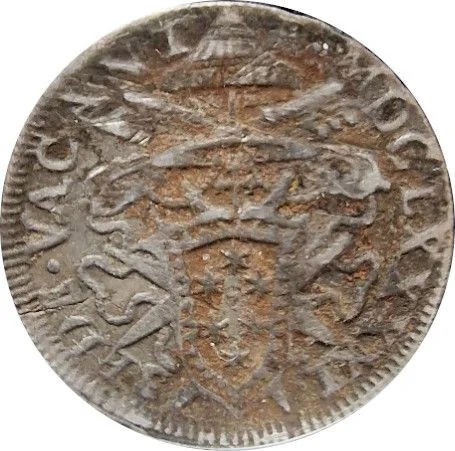
Obverse
Description:
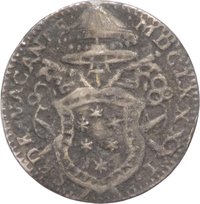
Cardinal Paluzzo Paluzzi-Altieri's coat of arms.
Inscription:
SEDE·VACANT·E MDCLXXXXI
Script: Latin
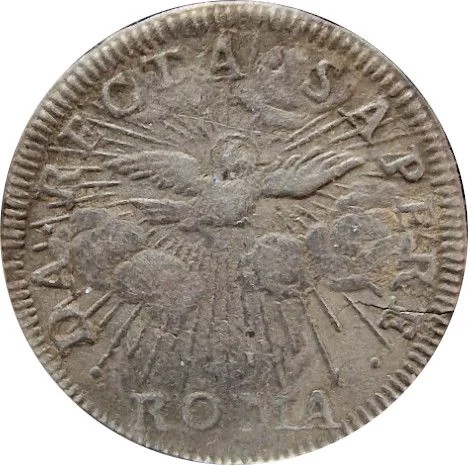
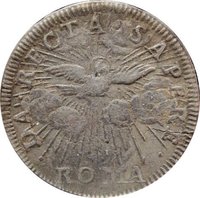
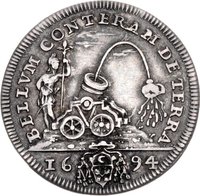
Reverse
Edge
Plain
Mints
| Name | Mark |
|---|---|
| Rome | — |
Mintings
| Year | Mint Mark | Mintage | Quality | Collection |
|---|---|---|---|---|
| 1691 | — | — |
Historical background
In 1691, the Papal States operated under a complex and strained monetary system, typical of many Italian states in the early modern period. The primary unit of account was the scudo (plural scudi), a silver coin, which was subdivided into 100 baiochi, each of which was further divided into 10 quattrini. However, the circulation was a chaotic mix of physical coins from various mints, including domestic issues from Rome, Bologna, and other papal cities, alongside a flood of foreign silver coins from Spain, the Empire, and other Italian states. This proliferation of coins of varying weight and fineness, many of which were clipped or debased, created constant challenges for trade and state finance, requiring official "agios" (exchange rates) to be periodically published.
The financial situation was particularly pressured due to the immense debts incurred by Pope Innocent XI (r. 1676-1689) to fund the wars against the Ottoman Empire, most notably the relief of Vienna in 1683 and the subsequent campaigns in Hungary. His successor, Pope Alexander VIII (r. 1689-1691), who died in February of 1691, had exacerbated the fiscal crisis through nepotism, lavish spending, and the purchase of the library of Queen Christina of Sweden. Consequently, the papacy in 1691, under the newly elected Pope Innocent XII, faced a treasury that was virtually empty and a significant devaluation of its currency on international markets, especially against the dominant Venetian ducat.
Monetary policy was therefore a critical concern. The papal government attempted to control the system through edicts that set the legal value of specific coins in circulation, trying to stem the loss of good silver and stabilize the scudo. However, these efforts were often undermined by market forces, counterfeiting, and the sheer volume of foreign coinage. The underlying economic weakness—reliant on tithes, taxes from the provinces, and loans from Roman banks—meant that monetary stability was elusive, setting the stage for the more comprehensive financial reforms that Innocent XII would cautiously begin to implement later in his pontificate.
The financial situation was particularly pressured due to the immense debts incurred by Pope Innocent XI (r. 1676-1689) to fund the wars against the Ottoman Empire, most notably the relief of Vienna in 1683 and the subsequent campaigns in Hungary. His successor, Pope Alexander VIII (r. 1689-1691), who died in February of 1691, had exacerbated the fiscal crisis through nepotism, lavish spending, and the purchase of the library of Queen Christina of Sweden. Consequently, the papacy in 1691, under the newly elected Pope Innocent XII, faced a treasury that was virtually empty and a significant devaluation of its currency on international markets, especially against the dominant Venetian ducat.
Monetary policy was therefore a critical concern. The papal government attempted to control the system through edicts that set the legal value of specific coins in circulation, trying to stem the loss of good silver and stabilize the scudo. However, these efforts were often undermined by market forces, counterfeiting, and the sheer volume of foreign coinage. The underlying economic weakness—reliant on tithes, taxes from the provinces, and loans from Roman banks—meant that monetary stability was elusive, setting the stage for the more comprehensive financial reforms that Innocent XII would cautiously begin to implement later in his pontificate.
✨ Legendary