

⅙ Ducat – Bishopric of Olomouc
Context
Years: 1664–1695
Country: Bohemia
Issuer: Bishopric of Olomouc
Currency:
(1613—1748)
Demonetized: Yes
Material
References
KM: #Click to copy to clipboard256
Numista: #551877
Value
Bullion value: $97.24
Obverse
Description:
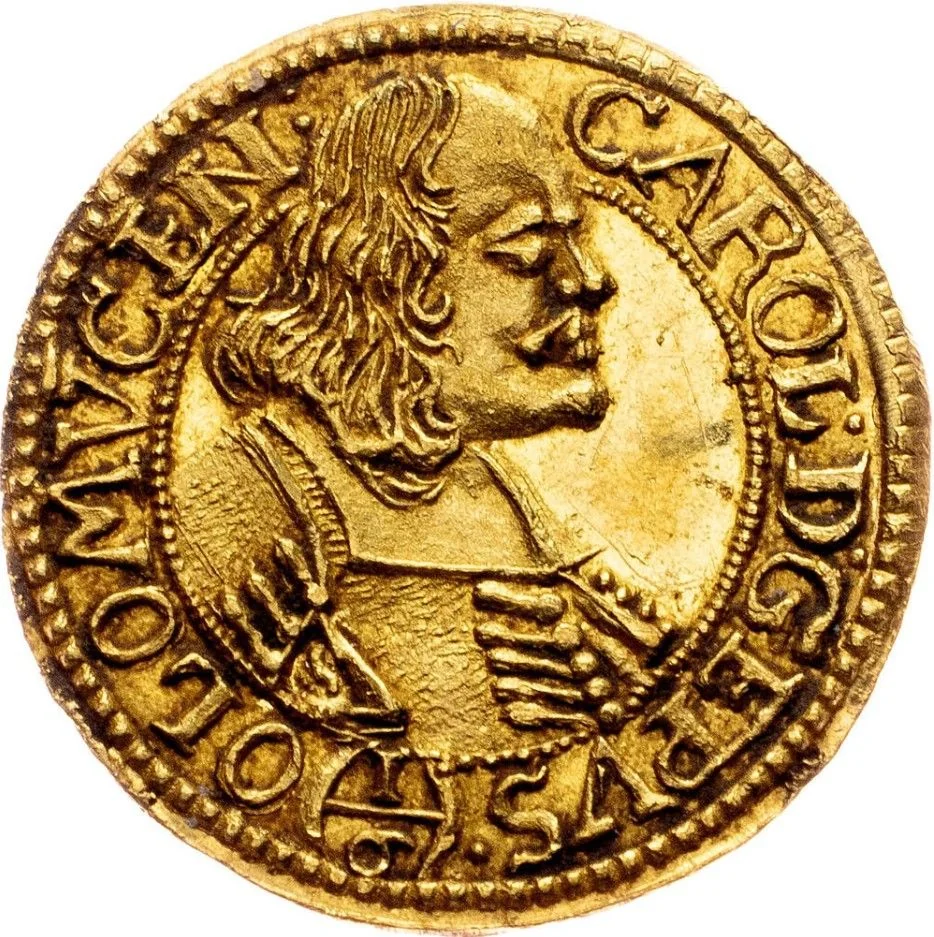
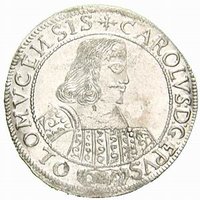
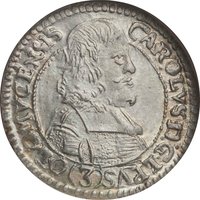
Charles II bust right within beaded circle, legend around. Fractional value in frame below.
Inscription:
CAROL D G EPVS OLOMVCEN
1/6
1/6
Script: Latin
Reverse
Description:
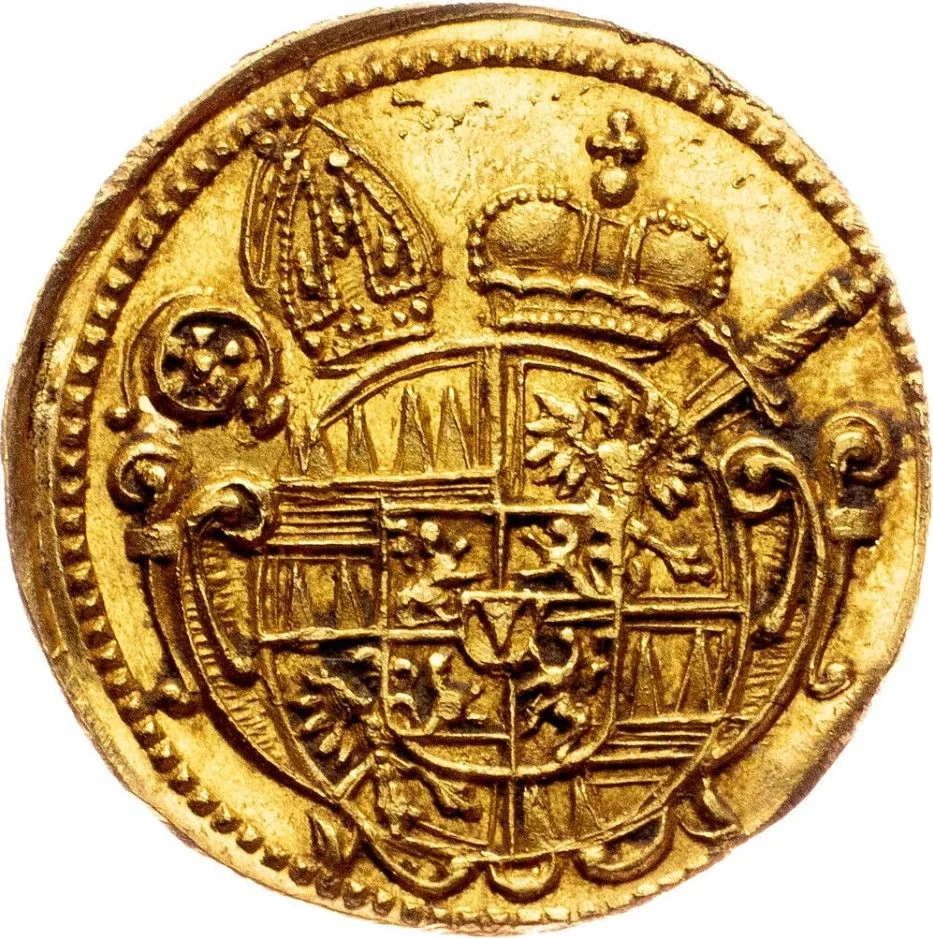
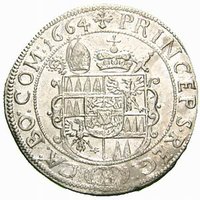
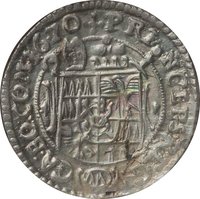
Ornate shield with composite arms under mitre and crown, crossed by sword and crozier.
Edge
Plain
Categories
| Symbols> Coat of Arms |
Mints
| Name | Mark |
|---|---|
| Kroměříž | — |
Mintings
| Year | Mint Mark | Mintage | Quality | Collection |
|---|---|---|---|---|
| — | — | — |
Historical background
In 1664, the currency situation within the Bishopric of Olomouc, a semi-autonomous ecclesiastical principality within the Kingdom of Bohemia under Habsburg rule, was complex and influenced by broader regional monetary turmoil. The period following the Thirty Years' War (1618-1648) was marked by severe currency debasement across Central Europe. The Habsburg government in Vienna, facing immense debt, repeatedly reduced the silver content of its coinage, particularly the small-denomination kreuzers that circulated widely. As a territory of the Bohemian Crown, the Bishopric was directly affected by these imperial monetary policies, leading to a proliferation of underweight and adulterated coins in local markets, causing price inflation and economic uncertainty.
Locally, the Bishopric's own minting rights were historically significant but were not actively exercised for large-scale coinage in this period. The economic power of the Bishop-Prince, Karl II von Liechtenstein-Kastelkorn, was instead manifested through the management of his extensive estates and the collection of revenues, which were now complicated by the unstable currency. Trade and daily transactions were conducted with a chaotic mix of legitimate imperial coins, debased domestic issues, and various foreign currencies from neighboring regions like Silesia and Poland, creating a challenging environment for commerce and taxation.
Consequently, the primary monetary "situation" in Olomouc in 1664 was one of passive endurance and adaptation to externally imposed instability. The bishopric's authorities had limited power to enact independent monetary reform, as currency sovereignty largely resided with the Habsburg court in Vienna. The economic recovery of the bishopric was thus hindered by this unpredictable monetary environment, which eroded trust in coinage and complicated the financial administration of the territory until more systematic reforms, like those later attempted under Leopold I's Münzordnung (coinage ordinances), began to take hold in the subsequent decades.
Locally, the Bishopric's own minting rights were historically significant but were not actively exercised for large-scale coinage in this period. The economic power of the Bishop-Prince, Karl II von Liechtenstein-Kastelkorn, was instead manifested through the management of his extensive estates and the collection of revenues, which were now complicated by the unstable currency. Trade and daily transactions were conducted with a chaotic mix of legitimate imperial coins, debased domestic issues, and various foreign currencies from neighboring regions like Silesia and Poland, creating a challenging environment for commerce and taxation.
Consequently, the primary monetary "situation" in Olomouc in 1664 was one of passive endurance and adaptation to externally imposed instability. The bishopric's authorities had limited power to enact independent monetary reform, as currency sovereignty largely resided with the Habsburg court in Vienna. The economic recovery of the bishopric was thus hindered by this unpredictable monetary environment, which eroded trust in coinage and complicated the financial administration of the territory until more systematic reforms, like those later attempted under Leopold I's Münzordnung (coinage ordinances), began to take hold in the subsequent decades.
✨ Legendary