

1 Paisa – Maratha Empire
India
Context
Years: 1664–1680
Country: India 
Issuer: Maratha Empire
Issuing organization: Bhonsla Rajas
Ruler: Sambhaji I
Currency:
(1674—1818)
Demonetized: Yes
Material
Diameter: 20 mm
Weight: 11 g
Shape: Irregular round
Composition: Copper
Magnetic: No
Technique: Hammered
References
KM: #Click to copy to clipboard266
Numista: #551846
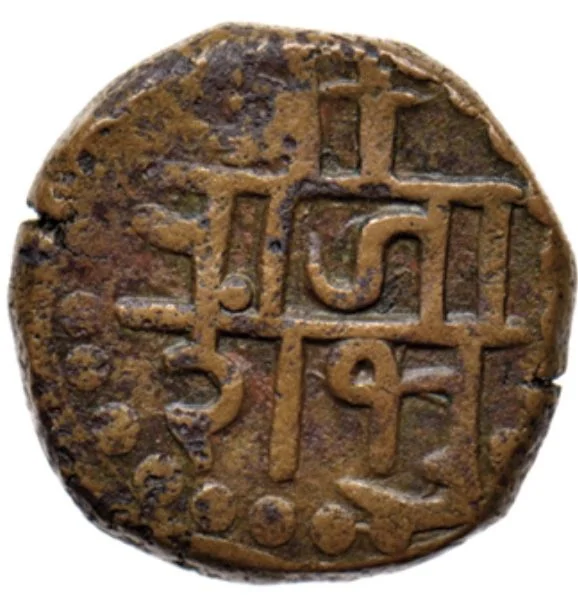
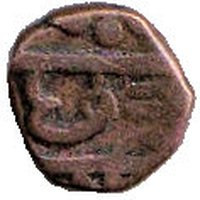
Obverse
Inscription:
श्री
राजा
शंभू
राजा
शंभू
Script: Devanagari
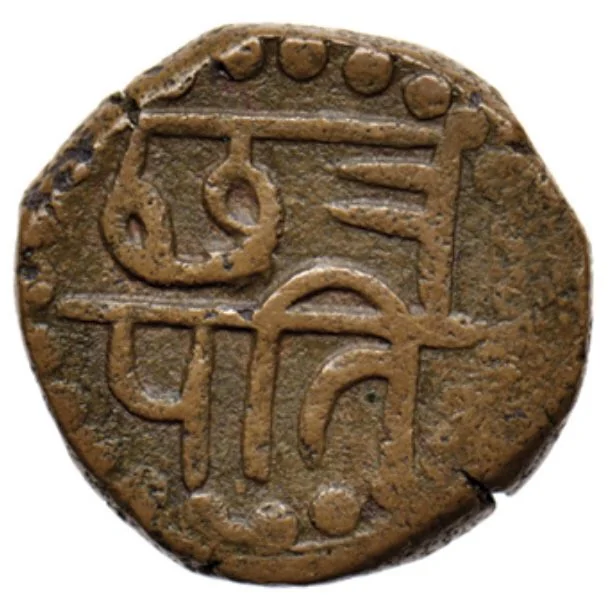
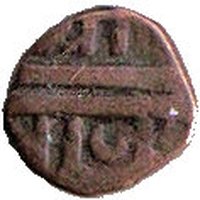
Reverse
Inscription:
छत्र
पति
पति
Script: Devanagari
Edge
Mints
| Name | Mark |
|---|---|
| Raigad Fort | — |
Mintings
| Year | Mint Mark | Mintage | Quality | Collection |
|---|---|---|---|---|
| — | — | — |
Historical background
In 1664, the Maratha Empire under Chhatrapati Shivaji Maharaj was in a formative and expansionist phase, with its currency system reflecting both practical necessity and political symbolism. The region was still largely operating within the established monetary frameworks of the Deccan Sultanates and the Mughal Empire, whose silver rupees (like the Adilshahi huns and Mughal mohurs) dominated high-value trade and revenue collection. Shivaji, however, recognized that a sovereign state required its own fiscal identity. While systematic minting of Maratha coinage was still in its early stages, his administration had begun the crucial process of establishing mints (Taksals) in captured forts, laying the groundwork for a independent monetary policy.
The currency situation was therefore one of transition and coexistence. Older Sultanate and Mughal coins remained in widespread circulation, accepted for their known silver content, while the early Maratha issues began to appear. These first Maratha rupees, such as the Shivarai hon or Shivrai rupees, were often struck on captured or imported bullion. They were imitative in weight and fineness to facilitate acceptance but bore distinct Sanskrit legends like "Shri Raja Shivachhatrapati" in the Nagari script, announcing the new political authority. This blend ensured economic continuity while visually asserting sovereignty.
This period was financially strained by constant warfare, making the control of mints and treasure (khazana) vital for funding military campaigns and administration. Revenue from expanded territories (Swarajya) and war booty (ghanima) were primary sources of bullion for coinage. Thus, the currency situation in 1664 was not yet one of a unified, standardized system, but rather a deliberate and strategic project in its infancy—using familiar monetary standards to ensure stability, while simultaneously stamping them with the insignia of the nascent Hindavi Swarajya to cement its legitimacy and economic independence.
The currency situation was therefore one of transition and coexistence. Older Sultanate and Mughal coins remained in widespread circulation, accepted for their known silver content, while the early Maratha issues began to appear. These first Maratha rupees, such as the Shivarai hon or Shivrai rupees, were often struck on captured or imported bullion. They were imitative in weight and fineness to facilitate acceptance but bore distinct Sanskrit legends like "Shri Raja Shivachhatrapati" in the Nagari script, announcing the new political authority. This blend ensured economic continuity while visually asserting sovereignty.
This period was financially strained by constant warfare, making the control of mints and treasure (khazana) vital for funding military campaigns and administration. Revenue from expanded territories (Swarajya) and war booty (ghanima) were primary sources of bullion for coinage. Thus, the currency situation in 1664 was not yet one of a unified, standardized system, but rather a deliberate and strategic project in its infancy—using familiar monetary standards to ensure stability, while simultaneously stamping them with the insignia of the nascent Hindavi Swarajya to cement its legitimacy and economic independence.
✨ Legendary