

¼ Pe – Myanmar
Myanmar
Context
Year: 1782
Buddhist (Chulasakarat) Year: 1143
Issuer: Myanmar 
Currency:
(1852—1889)
Demonetized: Yes
Material
Diameter: 27 mm
Weight: 10.23 g
Shape: Irregular round
Composition: Copper
Magnetic: No
Technique: Milled
Alignment: Medal alignment
flip
References
KM: #Click to copy to clipboard3.2
Numista: #551799
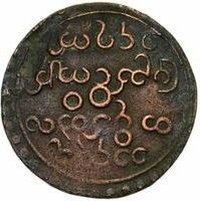
Obverse
Description:
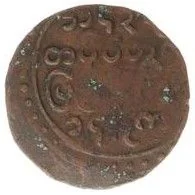
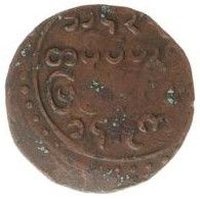
Four-line Burmese legend.
Script: Burmese
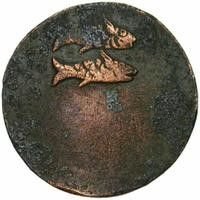
Reverse
Description:
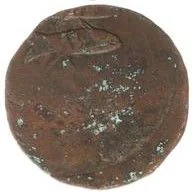
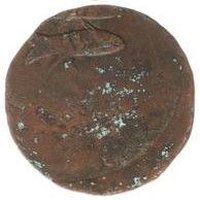
Two fish above.
Edge
Plain
Mints
| Name | Mark |
|---|---|
| Kolkata / Calcutta / Murshidabad | — |
Mintings
| Year | Mint Mark | Mintage | Quality | Collection |
|---|---|---|---|---|
| 1782 | — | — |
Historical background
In 1782, the currency situation in the Konbaung Dynasty of Myanmar was characterized by a traditional, bimetallic system under the firm control of the monarchy. The primary circulating mediums were silver and copper coins, with gold reserved for high-value transactions and state treasures. The standard unit was the kyat (or tical) of silver, often cast into bell-shaped lumps known as ngwe gan, and its fractional copper counterpart, the pe. These were not minted coins with intricate markings but rather stamped lumps, their value derived from their intrinsic metal content, which was guaranteed by royal authority.
This system faced significant challenges, including chronic shortages of precious metals, particularly silver. The kingdom's military campaigns and territorial expansions, while ambitious, were costly and drained royal coffers. Furthermore, the economy remained largely agrarian and localized, with a significant portion of transactions conducted through barter, especially in rural areas beyond major administrative centers like the capital, Amarapura. The state's ability to produce uniform coinage was limited, leading to variations in purity and weight, which complicated regional trade.
King Bodawpaya, who ascended the throne in 1782, was acutely aware of these monetary issues. His early reign saw attempts to centralize economic authority and stabilize the currency, partly to fund his grand projects and military ambitions. However, substantive reform was still in its infancy. The currency system of 1782 was thus one of inherent fragility—a royal monopoly struggling with material constraints, setting the stage for the more concerted, but often disruptive, monetary interventions that would mark Bodawpaya's later rule.
This system faced significant challenges, including chronic shortages of precious metals, particularly silver. The kingdom's military campaigns and territorial expansions, while ambitious, were costly and drained royal coffers. Furthermore, the economy remained largely agrarian and localized, with a significant portion of transactions conducted through barter, especially in rural areas beyond major administrative centers like the capital, Amarapura. The state's ability to produce uniform coinage was limited, leading to variations in purity and weight, which complicated regional trade.
King Bodawpaya, who ascended the throne in 1782, was acutely aware of these monetary issues. His early reign saw attempts to centralize economic authority and stabilize the currency, partly to fund his grand projects and military ambitions. However, substantive reform was still in its infancy. The currency system of 1782 was thus one of inherent fragility—a royal monopoly struggling with material constraints, setting the stage for the more concerted, but often disruptive, monetary interventions that would mark Bodawpaya's later rule.
✨ Legendary