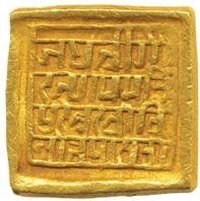
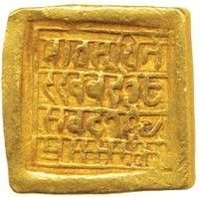
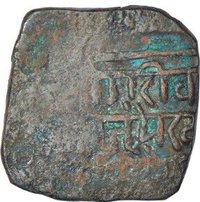
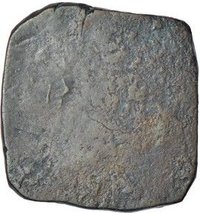
In 1762, the currency situation in the Kingdom of Manipur (then known as Meckley) was not one of a standardized, state-issued monetary system. The region operated primarily within a
barter economy, where goods like rice, salt, cloth, and local handicrafts were the principal mediums of exchange. This was typical for a largely agrarian, self-sufficient society nestled in the hills between the Brahmaputra and Irrawaddy valleys, with its economy structured around the
lallup system of compulsory labor service to the king.
However, the period was one of significant monetary transition and external influence. The most notable development was the
influx of silver coins from neighboring powers, particularly the Mughal Empire to the west and the expanding Kingdom of Burma (Ava) to the east. These foreign coins, especially Mughal rupees, began to circulate in border trade and state transactions. King Bhagya Chandra (Jai Singh, r. 1759-1761 and 1763-1798), who had just regained the throne after a period of exile, was exposed to the sophisticated administrative and economic systems of the Ahom kingdom and Bengal. This experience likely planted the seeds for future monetary reform.
Therefore, while 1762 itself did not see a unique Manipuri coinage, it existed at a
crucial juncture. The traditional barter system was being gradually supplemented by foreign silver coins through trade and tribute. This set the stage for the landmark monetary reform that would follow just a decade later, when King Bhagya Chandra introduced the
first distinct Manipuri silver coins, the
Sel*, around 1779, explicitly modeled on the Mughal rupee but stamped with Manipuri symbols to assert sovereignty and economic integration. The year 1762 thus represents the closing phase of a purely indigenous exchange system, on the cusp of a formalized currency regime influenced by regional geopolitics and royal initiative.