

1 Mun – Joseon
Context
Material
Diameter: 26 mm
Weight: 4 g
Shape: Round with a square hole
Composition: Bronze
Magnetic: No
Technique: Cast
Alignment: Medal alignment
flip
References
KM: #Click to copy to clipboard766
Numista: #547706
Obverse
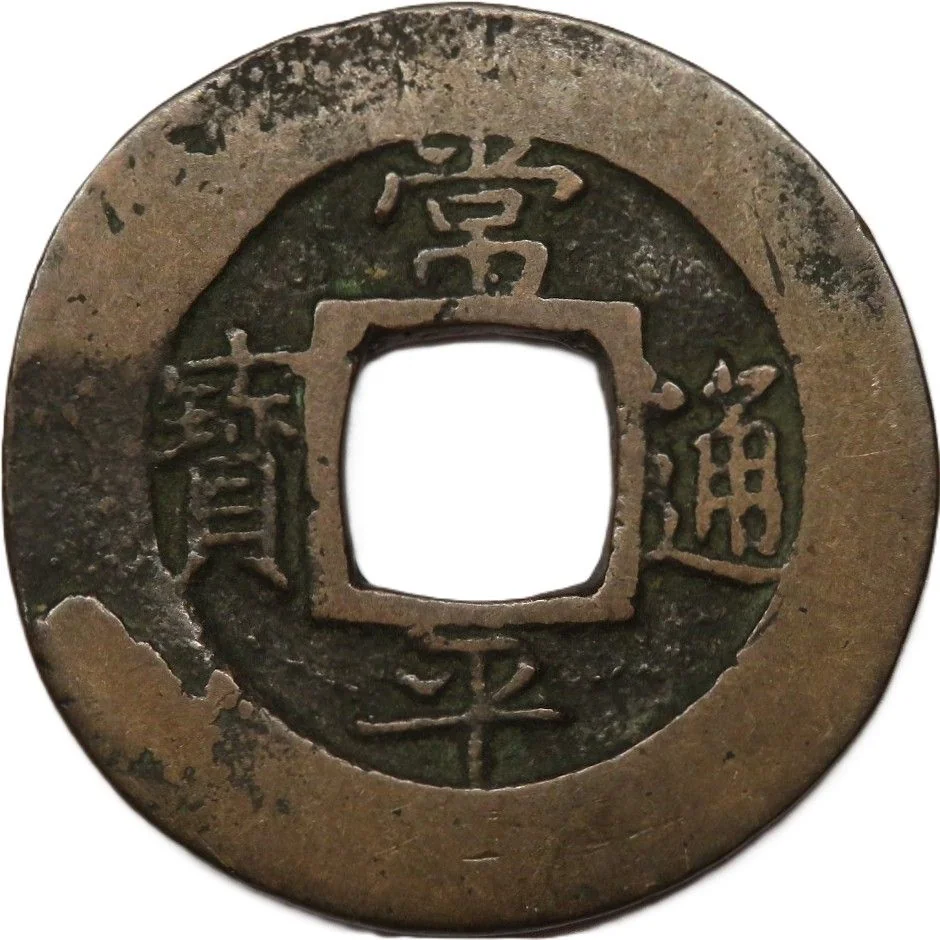
Description:
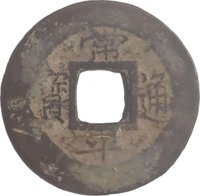
常平通寶 (Sang pyong tong bo) was a currency of Korea's Yi Dynasty.
Inscription:
常
寶 通
平
寶 通
平
Scripts: Chinese (traditional, regular script)
Reverse
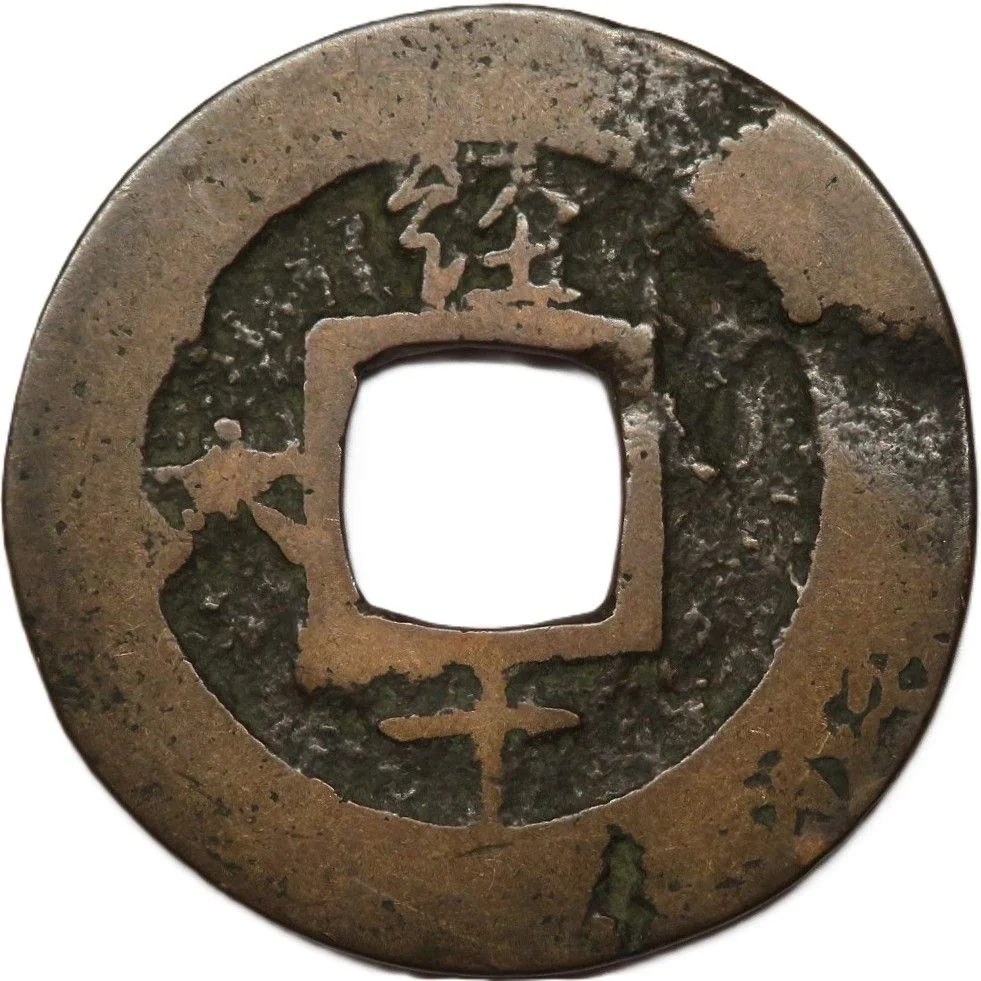
Description:
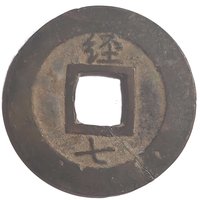
Mint mark top, "sip" (10) bottom, series number left. *经 (Kyong): Pukhan Mountain Fortress.
Inscription:
经
六
十
六
十
Scripts: Chinese (traditional, regular script)
Edge
Plain
Mints
| Name | Mark |
|---|---|
| Government Office of Pukhan Mountain Fortress | 经 |
Mintings
| Year | Mint Mark | Mintage | Quality | Collection |
|---|---|---|---|---|
| 1830 | 经 | — |
Historical background
In 1830, the currency system of the Joseon Dynasty was in a state of profound instability, caught between a debilitating shortage of official coinage and the rampant circulation of privately minted and counterfeit money. The primary legal tender was the sangpyeong tongbo copper-alloy cash coin, first minted in the 17th century, but official mints could not produce enough to meet the demands of a growing commercial economy. This chronic scarcity created a vacuum filled by "yeopjeon," privately cast coins of notoriously inferior and variable quality, which flooded the markets and eroded public trust in the monetary system.
The root of the crisis was fundamentally political and fiscal. The state treasury was perpetually strained due to a rigid tax system based largely on grain and cloth, limiting the government's liquid assets. Attempts to solve revenue shortfalls through occasional debasement or special mintings only worsened inflation and counterfeit problems. Furthermore, a powerful faction of scholar-officials, adhering to Confucian ideals that distrusted profit and commerce, often opposed comprehensive monetary reforms, viewing financial upheaval as a moral failing rather than a technical problem to be solved.
Consequently, the currency situation by 1830 contributed significantly to social unrest and economic hardship, particularly for the peasantry and lower-ranking yangban who lived on fixed incomes. Prices were volatile, transactions were fraught with uncertainty, and regional markets operated with chaotic exchange rates between different types of coin. This monetary dysfunction weakened the state's economic control, exacerbated corruption, and highlighted the dynasty's growing inability to manage the complexities of its own economy, foreshadowing the more severe fiscal crises that would plague its final decades.
The root of the crisis was fundamentally political and fiscal. The state treasury was perpetually strained due to a rigid tax system based largely on grain and cloth, limiting the government's liquid assets. Attempts to solve revenue shortfalls through occasional debasement or special mintings only worsened inflation and counterfeit problems. Furthermore, a powerful faction of scholar-officials, adhering to Confucian ideals that distrusted profit and commerce, often opposed comprehensive monetary reforms, viewing financial upheaval as a moral failing rather than a technical problem to be solved.
Consequently, the currency situation by 1830 contributed significantly to social unrest and economic hardship, particularly for the peasantry and lower-ranking yangban who lived on fixed incomes. Prices were volatile, transactions were fraught with uncertainty, and regional markets operated with chaotic exchange rates between different types of coin. This monetary dysfunction weakened the state's economic control, exacerbated corruption, and highlighted the dynasty's growing inability to manage the complexities of its own economy, foreshadowing the more severe fiscal crises that would plague its final decades.
✨ Legendary