

10 milliemes – Egypt
Add to wishlist
Circulating commemorative coins
Commemoration: International Year of the Child
Egypt
Context
Year: 1979
Islamic (Hijri) Year:: 1399
Issuer: Egypt
Period:
(since 1971)
Currency:
(since 1916)
Total mintage: 2,000,000
Material
Diameter: 21 mm
Weight: 3.2 g
Thickness: 1.5 mm
Shape: Round
Composition: Aluminium bronze
Magnetic: No
Technique: Milled
References
KM: #
Numista: #10421
Value
Exchange value: 0.010 EGP
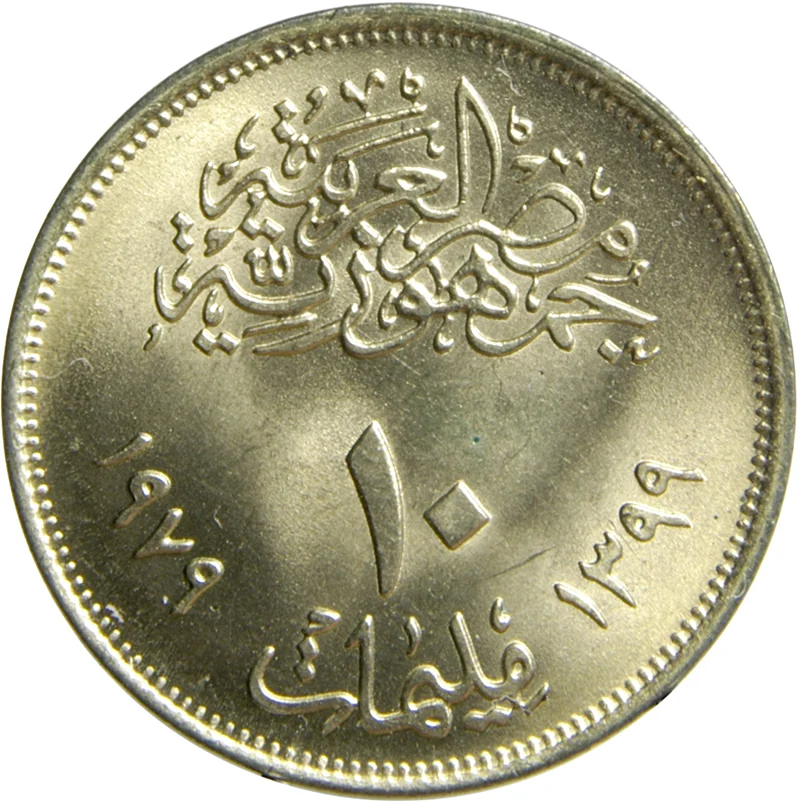
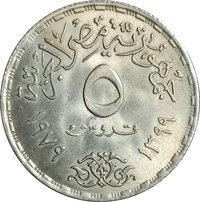
Obverse
Inscription:
جمهورية مصر العربية
١٣٩٩ ١٩٧٩
١٠
مليمات
١٣٩٩ ١٩٧٩
١٠
مليمات
Translation:
Arab Republic of Egypt
1399 1979
10
Millimes
1399 1979
10
Millimes
Language: Arabic
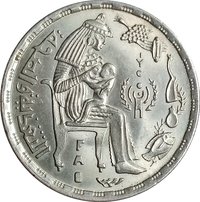
Reverse
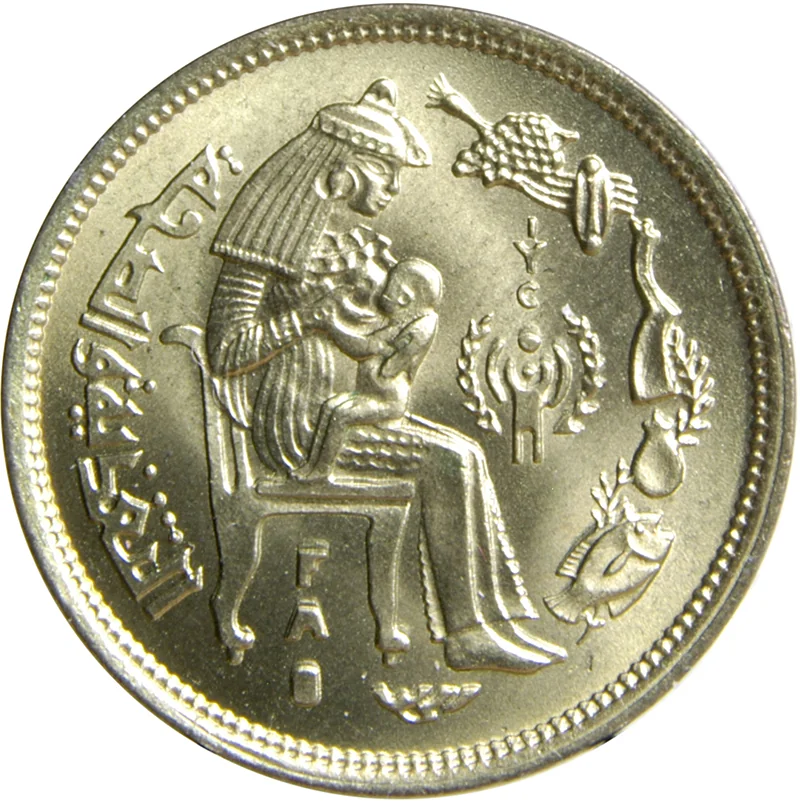
Description:
Woman breastfeeding baby
Inscription:
التغذية والصحة
IYC
FAO
IYC
FAO
Translation:
Nutrition and Health
International Year of the Child
Food and Agriculture Organization
International Year of the Child
Food and Agriculture Organization
Language: Arabic
Edge
Plain
Categories
| Animal> Fish |
| Organization> FAO |
Mintings
| Year | Mint Mark | Mintage | Quality | Collection |
|---|---|---|---|---|
| 1979 | — | 2,000,000 |
Historical background
By 1979, Egypt’s currency situation was defined by a critical transition and deep structural imbalances. The country operated under a complex multi-exchange rate system, a hallmark of its socialist-era economy. An official fixed rate (LE 0.39 = $1) was used for government transactions and essential imports, but it was grossly overvalued. Alongside this existed a "parallel" or "own-exchange" market, where the Egyptian pound traded at a much weaker rate (around LE 0.70 = $1), reflecting severe scarcity of foreign currency. This duality created distortions, encouraged a black market, and was unsustainable amid mounting external debt and a chronic trade deficit.
The political context of 1979 was pivotal, as it was the year Egypt signed its peace treaty with Israel. While this secured significant annual U.S. aid (both military and economic), it also finalized Egypt's estrangement from the Arab League and the loss of crucial financial support from oil-rich Gulf states. Consequently, despite incoming American assistance, the economy remained under severe pressure. Key sources of foreign exchange—remittances from workers abroad, Suez Canal tolls, tourism, and oil exports—were volatile and insufficient to cover the import bill for food and industrial goods, leading to persistent balance of payments crises.
Recognizing these pressures, the Egyptian government, in close consultation with the International Monetary Fund (IMF), was actively laying the groundwork for major economic liberalization. The distortions of 1979 set the stage for the decisive reforms that would follow in the coming years. This culminated in 1991 with a formal Economic Reform and Structural Adjustment Program, which finally unified and devalued the currency, moving Egypt toward a more market-determined exchange rate system. Thus, 1979 represents not a year of resolution, but a point of mounting pressure that made profound currency reform an eventual necessity.
The political context of 1979 was pivotal, as it was the year Egypt signed its peace treaty with Israel. While this secured significant annual U.S. aid (both military and economic), it also finalized Egypt's estrangement from the Arab League and the loss of crucial financial support from oil-rich Gulf states. Consequently, despite incoming American assistance, the economy remained under severe pressure. Key sources of foreign exchange—remittances from workers abroad, Suez Canal tolls, tourism, and oil exports—were volatile and insufficient to cover the import bill for food and industrial goods, leading to persistent balance of payments crises.
Recognizing these pressures, the Egyptian government, in close consultation with the International Monetary Fund (IMF), was actively laying the groundwork for major economic liberalization. The distortions of 1979 set the stage for the decisive reforms that would follow in the coming years. This culminated in 1991 with a formal Economic Reform and Structural Adjustment Program, which finally unified and devalued the currency, moving Egypt toward a more market-determined exchange rate system. Thus, 1979 represents not a year of resolution, but a point of mounting pressure that made profound currency reform an eventual necessity.
🌱 Common