

2 Speciedaler – Denmark
Denmark
Context

Material
References
KM: #Click to copy to clipboard239
Numista: #202574
Value
Bullion value: $143.35
Obverse
Description:
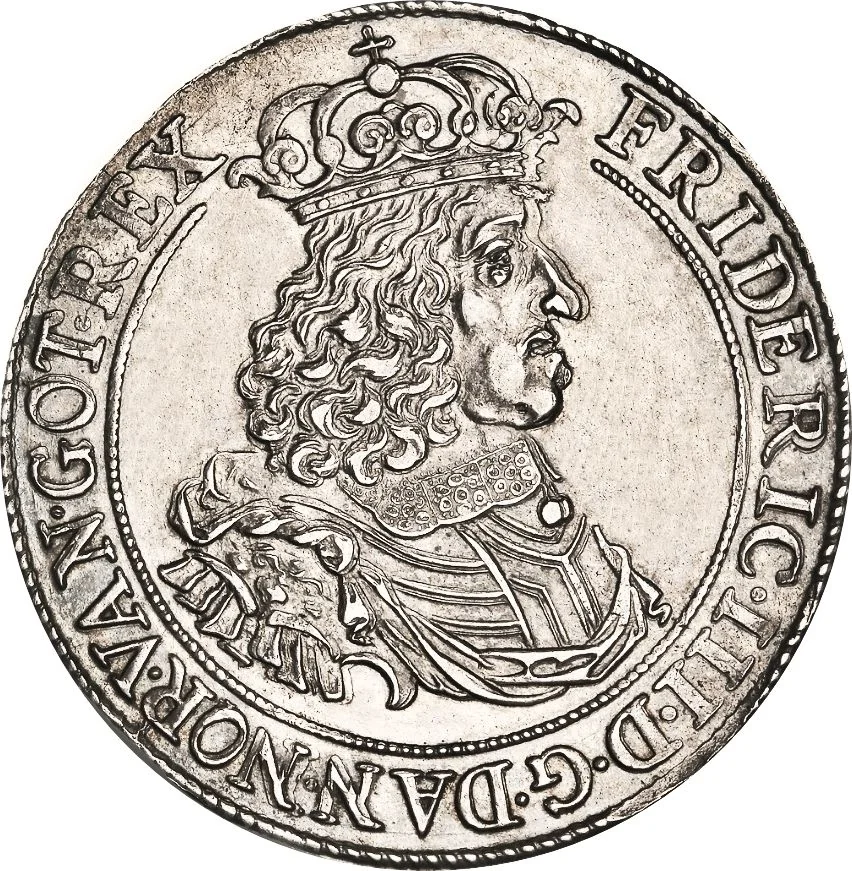
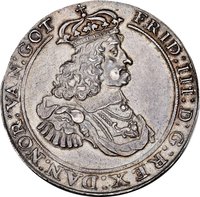
Right-facing armored bust of Frederik III in a roped circle, wearing drapery. His bust breaks the circle above his head. Outer legend begins left of the crown.
Inscription:
FRIDERIC·III·D·G·DAN·NOR·VAN:GOT·REX
Script: Latin
Reverse
Description:
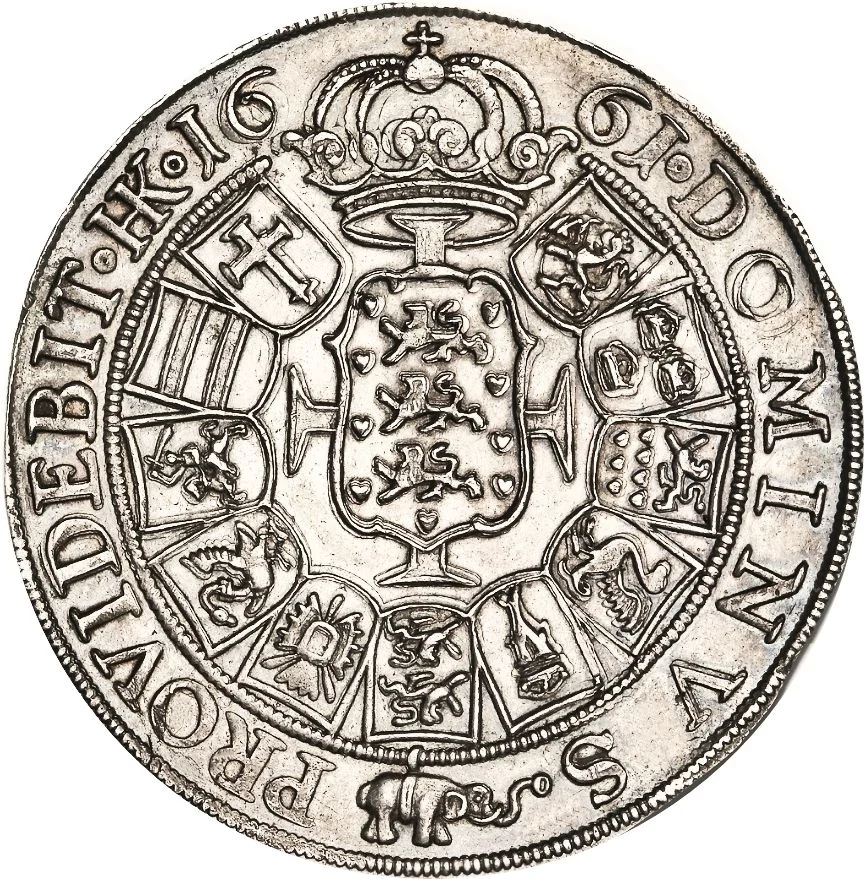
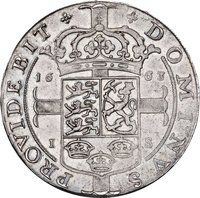
A central shield bearing Denmark's arms on a cross, topped by the Danish crown, is encircled by eleven provincial shields within a rope circle. The Order of the Elephant pendant hangs below. The king's motto surrounds the rim, with the date (split by the crown) and mintmark at the end.
Inscription:
DOMINVS | PROVIDEBIT ° HK ° 16 | 61
Script: Latin
Edge
Mints
| Name | Mark |
|---|---|
| Royal Danish Mint | — |
Mintings
| Year | Mint Mark | Mintage | Quality | Collection |
|---|---|---|---|---|
| 1661 | — | — |
Historical background
In 1661, Denmark stood at a pivotal moment in its monetary history, transitioning from a medieval system to a modern, state-controlled currency. For centuries, Danish coinage had been unreliable, with a multitude of domestic and foreign coins in circulation, often clipped or debased. The state’s finances were strained following the devastating wars of the mid-17th century, particularly the costly conflicts with Sweden, leading to severe inflation and public distrust in the coinage. The need for a stable and uniform monetary system to facilitate trade, restore royal credit, and centralize power was acute.
This crisis prompted King Frederik III, fresh from establishing an absolute monarchy in 1660, to enact a radical monetary reform in 1664. However, the groundwork and decisive shift in philosophy occurred in 1661. The state moved to monopolize the right to mint coins, outlawing the circulation of foreign currency and older, debased Danish coins. The conceptual breakthrough was the introduction of a kurant system, where the new silver coins' value was directly tied to their precious metal content, not an arbitrary royal decree. This created a "species" currency intended to be trustworthy and immune to arbitrary devaluation.
Thus, the situation in 1661 was one of deliberate upheaval, marking the end of chaotic, decentralized coinage and the beginning of a standardized monetary system under crown authority. While the physical new coins would not appear until 1664, the legal and philosophical foundations were laid in this period. This reform was a cornerstone of the new absolutist state, aiming to stabilize the economy, strengthen central control, and signal Denmark’s integration into the emerging modern European financial world.
This crisis prompted King Frederik III, fresh from establishing an absolute monarchy in 1660, to enact a radical monetary reform in 1664. However, the groundwork and decisive shift in philosophy occurred in 1661. The state moved to monopolize the right to mint coins, outlawing the circulation of foreign currency and older, debased Danish coins. The conceptual breakthrough was the introduction of a kurant system, where the new silver coins' value was directly tied to their precious metal content, not an arbitrary royal decree. This created a "species" currency intended to be trustworthy and immune to arbitrary devaluation.
Thus, the situation in 1661 was one of deliberate upheaval, marking the end of chaotic, decentralized coinage and the beginning of a standardized monetary system under crown authority. While the physical new coins would not appear until 1664, the legal and philosophical foundations were laid in this period. This reform was a cornerstone of the new absolutist state, aiming to stabilize the economy, strengthen central control, and signal Denmark’s integration into the emerging modern European financial world.
✨ Legendary