

25 kopecks – Transnistria
Add to wishlist
Moldova
Context
Material
Diameter: 17 mm
Weight: 2.15 g
Shape: Round
Composition: Aluminium bronze
Magnetic: No
Technique: Milled
Alignment: Medal alignment
flip
References
KM: #
Numista: #1556
Value
Exchange value: 0.25 PRB
Obverse
Description:
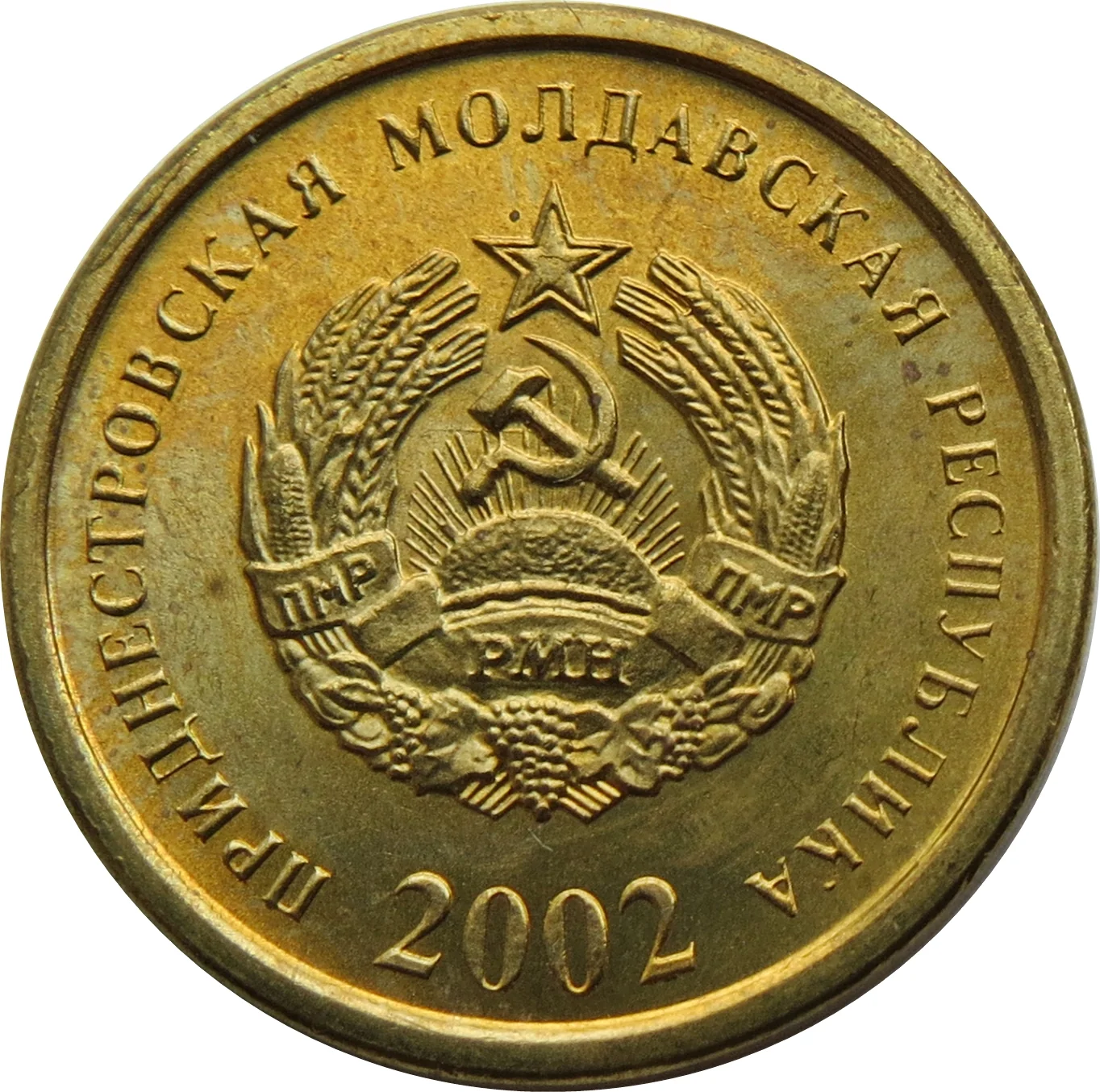
The PMR State Emblem with the circular inscription "Приднестровская Молдавская Республика".
Inscription:
ПРИДНЕСТРОВСКАЯ МОЛДАВСКАЯ РЕСПУБЛИКА
ПМР РМН ПМР
2002
ПМР РМН ПМР
2002
Script: Cyrillic
Reverse
Description:
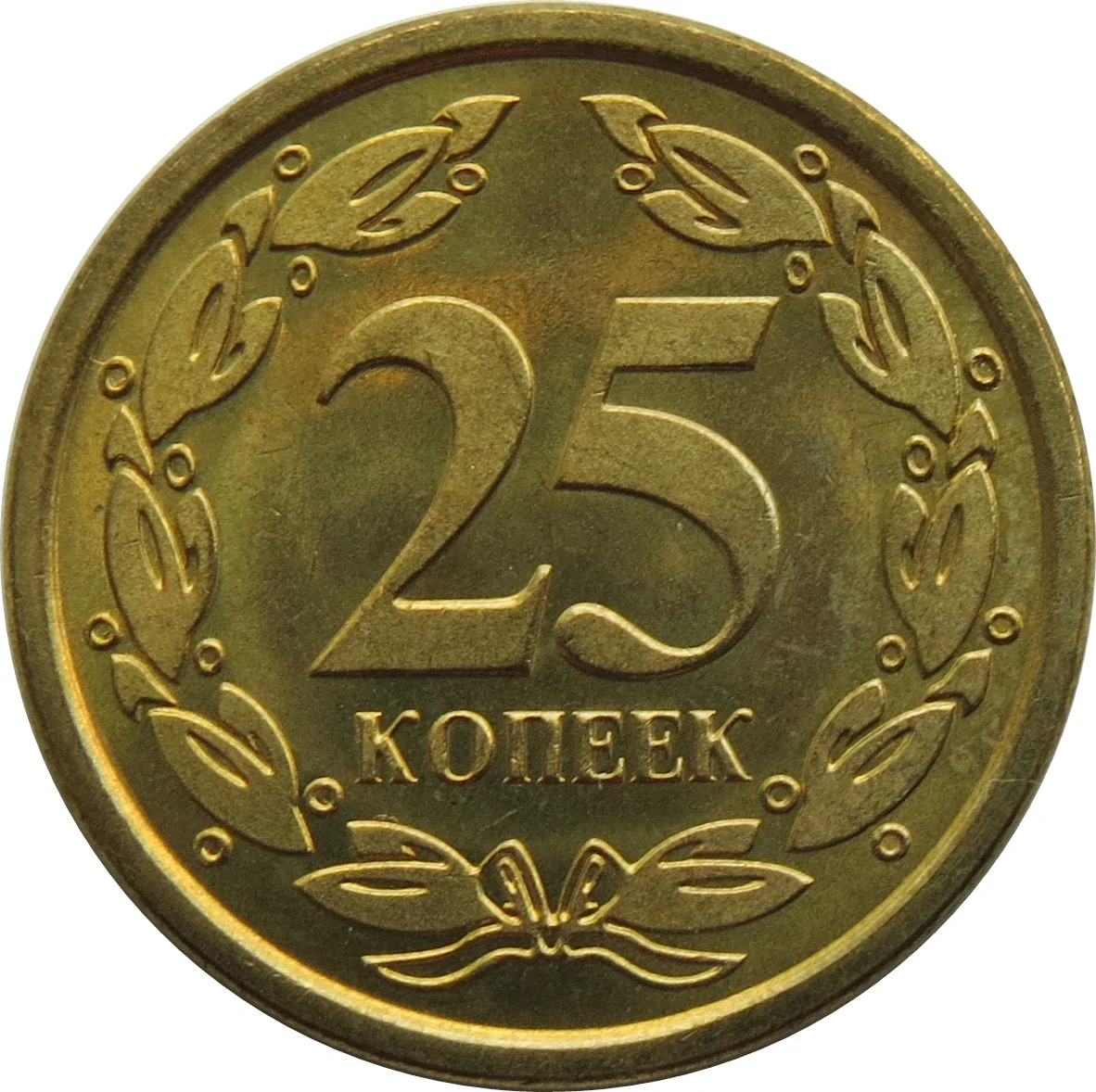
The denomination "25" in an embossed circle of laurel, with "КОПЕЕК" below.
Inscription:
25
КОПЕЕК
КОПЕЕК
Script: Cyrillic
Edge
Plain
Categories
| Symbol> Hammer and sickle |
Mints
| Name | Mark |
|---|---|
| Mint of Poland | — |
Mintings
| Year | Mint Mark | Mintage | Quality | Collection |
|---|---|---|---|---|
| 2002 | — | — |
Historical background
In 2002, the currency situation in the breakaway region of Transnistria remained a complex and artificial system, emblematic of its unresolved political status. Following its declaration of independence from Moldova in 1990, which was not recognized internationally, the region introduced its own currency, the Transnistrian ruble, in 1994. By 2002, this currency existed solely for internal circulation and was not convertible on international markets. Its value was entirely managed by the Transnistrian Republican Bank, with no backing by gold or foreign reserves, making it reliant on political decree and the economic relationship with Moldova.
The economy operated on a de facto dual-currency system. While the Transnistrian ruble was used for daily wages, pensions, and local transactions, the Moldovan leu and, crucially, the US dollar and Russian ruble were widely used for significant purchases, savings, and cross-border trade. This dollarization reflected a deep lack of public confidence in the local currency, which was prone to inflation and arbitrary adjustments. The region's economic survival depended heavily on support from Russia, in the form of direct subsidies and especially the provision of free natural gas to key Soviet-era industries, which generated export revenue in hard currency.
Consequently, the 2002 monetary landscape was one of isolation and fragility. The Transnistrian ruble's exchange rate was set administratively, creating a disconnect from real economic performance. This system facilitated the control of the economy by a small group of enterprise managers and political elites, but it also entrenched economic stagnation for the general population. The currency regime underscored the territory's political limbo—functioning with the trappings of a state while being entirely dependent on external patronage and the shadow economy for financial sustenance.
The economy operated on a de facto dual-currency system. While the Transnistrian ruble was used for daily wages, pensions, and local transactions, the Moldovan leu and, crucially, the US dollar and Russian ruble were widely used for significant purchases, savings, and cross-border trade. This dollarization reflected a deep lack of public confidence in the local currency, which was prone to inflation and arbitrary adjustments. The region's economic survival depended heavily on support from Russia, in the form of direct subsidies and especially the provision of free natural gas to key Soviet-era industries, which generated export revenue in hard currency.
Consequently, the 2002 monetary landscape was one of isolation and fragility. The Transnistrian ruble's exchange rate was set administratively, creating a disconnect from real economic performance. This system facilitated the control of the economy by a small group of enterprise managers and political elites, but it also entrenched economic stagnation for the general population. The currency regime underscored the territory's political limbo—functioning with the trappings of a state while being entirely dependent on external patronage and the shadow economy for financial sustenance.
🌱 Common