

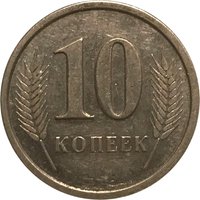
10 Kopecks – Transnistria
Moldova
Context
Material
References
KM: #Click to copy to clipboard3
Numista: #1555
Value
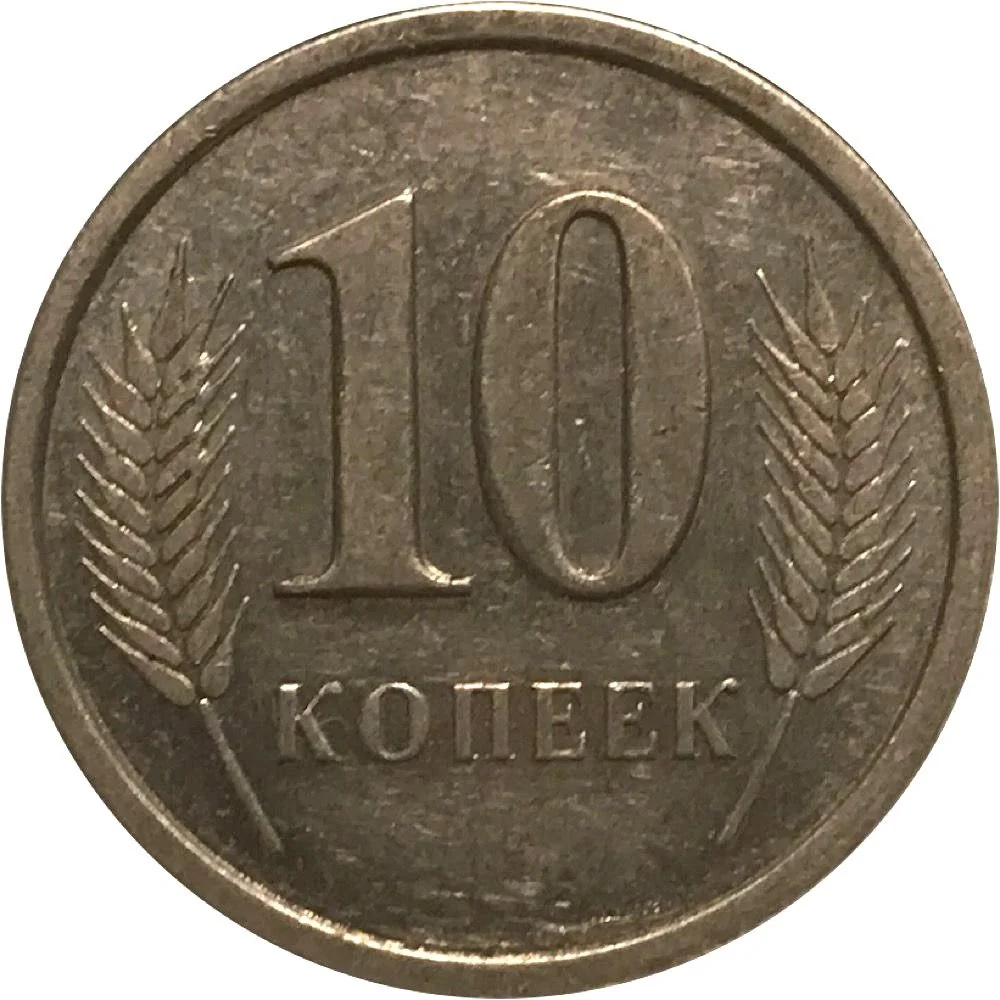
Exchange value: 0.10 PRB
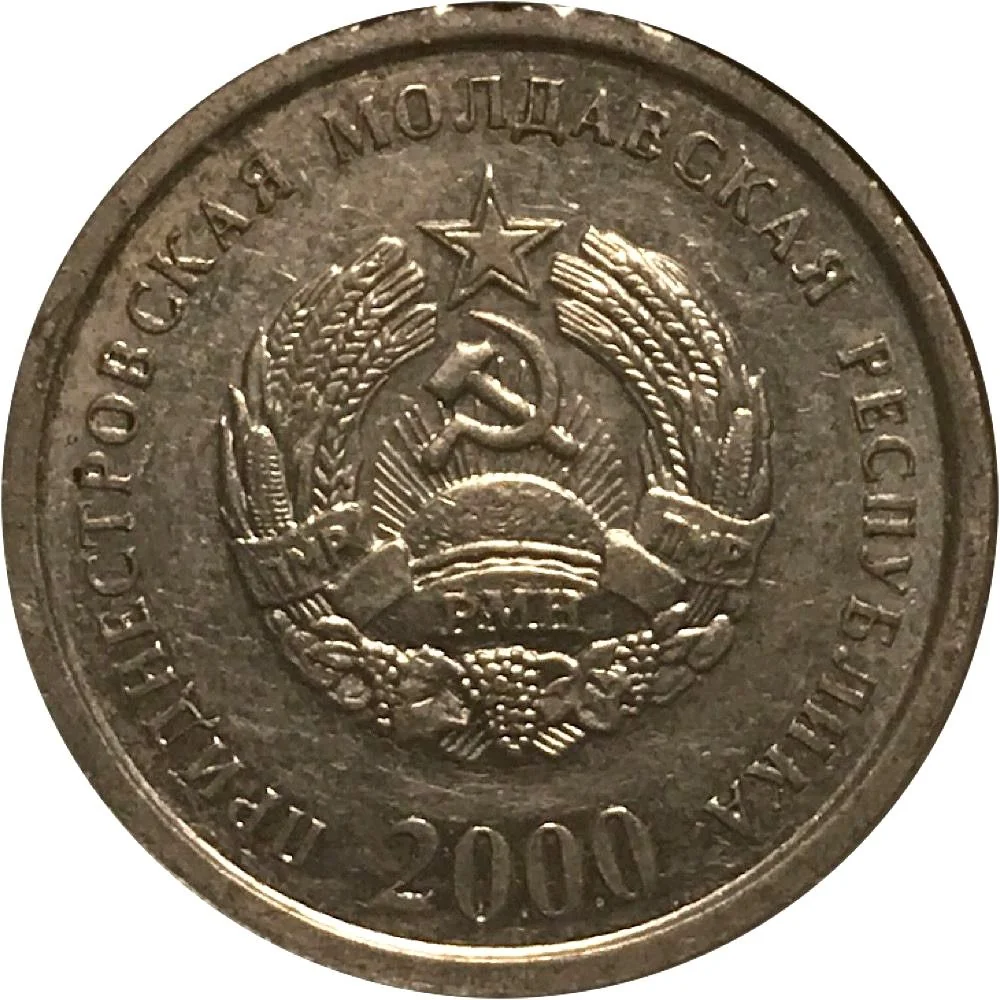
Obverse
Description:
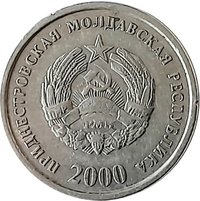
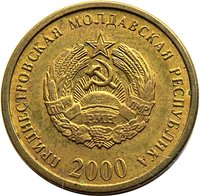
State Emblem of Transnistria, date below.
Inscription:
ПРИДНЕСТРОВСКАЯ МОЛДАВСКАЯ РЕСПУБЛИКА
ПМР РМН ПМР
2000
ПМР РМН ПМР
2000
Script: Cyrillic
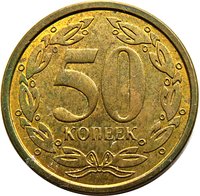
Reverse
Edge
Plain
Categories
| Symbols> Coat of Arms |
| Symbol> Hammer and sickle |
Mints
| Name | Mark |
|---|---|
| Mint of Poland | — |
Mintings
| Year | Mint Mark | Mintage | Quality | Collection |
|---|---|---|---|---|
| 2000 | — | — |
Historical background
In 2000, Transnistria, a breakaway region of Moldova, operated under a complex and unstable currency regime that was a direct legacy of its unresolved political status. Following its self-declared independence in 1990 and the brief 1992 war, the region had established its own central bank and continued to use a unique currency: the Transnistrian ruble (or rubla), introduced in 1994. This currency was not internationally recognized and existed solely for domestic circulation within the separatist statelet, functioning as a symbol of its de facto sovereignty but also its profound economic isolation.
The monetary situation was characterized by a severe lack of confidence and chronic inflation. The Transnistrian ruble was a "soft" currency, inconvertible on international markets and subject to frequent devaluations. To stabilize everyday transactions and facilitate crucial imports, the economy operated on a de facto multi-currency system. Alongside the local ruble, the US dollar and, to a lesser extent, the Russian ruble and Moldovan leu were widely used for savings, major purchases, and business contracts. This dollarization was a pragmatic response to hyperinflation episodes in the mid-1990s and reflected deep public distrust in the local monetary authority.
Furthermore, the currency issue was deeply entangled with geopolitical dependence. Transnistria's economy was kept afloat largely through subsidies from Russia, including direct budgetary aid and critically important free or heavily subsidized natural gas deliveries from Gazprom. This external support prevented total economic collapse but did not create a sustainable financial system. The year 2000 thus saw Transnistria maintaining a fragile, dual-currency reality—a weak local tender for daily wages and small transactions, underpinned by hard foreign currencies for real economic stability, all sustained by political patronage from Moscow.
The monetary situation was characterized by a severe lack of confidence and chronic inflation. The Transnistrian ruble was a "soft" currency, inconvertible on international markets and subject to frequent devaluations. To stabilize everyday transactions and facilitate crucial imports, the economy operated on a de facto multi-currency system. Alongside the local ruble, the US dollar and, to a lesser extent, the Russian ruble and Moldovan leu were widely used for savings, major purchases, and business contracts. This dollarization was a pragmatic response to hyperinflation episodes in the mid-1990s and reflected deep public distrust in the local monetary authority.
Furthermore, the currency issue was deeply entangled with geopolitical dependence. Transnistria's economy was kept afloat largely through subsidies from Russia, including direct budgetary aid and critically important free or heavily subsidized natural gas deliveries from Gazprom. This external support prevented total economic collapse but did not create a sustainable financial system. The year 2000 thus saw Transnistria maintaining a fragile, dual-currency reality—a weak local tender for daily wages and small transactions, underpinned by hard foreign currencies for real economic stability, all sustained by political patronage from Moscow.
🌱 Very Common